Stroke rehabilitation is the structured, daily therapy that helps a person relearn how to sit, stand, walk, use the arm, swallow, speak and manage everyday tasks after a stroke. It works best when it starts as soon as the person is medically stable (but not with intensive exercise in the first 24 hours), when it is delivered by a full team for several hours a day, and when the family is part of the plan. Most recovery happens in the first three months, but useful gains can continue for much longer.
This guide explains what to expect, what the evidence says about timing, intensity and technology, and how to get started with stroke rehabilitation in Bangalore.
If anyone shows a sudden change in Balance, Eyes (vision loss), Face droop, Arm weakness or Speech, note the Time it started and call 108 or 112 immediately. Every minute counts, and these signs can return at any stage of recovery.
How Common Is Stroke in India?
Very common, and the numbers are rising with an ageing population. The India State-Level Disease Burden Initiative estimated about 1.29 million new strokes in India in 2019 and about 699,000 stroke deaths, making stroke the largest contributor to the burden of neurological disorders in the country, at about 38% of neurological disease burden (India State-Level Disease Burden Initiative, 2021).
What Does Stroke Rehabilitation Actually Do?
A stroke cuts off blood supply to part of the brain. The cells in that area die, but the surrounding brain can reorganise and take over some of the lost work. This capacity is called neuroplasticity, and it is driven by practice: hundreds of repetitions of the movements, words and tasks the person needs back.
Rehabilitation is therefore active, goal-directed practice, progressed each day, with the medical problems that can derail recovery (blood pressure, blood sugar, infections, clots, swallowing safety, mood) managed at the same time.
When Should Rehabilitation Start?
Early, but not in the form of intensive exercise within the first day. The large AVERT trial randomised 2,104 stroke patients to very early, high-dose mobilisation within 24 hours or to usual care. Fewer patients in the very early group had a good outcome at three months (46% versus 50%) (AVERT Trial Collaboration, 2015). The 2026 American Heart Association/American Stroke Association (AHA/ASA) guideline now states that high-dose mobilisation within the first 24 hours should not be performed (Richards et al., 2026).
After that first day, the direction is clear: begin gentle mobilisation and assessment in the acute hospital as soon as the person is stable, and move into a structured programme without delay. The Copenhagen Stroke Study followed 804 consecutive stroke patients and found that 95% reached their best walking function within the first 11 weeks (Jørgensen et al., 1995). Arm recovery follows a similar pattern: 80% reached their best arm function within 3 weeks and 95% within 9 weeks (Nakayama et al., 1994). The weeks in which the brain is most ready to relearn should not be spent waiting.
How Much Therapy Is Enough?
More than most families expect. The UK's NICE guideline recommends needs-based stroke rehabilitation for at least 3 hours a day, on at least 5 days a week, across physiotherapy, occupational therapy and speech and language therapy, for people who can take part; where someone cannot manage that much, the therapy they need should still be offered at least 5 days a week (NICE NG236, 2023).
The 2026 AHA/ASA guideline recommends repetitive, progressively graded practice of functional tasks (its strongest class of recommendation) and, for people who are able, high-dose walking therapy in 1–2 hour sessions, five times a week (Richards et al., 2026). The same guideline recommends treatment in an inpatient rehabilitation facility, in preference to a nursing-home-type facility, for eligible patients, because it produces more functional improvement.
If you are comparing centres, ask how many hours of therapy with qualified therapists your family member will actually receive each day. Our guide to home physiotherapy versus inpatient rehabilitation explains when each option fits.
Who Is on a Stroke Rehabilitation Team?
Stroke affects far more than the legs, so a rehabilitation team is more than a physiotherapist.
| Team member | What they work on |
|---|---|
| Physiatrist (rehabilitation physician) | Leads the plan, manages spasticity, pain, bladder, medicines and complications |
| Physiotherapist | Sitting balance, standing, walking, stairs, strength and endurance |
| Occupational therapist | Arm and hand use, dressing, bathing, eating, kitchen and work tasks, home adaptations |
| Speech-language therapist | Speech, language (aphasia), and safe swallowing (dysphagia) |
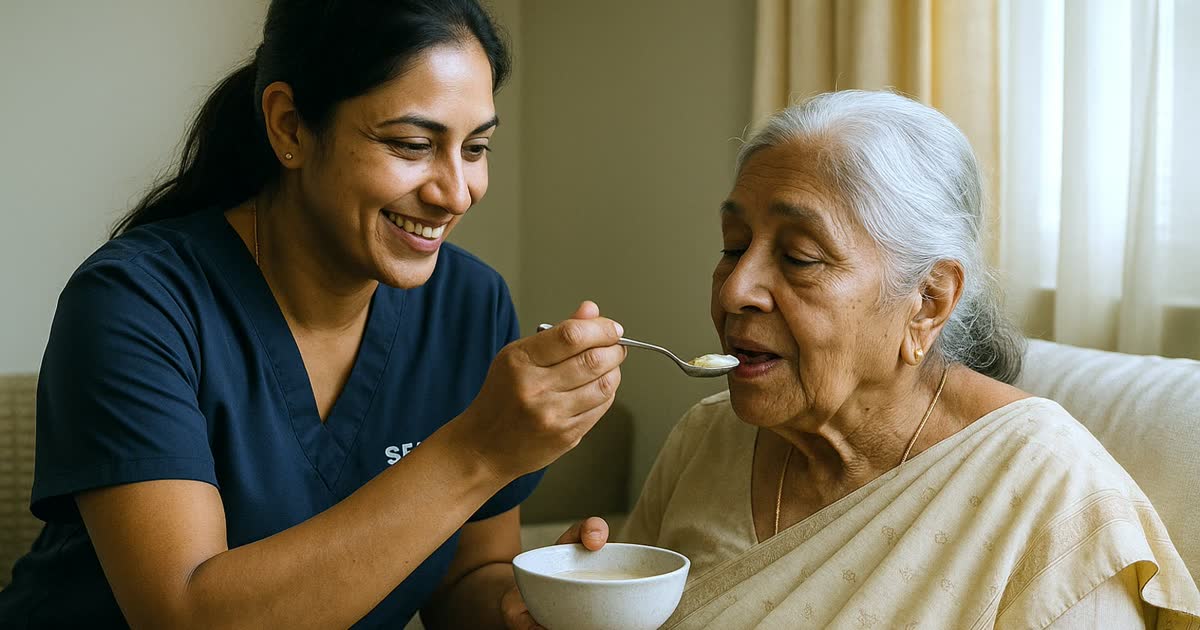
| Rehabilitation nurses and caregivers | Positioning, skin care, bladder and bowel routines, medicines, feeding tubes |
| Clinical nutritionist | Texture-modified diets, tube feeding, blood-sugar and weight management |
| Psychologist or counsellor | Mood, anxiety, motivation, memory and thinking skills, family coping |
The hidden problems deserve the same attention as walking. A 2022 meta-analysis of Indian studies found that about 48% of stroke patients had dysphagia (swallowing difficulty) and that those with dysphagia had about nine times the risk of pneumonia (Krishnamurthy et al., 2022). In a Canadian registry sample, about 30% of first-ever ischaemic strokes caused aphasia (Flowers et al., 2013). And across 61 studies, about 31% of stroke survivors experience depression (Hackett & Pickles, 2014). Our guides to swallowing therapy, aphasia rehabilitation and post-stroke depression cover each in detail.
What Is a Realistic Recovery Timeline?
Every stroke is different, and the severity of the initial weakness is the strongest predictor of outcome. Broadly, families can expect the following.
| Phase | What usually happens | What the family can do |
|---|---|---|
| Acute (first days) | Medical stabilisation, swallow screening, gentle mobilisation once stable; no intensive exercise in the first 24 hours | Learn safe positioning and the BE-FAST signs; ask when rehabilitation will start |
| First 3 months | Fastest recovery; most walking and arm gains happen here; highest risk of a second stroke | Prioritise daily intensive therapy; keep every medicine and follow-up appointment |
| 3–6 months | Gains continue but more slowly; focus shifts to independence, home and community tasks | Set practical goals (bathroom alone, stairs, cooking); continue home practice |
| Beyond 6 months | Slower but real improvement is still possible with structured practice; prevent falls, contractures and depression | Maintain exercise, review spasticity and mood, plan return to work or hobbies |
The arm recovers less predictably than the leg: in a cohort of 102 patients with an initially paralysed arm, about 38% regained some useful hand function at six months and 11.6% recovered fully (Kwakkel et al., 2003). See our guides to hemiplegic arm rehabilitation and the first 90 days after stroke.
What Does Technology Add, and What Is the Evidence?
Technology can help deliver more repetitions safely, but it is an addition to skilled therapy, not a replacement for it.
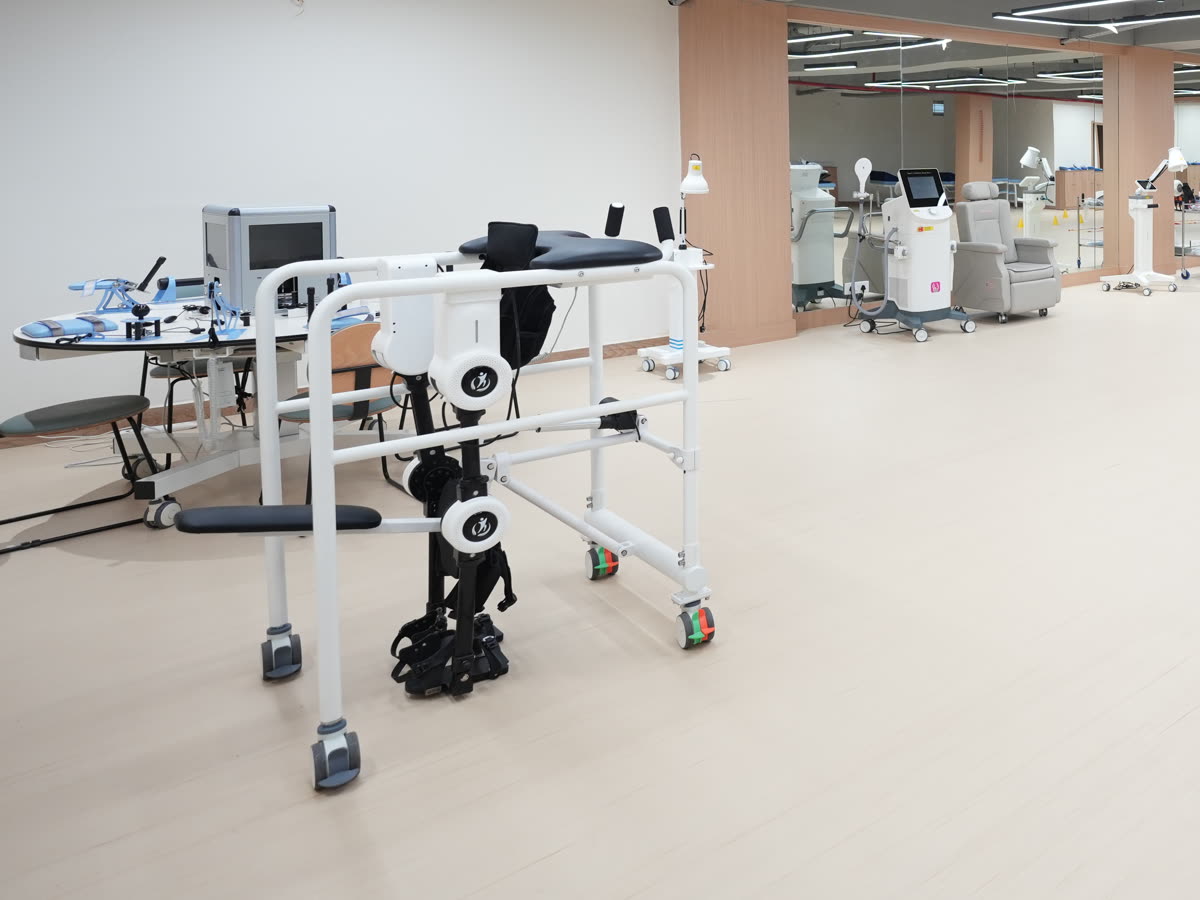
Robotic-assisted gait training (RAGT). A 2025 Cochrane review of 101 trials (4,224 people) found that electromechanical or robotic gait training combined with physiotherapy probably increases the chance of walking independently: about one extra person walks independently for every nine treated. The review's subgroup analyses suggested that time since stroke and walking ability at the start probably do not change this effect, although its plain-language summary notes the devices may particularly benefit people in the first three months. It did not meaningfully improve walking speed or distance (Mehrholz et al., 2025). The 2026 AHA/ASA guideline does not recommend RAGT over task-specific overground walking for people who are already able to walk (Richards et al., 2026). In practice this means RAGT is mainly a way to add safe, repeated stepping for people who cannot yet walk safely on their own, paired with overground practice; for people who already walk, overground training comes first. SENSE Health offers robotic gait training on that basis.
rTMS (repetitive transcranial magnetic stimulation). European evidence-based guidelines rate low-frequency rTMS over the unaffected hemisphere as having definite (Level A) efficacy for hand motor recovery in the post-acute stage of stroke, based on sham-controlled trials, while noting that a statistically significant benefit does not always mean a clinically large one (Lefaucheur et al., 2020). It is an adjunct to therapy. Read more about rTMS therapy.
HBOT (hyperbaric oxygen therapy). A Cochrane review of 11 trials (705 people) found no good evidence that HBOT improves outcomes in acute ischaemic stroke, though benefit was not ruled out (Bennett et al., 2014). Stroke is not on the Undersea and Hyperbaric Medical Society's list of accepted indications (UHMS). SENSE Health offers HBOT for selected patients after a doctor's assessment, and we say plainly that its role in stroke is still being studied.
NMES (neuromuscular electrical stimulation). The 2026 AHA/ASA guideline rates NMES as reasonable to reduce shoulder subluxation and improve arm positioning early after stroke, and NICE suggests a trial of NMES, FES or TENS for focal spasticity.
HIEMT / peripheral magnetic stimulation. The evidence is small: a 2019 Cochrane review found only four trials (139 people) and could not show a clear effect on daily activities or arm function, with a possible reduction in elbow spasticity (Sakai et al., 2019). We describe it as an experimental adjunct; see our article on spasticity after stroke.
How Do You Prevent a Second Stroke?
A pooled analysis of 13 studies found the cumulative risk of another stroke was about 11% in the first year and 26% by five years (Mohan et al., 2011). Rehabilitation and prevention go together: blood pressure, blood sugar and cholesterol control, antiplatelet or anticoagulant medicines as prescribed, stopping smoking, and regular physical activity. Teach everyone at home the BE-FAST signs: adding Balance and Eyes to the older FAST checklist reduced missed strokes from 14% to about 4% in one stroke-centre audit (Aroor et al., 2017). Never stop or change a medicine without asking the treating doctor, even if the person seems fully recovered.
Stroke Rehabilitation at SENSE Health
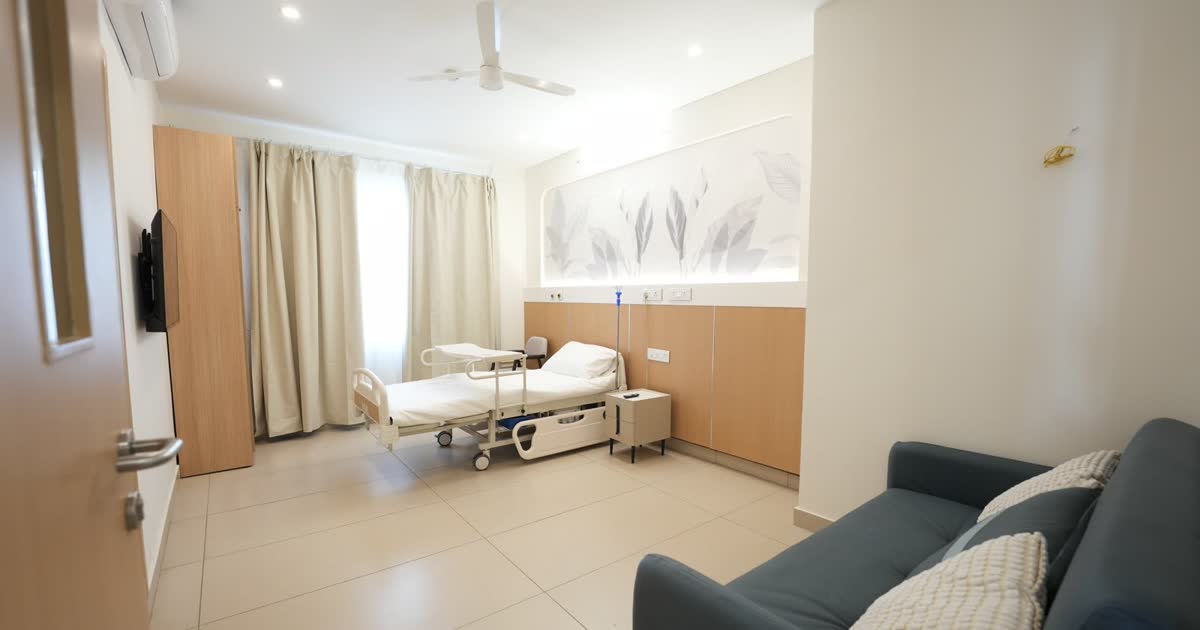
SENSE Health is a rehabilitation hospital in Kalyan Nagar with inpatient, outpatient and home-care services. Our consultant physiatrist, Dr. Vaibhav Shivram Lokhande (MBBS, DNB in Physical Medicine and Rehabilitation), leads a team of physiotherapists, occupational therapists, speech and swallow therapists, nurses, a clinical nutritionist and our neurologist. Inpatients have 24/7 doctors and a 24/7 emergency response team, with ICU/HDU support available when it is clinically required.
Before admission, families receive a written package sheet that lists exactly what the chosen inpatient package includes and what is charged separately when clinically needed (for example speech and swallow therapy, rTMS, HBOT and ICU-level care); it is explained and signed before you decide. Our stroke rehabilitation cost guide explains how to compare quotes. For a Kannada-language overview, see our stroke paralysis recovery guide in Kannada.
Getting Started in Kalyan Nagar
We are at AVR Heights, 100 Feet Road, HRBR Layout 1st Block, Kalyan Nagar, Bengaluru 560043, easy to reach from Indiranagar, Banaswadi and Hennur, and families come to us from Kammanahalli, Hebbal, Horamavu and Ramamurthy Nagar. If your family member is still in an acute hospital, call us early so the move is planned, not rushed.
For the first visit, bring the discharge summary, CT or MRI reports, the current medicine list and any insurance details. Expect a free initial consultation, an assessment of walking, arm use, swallowing, speech and mood, a frank discussion of goals, and a recommendation for inpatient rehabilitation, OPD therapy or home-based care.
OPD hours: Monday to Saturday, 9 AM to 7 PM.
Call +91 96633 34659, WhatsApp us, email listen@sensehealth.co.in, or get directions.
Sources
- India State-Level Disease Burden Initiative Neurological Disorders Collaborators. The burden of neurological disorders across the states of India: the Global Burden of Disease Study 1990–2019. Lancet Global Health. 2021.
- AVERT Trial Collaboration group. Efficacy and safety of very early mobilisation within 24 h of stroke onset (AVERT): a randomised controlled trial. Lancet. 2015.
- Richards LG, et al. 2026 Guideline for Adult Stroke Rehabilitation and Recovery: a guideline from the American Heart Association and American Stroke Association. Stroke. 2026.
- Jørgensen HS, et al. Recovery of walking function in stroke patients: the Copenhagen Stroke Study. Archives of Physical Medicine and Rehabilitation. 1995.
- Nakayama H, et al. Recovery of upper extremity function in stroke patients: the Copenhagen Stroke Study. Archives of Physical Medicine and Rehabilitation. 1994.
- National Institute for Health and Care Excellence. Stroke rehabilitation in adults (NG236). NICE. 2023.
- Krishnamurthy R, et al. Systematic review and meta-analysis of dysphagia and associated pneumonia in patients with stroke from India. American Journal of Speech-Language Pathology. 2022.
- Flowers HL, et al. The incidence, co-occurrence, and predictors of dysphagia, dysarthria, and aphasia after first-ever acute ischemic stroke. Journal of Communication Disorders. 2013.
- Hackett ML, Pickles K. Part I: frequency of depression after stroke: an updated systematic review and meta-analysis. International Journal of Stroke. 2014.
- Kwakkel G, et al. Probability of regaining dexterity in the flaccid upper limb: impact of severity of paresis and time since onset in acute stroke. Stroke. 2003.
- Mehrholz J, et al. Electromechanical-assisted training for walking after stroke. Cochrane Database of Systematic Reviews. 2025.
- Lefaucheur JP, et al. Evidence-based guidelines on the therapeutic use of repetitive transcranial magnetic stimulation (rTMS): an update (2014–2018). Clinical Neurophysiology. 2020.
- Bennett MH, et al. Hyperbaric oxygen therapy for acute ischaemic stroke. Cochrane Database of Systematic Reviews. 2014.
- Undersea and Hyperbaric Medical Society. HBO indications. UHMS.
- Sakai K, et al. Repetitive peripheral magnetic stimulation for impairment and disability in people after stroke. Cochrane Database of Systematic Reviews. 2019.
- Mohan KM, et al. Risk and cumulative risk of stroke recurrence: a systematic review and meta-analysis. Stroke. 2011.
- Aroor S, Singh R, Goldstein LB. BE-FAST (Balance, Eyes, Face, Arm, Speech, Time): reducing the proportion of strokes missed using the FAST mnemonic. Stroke. 2017.
This article is for general education and does not replace advice from your own doctor. If symptoms are sudden or severe, call 108 or go to the nearest emergency department.