When families compare stroke rehabilitation in Bangalore, the daily bed charge is usually the first number they see, but it is rarely what they end up paying. At some centres the bed charge is kept low, and speech and swallow therapy, robotic training and other advanced therapies are billed as extras once the patient is admitted. At SENSE Health, you sign a written package sheet before admission that lists exactly what your package includes and what is charged separately, so nothing on the final bill should come as a surprise.
This guide explains why the bed charge is the wrong number to compare, which items commonly appear on the bill later, and the questions to ask any centre before you decide.
If your family member develops new sudden weakness, facial droop, slurred speech, loss of balance or loss of vision at any stage of recovery, call 108 or 112 immediately. Do not wait for a rehab appointment.
Why the Bed Charge Is Not the Price of Rehabilitation
A bed charge pays for a room, meals and nursing. Rehabilitation is something else: it is the daily, skilled therapy that helps a person sit, stand, walk, use the arm, swallow and speak again.
The UK's National Institute for Health and Care Excellence (NICE) recommends offering stroke rehabilitation for at least 3 hours a day, on at least 5 days a week, across physiotherapy, occupational therapy and speech and language therapy, for people who are able to take part. Where someone cannot manage that much, NICE says the therapy they need should still be offered at least 5 days a week (NICE NG236, 2023).
So a quote that covers the room but not the daily therapy is the price of a hospital stay, not the price of rehabilitation. Comparing two centres on bed charges alone is like comparing two schools on the cost of the classroom and ignoring whether teachers are included.
Which Therapies Are Often Added to the Bill Later?
When an estimate shows only a bed charge, look for what it leaves out. These are the items most often billed separately, per session or per day:
| Often billed as an extra | Why your family member may need it |
|---|---|
| Speech and swallow therapy | Swallowing difficulty and speech or language problems are common after stroke |
| Occupational therapy | Retraining the arm and hand, dressing, bathing, eating and other daily tasks |
| Extra physiotherapy sessions | One short session a day is far below the intensity guidelines recommend |
| Robotic gait or arm training | Technology-assisted practice when the clinical team advises it |
| Advanced therapies | For example rTMS, hyperbaric oxygen or electromagnetic stimulation, where suitable |
| Doctor reviews and nursing procedures | Specialist visits, tube-feeding care, dressings, catheter care |
Swallowing problems alone are not rare. A 2022 meta-analysis of Indian studies found that nearly half of stroke patients (about 48%) had dysphagia, or difficulty swallowing (Krishnamurthy et al., 2022). Our guide to swallowing therapy after stroke explains why it matters. A therapy that so many patients need should never be a surprise on the bill: before admission, you should know whether it is part of the package or charged per session.
Each extra may look small on its own. Added up over several weeks of daily sessions, they can take the final bill far above what the bed charge suggested, at exactly the moment a family has the least energy to argue about it.
How SENSE Health Is Different
At SENSE Health, the difference is that you see the whole picture in writing before you decide.
- A written package sheet, signed before admission. After assessing your family member, we go through a package sheet with you that lists what is included, what is charged separately and the payment terms. You sign it only once it has been explained to you.
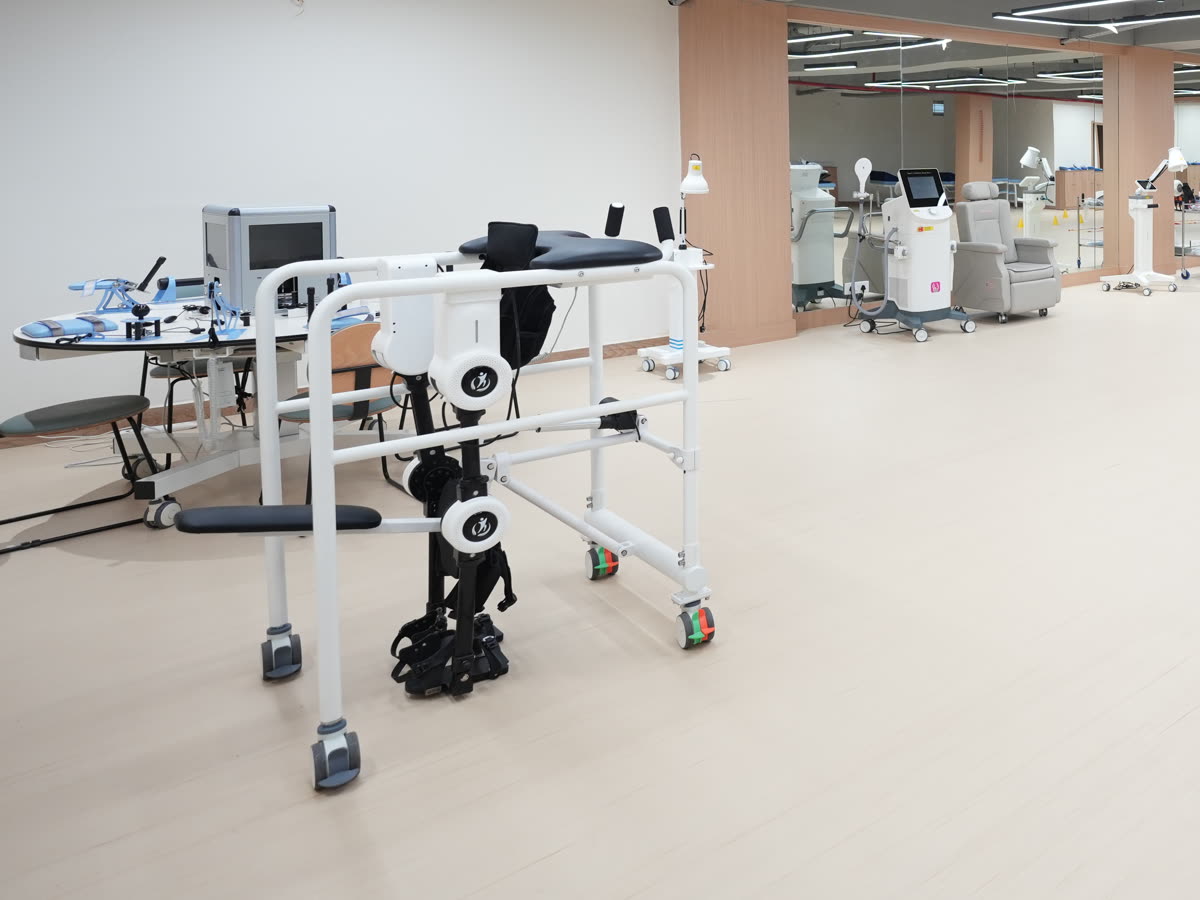
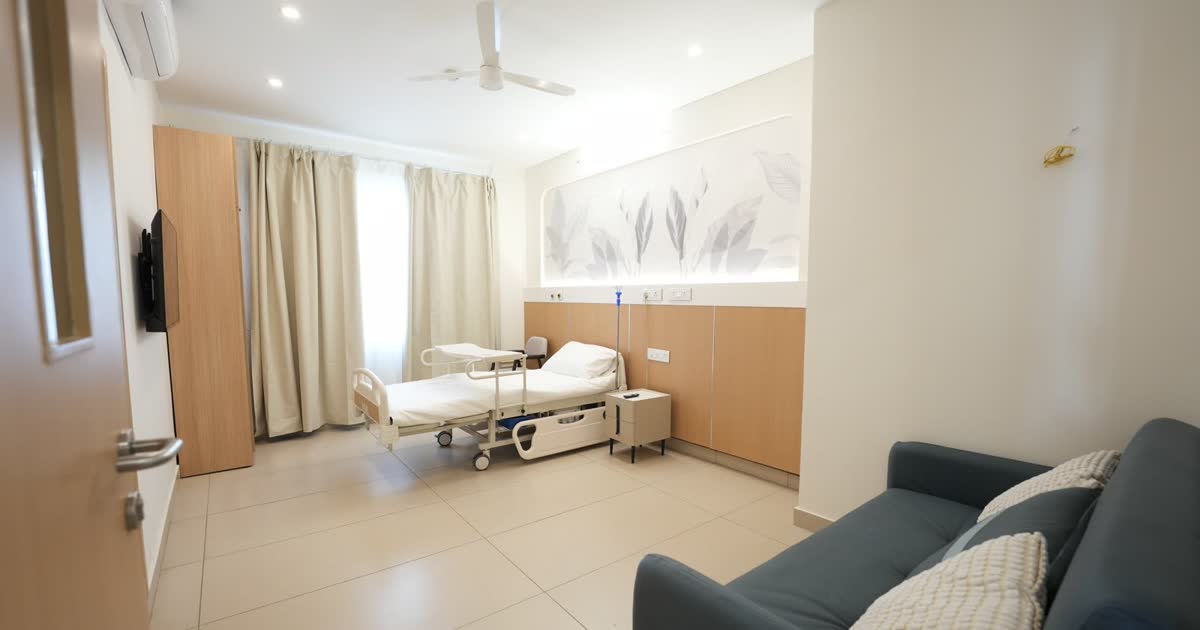
- Inpatient packages. The Essential and Advanced packages both include the room, attender stay, patient meals, duty doctor consultation, 24/7 nursing and caregivers, tube and catheter care, respiratory therapy, daily physiotherapy, gait training, electrotherapy, chest physiotherapy and robotic glove hand therapy. The Advanced package adds a second physiotherapy session each day, robotic gait training, HIEMT, cryotherapy, balance training and occupational therapy.
- Charged separately, and told to you upfront. Speech and swallow therapy, HBOT, rTMS, ICU or HDU care, oxygen and ventilator support, medicines, consumables, investigations and specialist consultations are used only when clinically needed and are billed per session or per day. They are listed on the sheet before admission, not discovered at discharge.
- If needs change, we talk first. If your family member develops a new medical problem that needs something outside the package, we explain why and discuss it with you before it is added.
- Hospital-level cover. Inpatients have 24/7 doctors and a 24/7 emergency response team.
- Help with insurance. Our admissions team verifies your policy coverage and helps with pre-authorisation.
Ask us to walk you through every line of the sheet before you decide. We would rather you understand it fully on day one than be surprised on the last day.
Questions to Ask Any Centre Before Admission
Use this list with every hospital you are considering, including ours:
- Is this quote only a bed charge, or does it include daily therapy?
- Which therapies are included: physiotherapy, occupational therapy, and speech and swallow therapy?
- Are robotic training and other advanced therapies included, or charged per session?
- How many hours of therapy with qualified therapists will my family member get each day, and on how many days a week?
- Is a doctor on site 24/7, and is nursing available round the clock?
- What else could be added to the bill after admission, and will you tell us before it is?
- How will progress be measured and shared with us, and how often?
- Will you help with insurance pre-authorisation and paperwork?
- Can I have all of this in writing before admission?
If a centre cannot answer these clearly, or will only give a verbal quote, treat that as a warning sign. Our 10-point checklist for choosing a neuro rehab hospital covers the clinical questions in more detail.
Does Health Insurance Cover Stroke Rehabilitation?
It depends on your policy. Some policies pay for inpatient rehabilitation as medically necessary hospital treatment; others limit or exclude it. Outpatient (OPD) physiotherapy is generally paid only if your policy includes outpatient cover.
- Read your Customer Information Sheet (CIS). IRDAI requires insurers to give a CIS with every policy, summarising what is covered, the exclusions, sub-limits and waiting periods (IRDAI, 2024).
- Check for a rehabilitation exclusion. Earlier IRDAI standard wording had an exclusion titled "Rest cure, rehabilitation and respite care", covering admissions "primarily for enforced bed rest and not for receiving treatment" (IRDAI, 2020). Active rehabilitation is treatment, not bed rest, but ask your TPA in writing how your policy treats it.
- Know the cashless timelines. IRDAI's 2024 Master Circular requires insurers to decide a cashless authorisation request within one hour, and to grant final discharge authorisation within three hours of the hospital's request (IRDAI, 2024).
SENSE Health works with many major insurance providers and TPA networks. Ask our admissions team to check your policy before you decide.
How to Get Your Written Care Plan From SENSE Health
- Call or WhatsApp +91 96633 34659 to book a free initial consultation, or walk in during OPD hours.
- Bring the paperwork: the discharge summary from the acute hospital, CT or MRI reports, the current medicine list, and your insurance card and policy details.
- Assessment: our team assesses your family member's needs, medical stability and goals, and discusses whether inpatient rehab, outpatient therapy or home care fits best.
- Written package sheet: before admission, we go through the sheet with you, showing which therapies are included and which are charged separately, and you sign it once it has been explained.
- Insurance check: our admissions team verifies your coverage and helps with pre-authorisation.
Still weighing your options? Read our guide to stroke rehabilitation in Bengaluru, or compare home physiotherapy and inpatient rehab.
Talk to Us in Kalyan Nagar Before You Decide
SENSE Health is at AVR Heights, 100 Feet Road, HRBR Layout 1st Block, Kalyan Nagar, Bengaluru 560043, easily accessible from Indiranagar, Banaswadi and Hennur. Families from Kammanahalli, Hebbal, Ramamurthy Nagar and across north-east Bengaluru are welcome to walk in with their questions, their paperwork, and any quote they have from another centre, so you can compare what is actually included.
At your first visit, expect a free consultation, a review of the discharge summary, scans and medicines, and a frank discussion of goals and whether inpatient or home-based care suits your family member. If admission is advised, you receive the written care plan first.
If your family member is still in an acute hospital, call us early so there is time to compare options calmly.
OPD hours: Monday to Saturday, 9 AM to 7 PM.
Call +91 96633 34659, WhatsApp us, email listen@sensehealth.co.in, or get directions.
Sources
- National Institute for Health and Care Excellence. Stroke rehabilitation in adults (NG236). NICE. 2023.
- Krishnamurthy R, Balasubramanium RK, Premkumar PK. Systematic review and meta-analysis of dysphagia and associated pneumonia in patients with stroke from India. American Journal of Speech-Language Pathology. 2022.
- Insurance Regulatory and Development Authority of India. Master Circular on Health Insurance Business (IRDAI/HLT/CIR/PRO/84/5/2024). IRDAI. 2024.
- Insurance Regulatory and Development Authority of India. Master Circular on Standardization of Health Insurance Products (IRDAI/HLT/REG/CIR/193/07/2020). IRDAI. 2020.
This article is for general education and does not replace advice from your own doctor. If symptoms are sudden or severe, call 108 or go to the nearest emergency department.