Stroke can silently disrupt one of the most fundamental human acts: swallowing. Up to 65% of acute stroke patients develop dysphagia — the medical term for difficulty swallowing — according to research published in Dysphagia journal. Left unmanaged, dysphagia leads to aspiration (food or liquid entering the airway), pneumonia, severe malnutrition, dehydration, and significantly prolonged hospital and rehabilitation stays.
At SENSE Health, dysphagia management is an integral part of every stroke rehabilitation admission. Our speech-language pathologists specialise in swallowing assessment, therapy, and safe feeding — protecting nutrition, preventing complications, and working toward oral feeding independence.
What is Dysphagia?
Dysphagia is an impairment in any phase of swallowing — the complex, coordinated sequence of more than 30 muscles working together to move food and liquid safely from mouth to stomach. Stroke disrupts the neural signals that coordinate this process.
Swallowing has three phases, any of which can be affected:
- Oral phase — preparing and moving the bolus (food/liquid) to the back of the mouth
- Pharyngeal phase — triggering the swallow reflex and protecting the airway
- Oesophageal phase — moving the bolus down the oesophagus to the stomach
Most post-stroke dysphagia involves the oral and pharyngeal phases.
Why Dysphagia is Dangerous
Aspiration Pneumonia
When food or liquid enters the airway instead of the oesophagus, bacteria are carried into the lungs — causing aspiration pneumonia, the most serious direct complication of dysphagia. It is the leading cause of death in stroke patients in the weeks following stroke. Research shows stroke patients with dysphagia have a 3× higher risk of pneumonia than those without swallowing impairment.
Silent Aspiration
Critically, up to 40% of post-stroke aspirations are silent — the patient does not cough or show any obvious sign of food entering the airway. This is why clinical screening alone is insufficient; instrumental swallowing assessment is often necessary.
Malnutrition and Dehydration
Swallowing difficulty leads many patients to eat and drink less, rapidly causing malnutrition and dehydration. Both worsen stroke recovery outcomes, impair immune function, and delay all rehabilitation progress.
Dysphagia Assessment at SENSE Health
Early screening and assessment form the foundation of safe management.
Bedside Swallowing Assessment
Our speech-language pathologist performs a structured clinical evaluation including:
- Oral motor assessment (lip, tongue, jaw strength and coordination)
- Vocal quality assessment (a "wet" or gurgly voice suggests pharyngeal residue)
- Trial swallows with graduated consistencies
- Cough reflex testing
Modified Texture Diet
Based on assessment findings, our team prescribes appropriate food textures and liquid consistencies using the International Dysphagia Diet Standardisation Initiative (IDDSI) framework — from Level 0 (thin liquids) to Level 7 (regular). Consistent texture modification significantly reduces aspiration risk while ensuring adequate nutrition.
Nasogastric Tube (NGT) and PEG Tube Management
When oral feeding is unsafe, our nursing and therapy team manages nasogastric tubes (NGT) and PEG (Percutaneous Endoscopic Gastrostomy) tubes to maintain nutrition while swallowing therapy progresses. At SENSE Health, tube feeding is always transitional — the goal is safe return to oral feeding wherever possible.
Dysphagia Treatment
Swallowing Exercises
Evidence-based exercises target the specific muscles and reflexes impaired by stroke:
- Shaker exercise — head-lift against gravity strengthens suprahyoid muscles, critical for airway protection
- Masako manoeuvre — tongue-hold technique for pharyngeal strengthening
- Mendelsohn manoeuvre — prolonged laryngeal elevation to improve upper oesophageal sphincter opening
- Effortful swallow — maximises posterior tongue base contact to clear pharyngeal residue
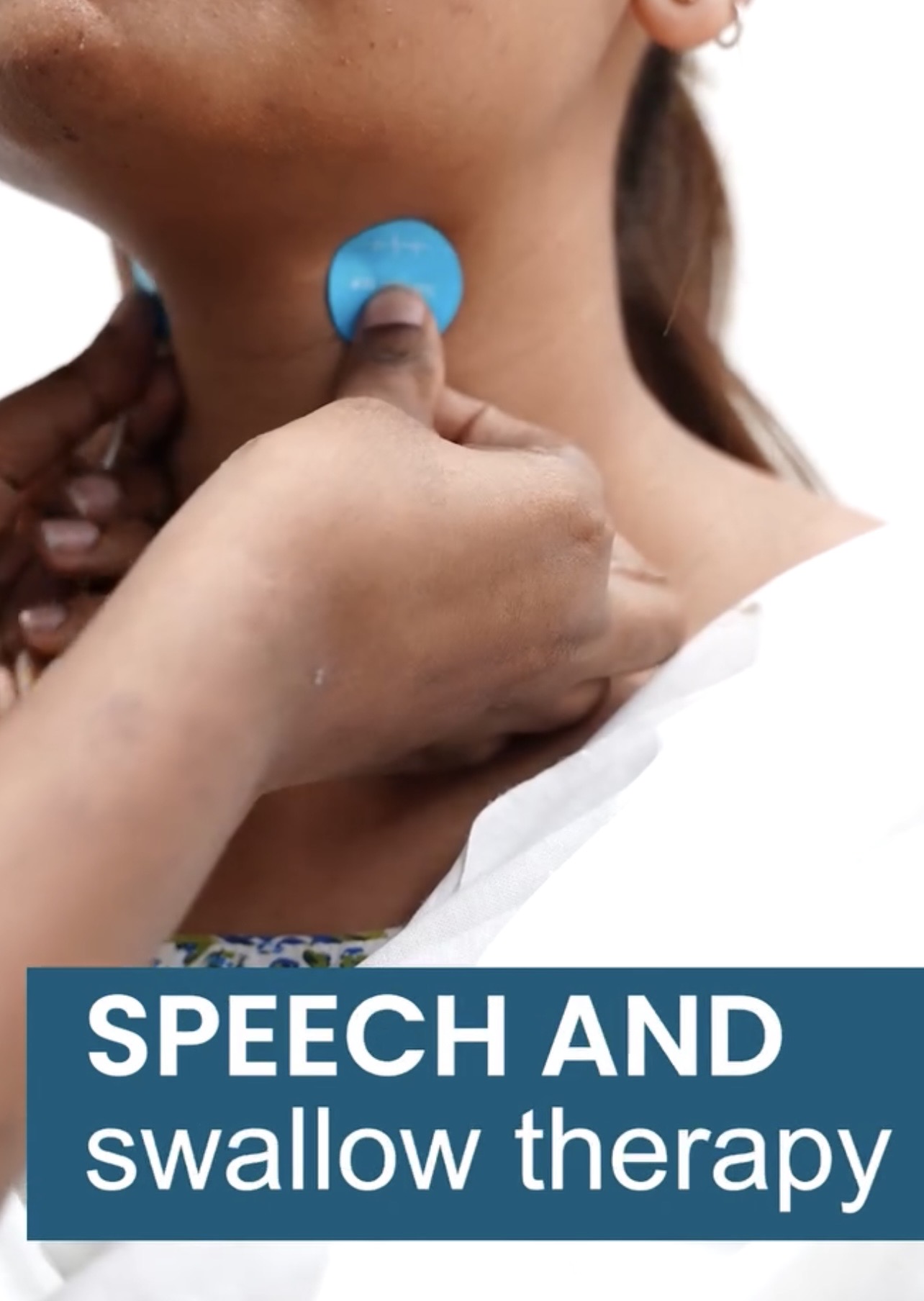
Neuromuscular Electrical Stimulation (NMES/VitalStim)
NMES applied to the swallowing musculature of the throat re-trains and strengthens muscles involved in the pharyngeal swallow. A systematic review in Dysphagia found NMES combined with swallowing exercises produces greater improvement than exercises alone in post-stroke dysphagia.
Thermal-Tactile Stimulation (TTS)
Cold stimulation of the faucial pillars at the back of the mouth primes the swallow reflex — improving trigger latency and reliability. TTS is particularly effective for patients with a delayed or absent swallow reflex.
Compensatory Strategies
When impairment is severe, compensatory strategies protect the airway during swallowing:
- Chin-tuck posture — reduces aspiration risk by narrowing the airway entrance
- Head-turn to weak side — directs bolus down the stronger side in unilateral pharyngeal weakness
- Small bolus sizes — reduces pharyngeal residue and aspiration risk
Nutrition Support
Dysphagia management at SENSE Health is coordinated with our clinical nutritionist, who ensures that modified-texture diets meet full caloric and protein requirements. Protein is critical for muscle repair and neurological recovery — especially in stroke patients where muscle wasting occurs rapidly.
Oral nutritional supplements, texture-modified home recipes, and family education ensure nutrition continuity after discharge.
Recovery Trajectory
Most acute post-stroke dysphagia improves significantly within the first two to four weeks with intensive therapy. Approximately 85% of stroke patients with initial dysphagia recover functional swallowing by three months. However, patients with severe strokes, bilateral damage, or brainstem strokes may have prolonged or permanent dysphagia requiring ongoing management.
At SENSE Health, progress is tracked using validated outcome measures and clinical reassessment — with instrumental evaluation arranged when clinical findings change.
Signs of Dysphagia to Watch For
Contact SENSE Health if your family member after stroke:
- Coughs or chokes during or after eating/drinking
- Has a wet or gurgly voice after swallowing
- Takes a very long time to finish meals
- Has recurrent chest infections or low-grade fever
- Loses weight unexpectedly
- Refuses food or shows anxiety around mealtimes
- Has food or liquid coming from the nose
"A single episode of aspiration can undo weeks of rehabilitation progress. Dysphagia management is not optional — it is the foundation of safe stroke recovery."
— SENSE Health Speech & Language Therapy Team
Book a free consultation for dysphagia assessment and swallowing therapy at SENSE Health, Kalyan Nagar, Bangalore. Call +91 96633 34659 or email listen@sensehealth.co.in.