When a stroke damages the language centres of the brain, the result is aphasia — a condition that impairs the ability to speak, understand speech, read, or write. For many stroke survivors, aphasia is more isolating than physical paralysis: the person inside remains fully aware, yet cannot communicate their thoughts, needs, or feelings.
At SENSE Health, our speech-language therapists specialize in post-stroke aphasia rehabilitation, using evidence-based programs tailored to each patient's specific language profile.
What is Aphasia?
Aphasia is caused by damage to the language-dominant hemisphere of the brain — most commonly the left hemisphere — typically in the frontal, temporal, or parietal lobes. It is not a cognitive or intelligence disorder: people with aphasia understand the world around them but struggle to translate thoughts into language.
According to the [National Aphasia Association](https://www.aphasia.org/), approximately one in three stroke survivors develops aphasia. Yet it remains one of the least-recognised post-stroke conditions.
There are several types of aphasia, each with distinct patterns:
- Broca's aphasia — difficulty producing speech; halting, effortful words with relatively preserved comprehension
- Wernicke's aphasia — fluent but meaningless speech; impaired understanding of spoken or written language
- Global aphasia — severe impairment of all language functions; typical in large left-hemisphere strokes
- Anomic aphasia — difficulty naming objects or finding words; otherwise relatively intact language
Why Early Speech Therapy Matters
The first three to six months after stroke represent the period of greatest neuroplasticity — when the brain is most receptive to rewiring. Intensive speech therapy during this window produces significantly better long-term language outcomes than therapy delayed by months.
A landmark Cochrane review of 57 randomised controlled trials found that speech and language therapy improves communication ability in stroke patients with aphasia compared to no treatment. Higher therapy intensity and frequency are associated with greater gains.
At SENSE Health, aphasia therapy begins as soon as the patient is medically stable — ideally within the first week of admission.
Our Aphasia Rehabilitation Approach
Comprehensive Language Assessment
Every patient receives a detailed assessment using validated tools including the Western Aphasia Battery (WAB) and the Boston Diagnostic Aphasia Examination (BDAE). This identifies the aphasia type, severity, and which language modalities (speaking, listening, reading, writing) are most affected — forming the foundation of the treatment plan.
Constraint-Induced Language Therapy (CILT)
CILT is an intensive, evidence-based approach that restricts compensatory strategies (gestures, writing) and forces verbal communication — promoting maximal use of the damaged language system. Research published in Aphasiology shows CILT produces greater language gains than standard therapy with matched intensity.
Semantic Feature Analysis (SFA)
SFA strengthens word-retrieval networks by prompting patients to describe the properties, function, and associations of target words. This systematic activation of semantic networks rebuilds vocabulary access — particularly effective for anomic aphasia.
Melodic Intonation Therapy (MIT)
For patients with severe Broca's aphasia, MIT uses the rhythm and melody of speech to engage the right hemisphere — activating alternate language pathways. By starting with sung phrases and gradually transitioning to normal speech, MIT helps patients with limited verbal output regain spoken communication.
Augmentative and Alternative Communication (AAC)
When speech recovery is slow, AAC devices and strategies — communication boards, picture symbols, speech-generating apps — ensure patients can continue to communicate their needs, preferences, and emotions throughout recovery. At SENSE Health, AAC is introduced early as a bridge to speech, not a replacement for it.
Family and Caregiver Training
Recovery from aphasia requires a communication-rich environment 24 hours a day. Our therapists train families in Supported Conversation for Adults with Aphasia (SCA) techniques — how to slow down, use visual supports, confirm understanding, and create opportunities for meaningful communication at home.
Technology-Assisted Communication Rehabilitation
SENSE Health integrates technology into aphasia therapy through:
- Computerised aphasia therapy programs for high-repetition practice between sessions
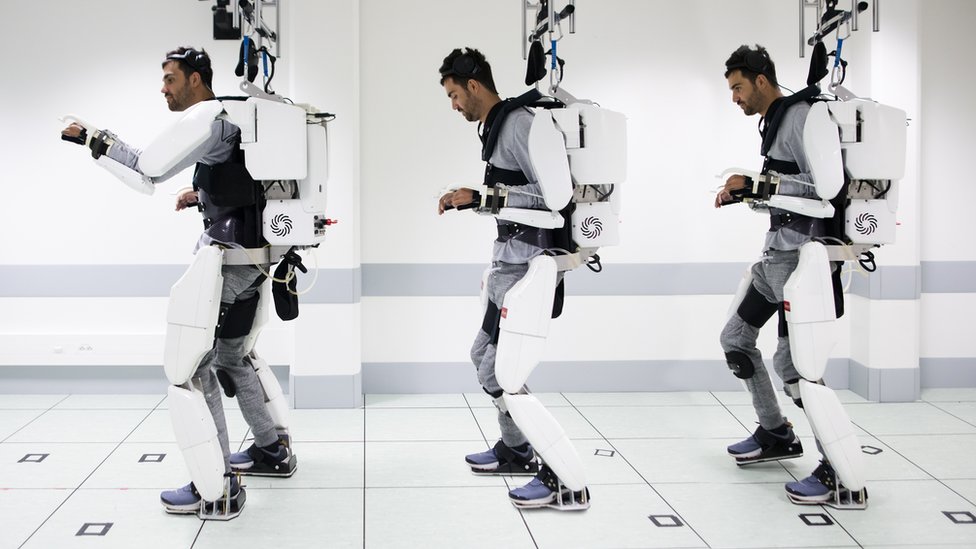
- VR-based social interaction simulations for functional communication training
- App-based word-finding and reading exercises reviewed weekly by therapists
What Recovery Looks Like
Aphasia recovery is highly variable and depends on stroke location, size, age, pre-stroke language ability, and therapy intensity. Some patients regain near-normal language function. Others make significant gains in functional communication even if formal language remains impaired.
Progress milestones commonly observed at SENSE Health:
- Week 1–2: Patient follows simple instructions, responds to yes/no questions
- Week 4–6: Consistent single-word responses, improved comprehension
- Week 8–12: Multi-word utterances, functional conversation in familiar contexts
- Month 4–6: Sentence-level communication, improved reading and writing
Recovery continues beyond six months — particularly with continued therapy and an enriched communication environment.
Aphasia Is Not "Mental Illness"
A common and damaging misconception is that aphasia indicates cognitive impairment or dementia. It does not. Stroke survivors with aphasia often have fully intact thinking, memory (for non-verbal tasks), and social awareness — trapped behind a language barrier.
At SENSE Health, our team works with every patient with dignity and patience, recognising the whole person behind the communication difficulty.
When to Seek Aphasia Rehabilitation
Contact SENSE Health if your family member:
- Speaks in short, halting fragments or cannot produce words
- Uses incorrect words or meaningless sounds
- Has difficulty following spoken instructions
- Cannot read or write as before the stroke
- Understands very little despite appearing awake and alert
Early and intensive intervention dramatically improves the trajectory of aphasia recovery.
"At SENSE Health, we know that behind every case of aphasia is a person with full thoughts, emotions, and a life story. Our job is to rebuild the bridge between that person and the world."
— SENSE Health Speech & Language Therapy Team
Book a free consultation for aphasia rehabilitation at SENSE Health, Kalyan Nagar, Bangalore. Call +91 96633 34659 or email listen@sensehealth.co.in.