The right neuro rehabilitation hospital is one that keeps your family member medically safe around the clock, delivers several hours of skilled therapy a day from a full team, and shows you progress using standard measures. Use the 10-point checklist below on every centre you visit, including ours, and trust what you see on the rehab floor more than any advertisement.
Searching for the "best neuro rehab hospital in Bangalore" brings up long lists and bold claims. After a stroke, head injury, spinal cord injury or a long ICU stay, families often have to decide quickly. These questions work for any hospital, and most can be checked in a single visit.
The 10-Point Checklist at a Glance
| # | Ask this | A reassuring answer sounds like |
|---|---|---|
| 1 | Who manages medical problems at night? | "A duty doctor is on site 24/7, with 24/7 nursing" |
| 2 | Who is on the team? | Physio, OT, speech and swallow, nursing, dietitian, doctor |
| 3 | How many therapy hours a day? | A specific number of hours and days, in writing |
| 4 | How will you measure progress? | Named scales, repeated and shared with you |
| 5 | Will we set goals together? | Regular goal meetings with the family |
| 6 | How do you keep eating safe? | Swallow assessment before food, dietitian input |
| 7 | How do you prevent complications? | Clear routines for falls, pressure sores, chest and clots |
| 8 | What is the evidence for this technology? | An honest answer, including limits |
| 9 | Can I have a written estimate? | Yes, itemised, before admission |
| 10 | How will you prepare us for home? | Family training and a written discharge plan |
1. Round-the-Clock Doctor Cover and Medical Stability
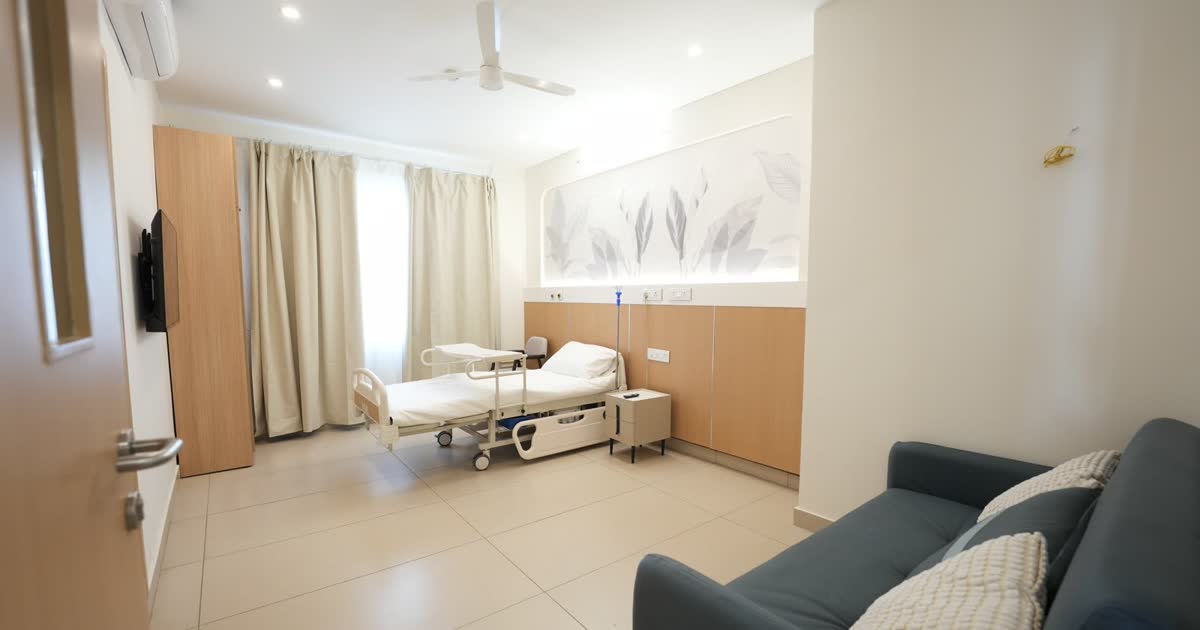
People in early neuro rehabilitation often still have unstable blood pressure, blood sugar, infections, seizures or heart rhythm problems. Ask whether a doctor is physically present at night, how quickly they respond, and what happens if your family member becomes unwell, including the arrangement for transfer to an acute hospital if needed.
2. A Full Multidisciplinary Team
NICE's 2023 stroke rehabilitation guideline lists the core team as doctors specialising in stroke or rehabilitation medicine, nurses, physiotherapists, occupational therapists, speech and language therapists, dietitians, clinical psychologists or neuropsychologists, orthoptists, rehabilitation assistants and social workers (NICE NG236, 2023). Not every centre will have all of these on staff, but ask which professionals will see your family member, how often, and how they share information. Ask too whether a neurologist or rehabilitation physician reviews the plan.
3. Therapy Intensity: Hours a Day, Days a Week
NICE recommends offering needs-based stroke rehabilitation for at least 3 hours a day, on at least 5 days a week, across physiotherapy, occupational therapy and speech and language therapy, for people who can take part. Those who cannot manage this should still be offered the therapy they need at least 5 days a week (NICE NG236, 2023). Ask how many hours of hands-on therapy with qualified therapists your family member will get, and get the answer in writing.
4. Standard Outcome Measures, Shared With You
Good centres measure progress with recognised scales at admission, during the stay and at discharge, and explain the results to the family. The 2026 American Heart Association and American Stroke Association guideline supports routine use of standardised assessments to guide decisions and transitions of care (Richards et al., 2026). Common ones include:
- Functional Independence Measure (FIM): a widely used rating of how much help a person needs in daily function during rehabilitation (Chumney et al., 2010)
- Barthel Index: a short score of independence in basic daily activities, often used alongside FIM (Hsueh et al., 2002)
- Berg Balance Scale: a test of standing balance (Van Criekinge et al., 2024)
- 10-metre walk test: measures walking speed (Van Criekinge et al., 2024)
- Modified Rankin Scale (mRS): a clinician-rated measure of overall disability (Banks and Marotta, 2007)
If a centre cannot tell you how it measures progress, it cannot show you whether therapy is working.
5. Goals Set With the Family
NICE recommends that rehabilitation goals are meaningful to the person, challenging but achievable, set in regular meetings that involve the family where appropriate, given to the person in writing, and reviewed at regular intervals (NICE NG236, 2023). Ask: "What are the goals for the next two weeks, and when will we review them together?"
6. Swallowing and Nutrition Safety
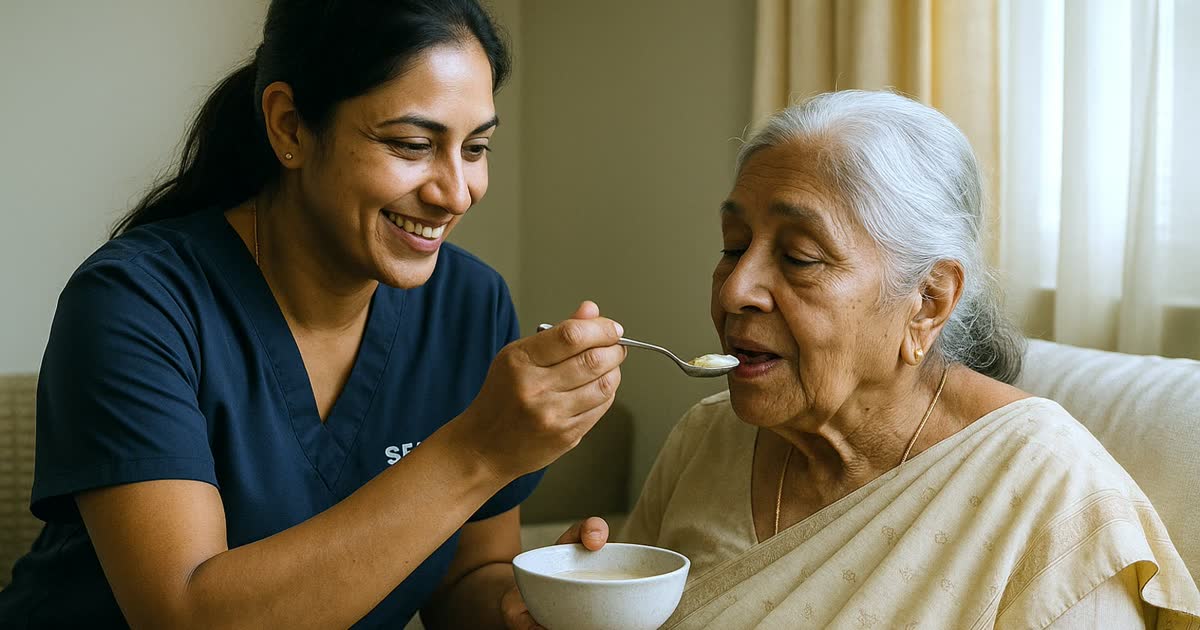
Swallowing problems can follow a stroke or other brain injury, and unsafe swallowing can lead to chest infections. NICE recommends assessing swallowing after stroke and regularly reassessing people with dysphagia who are on modified food and drink (NICE NG236, 2023). Ask who assesses swallowing, whether a dietitian plans meals and tube feeds, and how mealtimes are supervised. Our article on dysphagia after stroke explains warning signs.
7. Preventing Complications
Complications can set recovery back. Ask the nursing team how they prevent and watch for:
- Falls, especially at night and in the bathroom
- Pressure injuries (bed sores), through turning schedules and suitable mattresses
- Aspiration and chest infections during eating and tube feeding
- Blood clots in the legs (deep vein thrombosis)
- Urinary and other infections, including catheter care and hand hygiene
8. Technology as an Evidence-Based Add-On, Not a Miracle
Robotic devices, magnetic stimulation and oxygen therapies can be useful additions to hands-on therapy, but the evidence differs from one technology to another:
- A 2025 Cochrane review found moderate-certainty evidence that people who receive electromechanical-assisted gait training together with physiotherapy are probably more likely to walk independently (Mehrholz et al., 2025). However, the 2026 AHA/ASA guideline does not recommend robot-assisted gait training over task-specific overground walking practice for people who can already walk (Richards et al., 2026).
- For robotic arm training, guidelines differ: NICE advises against offering it as part of an upper-limb programme (NICE NG236, 2023), while the AHA/ASA guideline considers it reasonable for moderate to severe arm weakness in addition to standard therapy (Richards et al., 2026).
- A Cochrane review found no good evidence that hyperbaric oxygen therapy improves outcomes when given in the acute phase of ischaemic stroke, though benefit was not ruled out (Bennett et al., 2014). For rTMS, the AHA/ASA guideline says it may be considered for post-stroke depression, with larger trials still needed (Richards et al., 2026).
Ask what the evidence shows for your family member's specific problem, whether the technology is used alongside therapy rather than instead of it, and how its effect will be measured.
9. Cost and Insurance Transparency
Ask for a written, itemised estimate before admission, and ask what is included, especially whether speech and swallow therapy, robotic training and other advanced therapies are part of it or billed per session later. Karnataka's Private Medical Establishments (KPME) Act, as amended in 2018, requires private medical establishments to provide proper estimates for treatment and states that the final bill shall not exceed them (KPME Act). Ask who will check your insurance policy and help with pre-authorisation. Our guide to stroke rehabilitation cost in Bangalore covers this in detail.
10. Family Training and Discharge Planning
Recovery continues at home. NICE recommends offering training in care, such as helping a person move and dress, to family members who are willing and able (NICE NG236, 2023). Ask when training will start, whether you can attend therapy sessions, and what follow-up is available after discharge, including home physiotherapy. Our comparison of home physiotherapy and inpatient rehab may help.
Registration and Accreditation: What to Check
In Karnataka, a private medical establishment cannot be established or run without registration under the KPME Act, and it must display the Patient's Charter where the public can see it (KPME Act). You can ask to see the registration.
NABH, the National Accreditation Board for Hospitals and Healthcare Providers, operates under the Quality Council of India, and its accreditation is voluntary (NABH). Accreditation shows a hospital has been assessed against an external quality standard. Whether or not a hospital is accredited, use the checklist above.
Red Flags to Watch For
- Promises of a guaranteed recovery, a "cure" or a fixed timeline
- No standard measurement of progress, only "he is improving"
- Therapy delivered mainly by untrained aides rather than qualified therapists
- Pressure to prepay a long package before a proper assessment
- No doctor on site at night
- Technology offered in place of hands-on therapy, without evidence for your family member's condition
- Vague or verbal-only cost estimates
If your family member shows new sudden weakness, facial droop, slurred speech, loss of balance or vision, a seizure or breathing difficulty, call 108 or 112 immediately.
How SENSE Health Measures Against This Checklist
We wrote this checklist to be used on every hospital, including ours. Here is what SENSE Health offers:
- Doctor cover: inpatients have 24/7 doctors and 24/7 nursing. Smart ICU monitoring with Cloudphysician adds 24/7 video and vital-sign monitoring for post-ICU patients, with ICU/HDU support and post-ICU step-down care.
- Team: physiotherapy, occupational therapy, speech-language therapy including aphasia therapy, swallow (dysphagia) therapy, and clinical nutrition and dietetics.
- Safety: fall-prevention and balance therapy, and chest vibration and respiratory therapy.
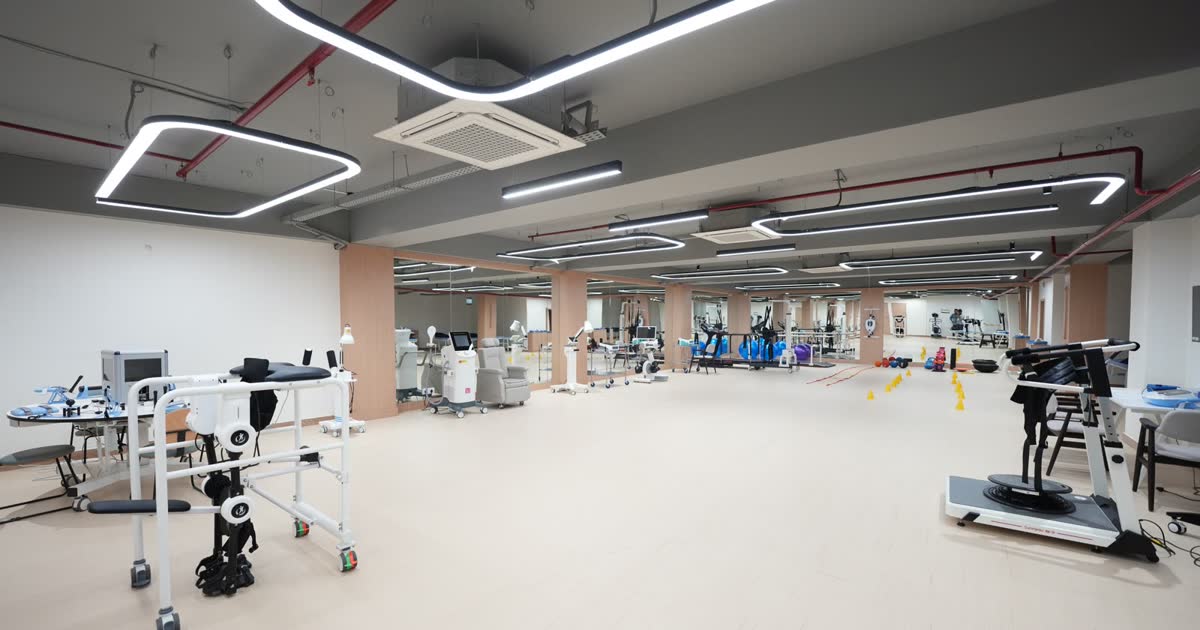
- Technology: robotic-assisted gait training, hyperbaric oxygen therapy, rTMS, high-intensity electromagnetic therapy and neuromuscular electrical stimulation.
- Costs and insurance: a free initial consultation, and a transparent written care plan with full cost details before admission. Our admissions team verifies insurance coverage and helps with pre-authorisation.
- After discharge: home care across Bengaluru, including in-home physiotherapy, nursing and rehabilitation support.
For the rest of the checklist, please ask us directly during your visit. Learn more about SENSE Health.
See the Rehab Floor for Yourself in Kalyan Nagar
The best test of any hospital is a visit. SENSE Health is at AVR Heights, 100 Feet Road, HRBR Layout 1st Block, Kalyan Nagar, Bengaluru 560043, easily accessible from Indiranagar, Banaswadi and Hennur. Families from HRBR Layout, Kammanahalli, Hebbal and RT Nagar are welcome to walk in for a free initial consultation and see the rehabilitation floor before deciding.
Bring with you: the discharge summary, scan reports, current medicine list, insurance details, and this checklist. Ask every question on it.
If your family member is still in an acute hospital, ask us about an inpatient rehabilitation assessment so you can plan the transfer calmly.
OPD hours: Monday to Saturday, 9 AM to 7 PM.
Call +91 96633 34659, WhatsApp us, email listen@sensehealth.co.in, or get directions.
Sources
- National Institute for Health and Care Excellence. Stroke rehabilitation in adults (NG236). NICE. 2023.
- Richards LG, et al. 2026 Guideline for Adult Stroke Rehabilitation and Recovery: a guideline from the American Heart Association and American Stroke Association. Stroke. 2026.
- Chumney D, et al. Ability of Functional Independence Measure to accurately predict functional outcome of stroke-specific population: systematic review. Journal of Rehabilitation Research and Development. 2010.
- Hsueh IP, et al. Comparison of the psychometric characteristics of the functional independence measure, 5 item Barthel index, and 10 item Barthel index in patients with stroke. Journal of Neurology, Neurosurgery and Psychiatry. 2002.
- Van Criekinge T, et al. Standardized measurement of balance and mobility post-stroke: consensus-based core recommendations from the third Stroke Recovery and Rehabilitation Roundtable. Neurorehabilitation and Neural Repair. 2024.
- Banks JL, Marotta CA. Outcomes validity and reliability of the modified Rankin scale: implications for stroke clinical trials. Stroke. 2007.
- Mehrholz J, et al. Electromechanical-assisted training for walking after stroke. Cochrane Database of Systematic Reviews. 2025.
- Bennett MH, et al. Hyperbaric oxygen therapy for acute ischaemic stroke. Cochrane Database of Systematic Reviews. 2014.
- Government of Karnataka. The Karnataka Private Medical Establishments Act, 2007, with amendments including Act 1 of 2018. PRS Legislative Research copy. 2018.
- National Accreditation Board for Hospitals and Healthcare Providers. About NABH. NABH, Quality Council of India.
This article is for general education and does not replace advice from your own doctor. If symptoms are sudden or severe, call 108 or go to the nearest emergency department.