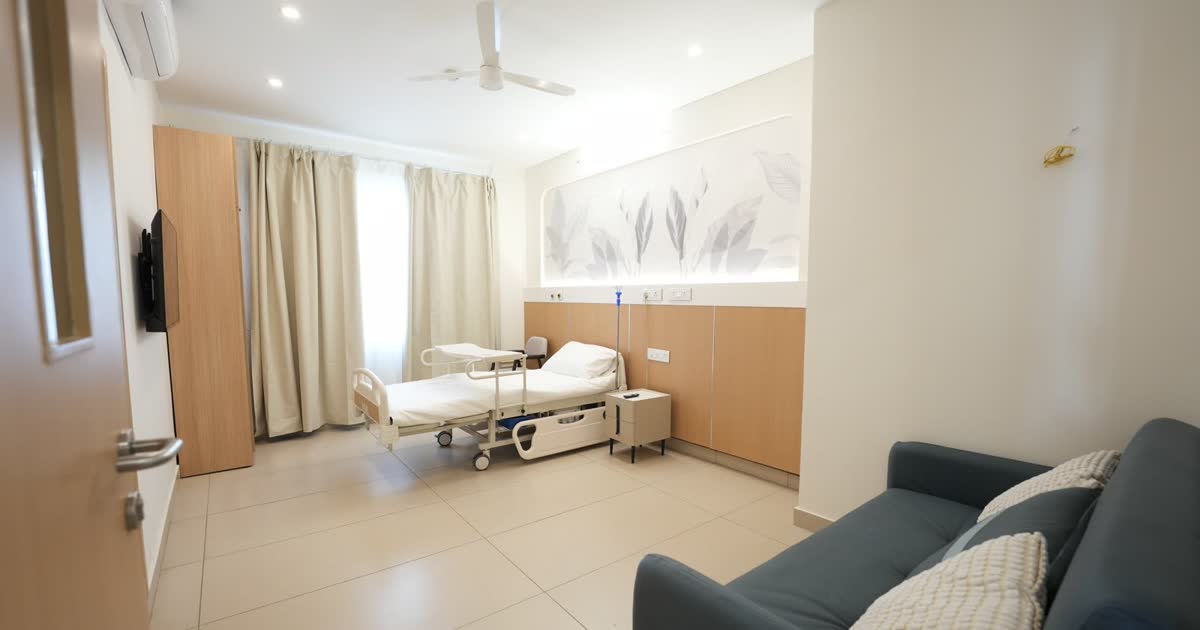
Inpatient rehabilitation is usually the safer first step if your family member needs two people to move, is on tube feeding or has a tracheostomy, or is not yet medically stable. Home physiotherapy can work well for people with a mild to moderate stroke who can move from bed to chair (alone or with help), have a safe home and a caregiver, and can get coordinated therapy from a team rather than a single visiting therapist. Many families use both, one after the other, and the choice should be made with your doctor.
In Bengaluru, this decision often has to be made in a hurry, on the day the acute hospital says your family member is "ready for discharge". This guide lays out the differences, what the research shows, and practical signs that point one way or the other.
What Is the Difference Between Inpatient Rehab and Home Physiotherapy?
Inpatient rehabilitation means staying in a rehabilitation hospital where therapy is the main purpose of the stay. Doctors and nurses manage medical problems around the clock, and the patient gets several therapy sessions a day from different professionals.
Home physiotherapy means a physiotherapist visits your home, usually for one session at a time. Some home programmes also include nursing, occupational therapy or speech therapy; others offer physiotherapy only. Between visits, the family carries out exercises and daily care.
Inpatient Rehab vs Home Physiotherapy: Side by Side
| Factor | Inpatient rehab | Home physiotherapy |
|---|---|---|
| Medical supervision | Doctors and nurses on site, day and night | Family watches; doctor contacted when needed |
| Therapy intensity | Several sessions a day across therapies | Usually one session per visit |
| Team | Physio, OT, speech and swallow, nursing, dietitian | Often physio alone unless others are arranged |
| Equipment and technology | Gym, tilt tables, parallel bars, specialised devices | Portable equipment only |
| Cost structure | Per-day or package; room, nursing, therapy, medicines | Per visit; plus attendant or nurse if needed |
| Family workload | Lower; family learns care before discharge | Higher; family handles most daily care |
| Infection, fall and aspiration risk | Staff monitor, screen swallow and act quickly | Depends on caregiver training and home safety |
| Best suited for | Higher care needs, complex or unstable cases | Medically stable, mild to moderate needs, safe home |
Neither option is "better" in general. The right choice depends on your family member's needs right now, and those needs change over weeks.
What Does the Research Say?
Early supported discharge works for the right patients
Early supported discharge (ESD) means leaving hospital earlier and continuing rehabilitation at home with a coordinated team. A 2017 Cochrane review of 17 trials with 2,422 participants found that ESD shortened hospital stays by about six days and reduced the chance of death or dependency, equal to about five fewer poor outcomes per 100 patients. The benefits were greatest in people with mild to moderate disability and in services with a co-ordinated multidisciplinary team (Langhorne et al., 2017).
The UK's NICE guideline recommends offering ESD to people who can move from a bed to a chair independently or with assistance, as long as a safe and secure environment can be provided. It also says ESD should continue therapy at the same intensity and level of support from skilled staff as in hospital (NICE NG236, 2023).
The key point for families: the research supports team-based rehabilitation at home for selected patients, not a single visiting therapist for everyone.
Therapy intensity matters
NICE recommends offering needs-based rehabilitation for at least 3 hours a day, on at least 5 days a week, covering physiotherapy, occupational therapy and speech and language therapy, for people who can take part. For those who cannot, or do not wish to, the therapy they need should still be offered at least 5 days a week (NICE NG236, 2023). If home therapy means one physiotherapy visit a day, that is well short of this level, especially if speech or arm function also needs work.
Inpatient rehab units are preferred for those who qualify
The 2026 American Heart Association and American Stroke Association guideline recommends that people who qualify for inpatient rehabilitation facility (IRF) care receive it in preference to a skilled nursing facility. It describes IRFs in the US as providing at least 3 hours of therapy 5 days a week, rehabilitation nursing and daily physician visits. The same guideline recommends early supported discharge with multidisciplinary services for people with mild to moderate activity limitations (Richards et al., 2026). These are US care settings, but the principle carries over: match the intensity of care to the person's needs.
Training families helps, but does not replace skilled therapy
The ATTEND trial, run across 14 hospitals in India with 1,250 stroke patients, tested whether training family members to deliver rehabilitation at home would improve recovery. At 6 months, 47% of patients in both groups were dead or dependent, so family-led rehabilitation was no better than usual care (ATTEND Collaborative Group, 2017). Caregiver training is still important for safe daily care, and NICE recommends offering it, but on its own it is not a substitute for skilled, team-based therapy.
Who Should Start With Inpatient Rehab?
This is general guidance, not a rule. Your treating doctor should decide. Inpatient rehabilitation is often the safer start if your family member:
- Needs two people to get out of bed, stand or move to a chair
- Is on tube feeding, or the swallow has not yet been assessed as safe
- Has a tracheostomy or needs frequent suctioning
- Has blood pressure, blood sugar, heart rhythm or seizures that are not yet well controlled
- Has repeated chest or urine infections, or pressure sores
- Has had falls, or keeps trying to get up unsafely
- Is confused, agitated or wandering
- Has no trained caregiver available at home day and night
- Lives in a home with stairs and no lift, or an unsafe bathroom
- Needs intensive work on several problems at once, such as walking, arm use, speech and swallowing
Who Can Do Well With Home Physiotherapy?
Home-based rehabilitation is more likely to work if your family member:
- Is medically stable, with a doctor the family can reach
- Can move from bed to chair alone or with one helper
- Eats and drinks safely, or has a texture plan set by a speech and swallow therapist
- Has a caregiver who is willing and able to be trained
- Lives in a home that is safe to move around, or can be made safe
- Has mild to moderate difficulties, mainly with walking or strength
- Can get other therapists (occupational therapy, speech therapy, nursing) at home if needed
Making Home Physiotherapy Work in a Bengaluru Home
If you choose home care, a few steps make a real difference:
- Agree on written goals with the therapist, such as "walk to the bathroom with a stick", and review them every few weeks.
- Ask for the full team, not just physio. If speech, swallowing, arm use or memory is affected, ask for occupational therapy and speech therapy too.
- Get trained. NICE recommends offering families training in care, for example how to help a person move and dress safely (NICE NG236, 2023).
- Make the home safer. Clear floors, add grab bars in the bathroom, use a firm chair with armrests and a night light, and plan around stairs and apartment lifts.
- Keep a simple log of walking distance, falls, meals and mood to share with the therapist and doctor.
Call 108 or 112 immediately for new sudden weakness, facial droop, slurred speech, severe headache, loss of balance or vision, a seizure, or breathing difficulty.
Contact your doctor promptly for fever, coughing during meals, new confusion, any fall, or a painful, swollen calf.
The Common Path: Inpatient First, Then Home
For many families, the answer is not "either-or" but "first one, then the other". A typical path is a period of inpatient rehabilitation while medical needs are high and intensive therapy is needed, followed by home physiotherapy and nursing once the person is safer to manage at home. Good discharge planning includes family training, home advice and a clear plan for who visits and when.
SENSE Health offers both ends of this path. Inpatients have 24/7 doctors and 24/7 nursing, with physiotherapy, occupational therapy, speech-language therapy, swallow therapy and clinical nutrition under one roof. Our home care team provides in-home physiotherapy, nursing and rehabilitation support across Bengaluru. See our rehabilitation services and senior care and home support.
If cost is part of the decision, our guide to stroke rehabilitation cost in Bangalore explains why a low bed charge is not the full price of rehabilitation, and our first 90 days after stroke checklist helps you plan the weeks ahead.
Not Sure Which to Choose? Visit Us in Kalyan Nagar
SENSE Health is at AVR Heights, 100 Feet Road, HRBR Layout 1st Block, Kalyan Nagar, Bengaluru 560043, easily accessible from Indiranagar, Banaswadi and Hennur. Families from Kammanahalli, Hebbal, Horamavu and nearby areas can walk in for a free initial consultation.
What to bring:
- The discharge summary and CT or MRI reports from the acute hospital
- The current medicine list
- A note of how your family member moves, eats and communicates now
- Photos of the stairs, bathroom and bedroom at home, if you are considering home care
- Insurance card and policy details
We will talk through whether inpatient rehabilitation, outpatient therapy or home care suits your family member now, and how the plan might change. If admission is advised, you receive a transparent written care plan with full cost details before admission, and our admissions team can check your insurance policy.
OPD hours: Monday to Saturday, 9 AM to 7 PM.
Call +91 96633 34659, WhatsApp us, email listen@sensehealth.co.in, or get directions.
Sources
- Langhorne P, Baylan S, Early Supported Discharge Trialists. Early supported discharge services for people with acute stroke. Cochrane Database of Systematic Reviews. 2017.
- National Institute for Health and Care Excellence. Stroke rehabilitation in adults (NG236). NICE. 2023.
- Richards LG, et al. 2026 Guideline for Adult Stroke Rehabilitation and Recovery: a guideline from the American Heart Association and American Stroke Association. Stroke. 2026.
- ATTEND Collaborative Group. Family-led rehabilitation after stroke in India (ATTEND): a randomised controlled trial. Lancet. 2017.
This article is for general education and does not replace advice from your own doctor. If symptoms are sudden or severe, call 108 or go to the nearest emergency department.