After stroke, arm weakness is the most common and most disabling motor impairment — affecting up to 80% of survivors. Whether it presents as complete paralysis (hemiplegia) or partial weakness (hemiparesis), loss of arm and hand function strips independence from everyday life: dressing, feeding, personal hygiene, and work all rely on functional upper limbs.
The arm is notoriously harder to rehabilitate than the leg. Yet with the right combination of intensity, technology, and repetition, remarkable recovery is achievable — even years after stroke.
At SENSE Health, our upper limb rehabilitation program uses robotics, neuromuscular stimulation, and constraint-induced therapy to rebuild arm and hand function through the science of neuroplasticity.
Why the Hemiplegic Arm is Hardest to Recover
Several factors make arm recovery more challenging than leg recovery after stroke:
- Greater cortical representation: The hand and wrist require disproportionately large areas of motor cortex — more cortical tissue means larger areas of potential damage
- Distal weakness is more severe: The fingers and wrist recover less reliably than the shoulder and elbow, because distal muscles are more dependent on direct cortical control (corticospinal tract)
- "Learned non-use": When early arm movement attempts fail, the brain begins to suppress the affected arm — reducing cortical drive further. This creates a vicious cycle where the arm gets progressively less input
- Spasticity: Flexor spasticity — the characteristic bent-arm posture after stroke — is common and blocks normal movement if untreated
How Neuroplasticity Drives Arm Recovery
The brain retains remarkable capacity for reorganisation after injury. Every time a stroke survivor practices a movement — even an attempted, incomplete movement — surviving neurons receive activation signals that drive the rewiring of motor pathways.
The key insight from three decades of neuroplasticity research: repetition, intensity, and specificity drive recovery. Patients who receive high-repetition, task-specific upper limb training recover more function than those who receive standard care — regardless of time since stroke.
This is why intensity matters. A typical physiotherapy session may include 30–50 movement repetitions. Technology-driven rehabilitation delivers hundreds to thousands of repetitions per session.
Upper Limb Rehabilitation at SENSE Health
Robotic Hand Rehabilitation
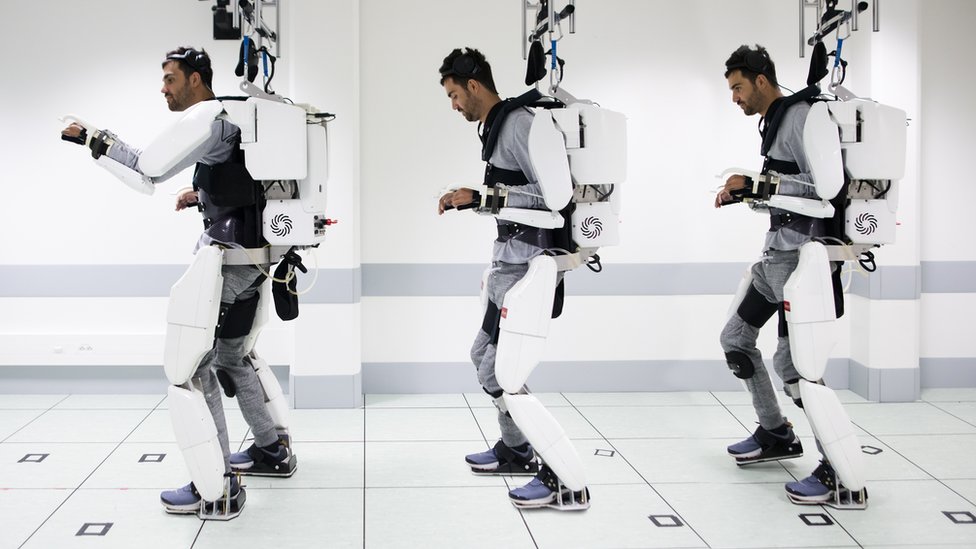
SENSE Health uses robotic hand and wrist rehabilitation systems to guide precise, repetitive movements of the fingers, hand, and wrist — the most difficult segments to recover. Robotic systems:
- Provide assisted movement even when voluntary movement is absent
- Deliver consistent, thousands of repetitions per session
- Adjust resistance to patient performance in real-time
- Provide biofeedback to engage the patient's active attention
Research shows robotic upper limb therapy produces greater gains in arm function than dose-matched conventional therapy in the subacute phase.
Constraint-Induced Movement Therapy (CIMT)
CIMT is one of the most evidence-based stroke rehabilitation interventions available. It works by:
- Restraining the unaffected arm with a padded mitt for up to 90% of waking hours
- Forcing intensive use of the affected arm through structured, functional tasks
- Targeting learned non-use — directly reversing the cortical suppression cycle
Landmark CIMT trials show lasting functional improvements in both acute and chronic stroke — including patients years post-stroke. At SENSE Health, modified CIMT is adapted to each patient's severity and tolerance.
Neuromuscular Electrical Stimulation (NMES)
NMES delivers electrical impulses to the weakened muscles of the forearm and hand, producing muscle contractions and activating sensorimotor pathways. When combined with attempted voluntary movement (a technique called EMG-triggered NMES), it dramatically amplifies the cortical signal associated with each movement attempt.
Cochrane reviews confirm that NMES significantly improves upper limb motor function after stroke, with greatest benefits when the patient attempts movement during stimulation.
rTMS for Upper Limb Recovery
Repetitive Transcranial Magnetic Stimulation (rTMS) modulates the brain circuits driving arm recovery. After stroke, the damaged hemisphere becomes under-activated while the healthy hemisphere over-inhibits it. Low-frequency rTMS applied to the healthy hemisphere reduces this inhibition — unblocking the damaged hemisphere's recovery.
rTMS at SENSE Health is applied immediately before physiotherapy sessions to maximise the brain's window of plasticity — a protocol supported by randomised controlled trial evidence.
Mirror Therapy
Mirror therapy uses a mirror to create a visual illusion that the affected arm is moving normally. This visual feedback activates motor cortex in the damaged hemisphere — driving neuroplasticity without requiring voluntary movement. Research shows mirror therapy improves both motor function and pain in hemiplegic arm rehabilitation.
It is particularly valuable in the early stages when voluntary arm movement is minimal or absent.
Task-Specific Functional Training
Upper limb recovery must ultimately translate to real-world tasks. SENSE Health's occupational therapists provide structured training in:
- Activities of Daily Living (ADL): dressing, feeding, grooming, bathing
- Fine motor tasks: pen grip, button fastening, phone use, key turning
- Bimanual coordination: tasks requiring both hands working together
- Home modifications: adaptive equipment to maintain independence during recovery
Managing Spasticity in the Arm
Flexor spasticity — the bent elbow, flexed wrist, and curled fingers seen in many stroke survivors — is a major barrier to arm recovery. At SENSE Health, spasticity is managed through:
- HIEMT (High-Intensity Electromagnetic Therapy): reciprocal inhibition to neurologically reduce tone (see our dedicated spasticity article)
- Serial casting: progressive casting of wrist and hand to lengthen spastic muscles
- Botulinum toxin (Botox): arranged in coordination with our neurologists to reduce focal spasticity
- Positioning and splinting: preventing contracture formation between therapy sessions
What Does Recovery Look Like?
Recovery timelines vary widely depending on stroke severity, location, and rehabilitation intensity. Broadly:
- Week 1–4: Shoulder and elbow movement may begin to return in incomplete injuries
- Month 1–3: Greatest neuroplasticity window — intensive therapy produces maximum gains
- Month 3–6: Continued significant gains with sustained intensive programs
- After 6 months: Recovery continues — chronic stroke patients benefit from intensive programs
At SENSE Health, we have seen patients years post-stroke make meaningful upper limb gains with our technology-driven approach. The brain does not stop reorganising at an artificial deadline.
When to Start
The answer is simple: immediately. The evidence overwhelmingly supports early, intensive upper limb rehabilitation beginning within the first days of stroke, continued intensively through the first six months, and maintained beyond.
If your family member's arm has not recovered despite months of conventional physiotherapy, an intensive program at SENSE Health may unlock further progress.
"The hemiplegic arm is not a lost cause. With thousands of repetitions, the right technology, and the patience of a committed team, remarkable recovery is possible — even years after stroke."
— SENSE Health Upper Limb Rehabilitation Team
Book a free consultation for upper limb and hemiplegic arm rehabilitation at SENSE Health, Kalyan Nagar, Bangalore. Call +91 96633 34659 or email listen@sensehealth.co.in.