Hyperbaric Oxygen Therapy
(HBOT) in Bangalore
SENSE Health, a dedicated stroke and neuro rehabilitation hospital in Bangalore, offers Hyperbaric Oxygen Therapy (HBOT), in which patients breathe 100% oxygen in a pressurised chamber. For stroke and brain injury, HBOT is an add-on to rehabilitation, and its benefit is still being studied.
Animal (pre-clinical) studies summarised in a 2020 review suggest HBOT may support neuroplasticity, cerebral angiogenesis, and nerve fibre regeneration after ischaemic stroke. This has not yet been proven in patients.
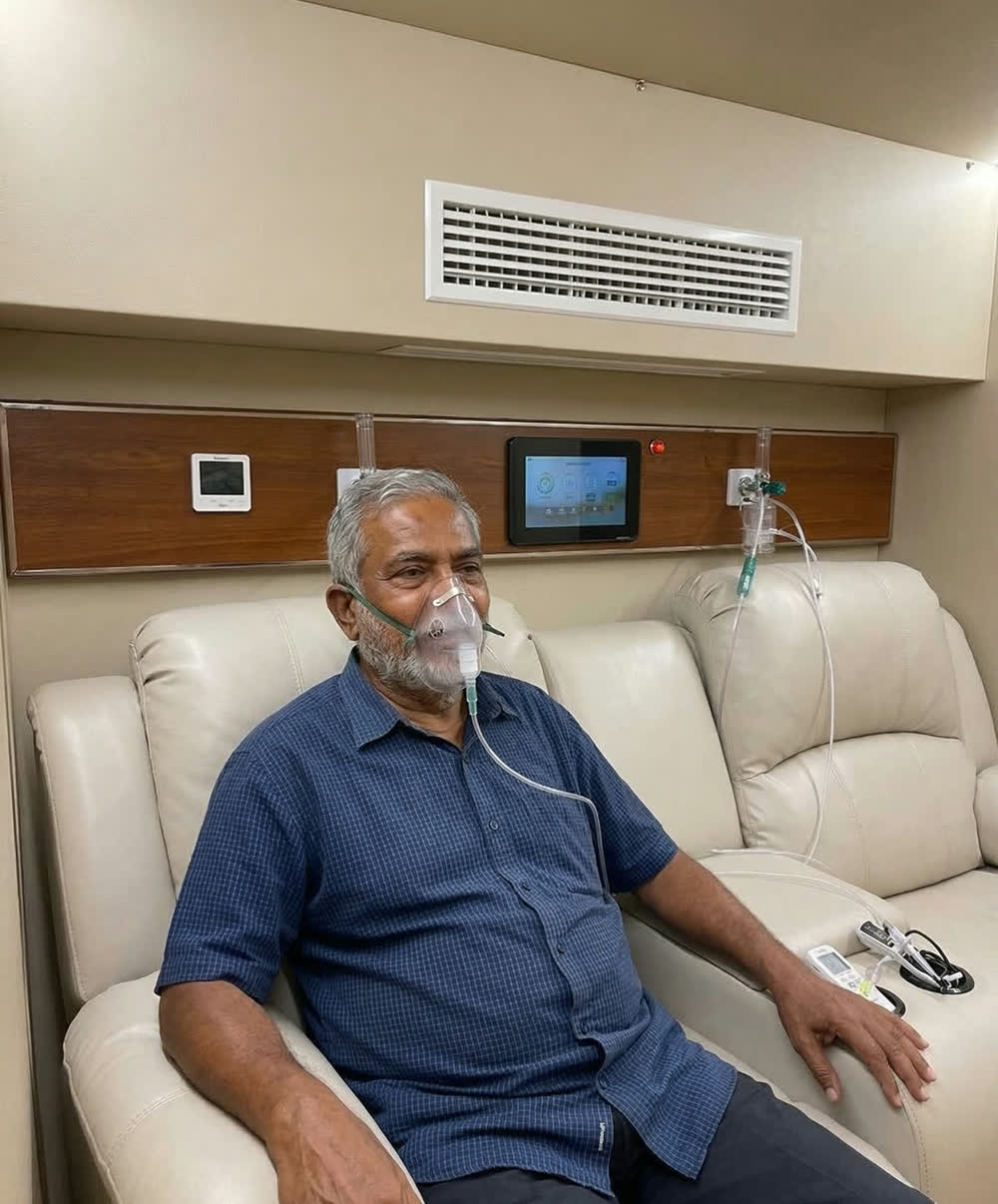
What Is HBOT and How Does It Work?
During HBOT, the patient sits or lies inside a pressurised chamber and breathes 100% pure oxygen — usually at 2 to 3 atmospheres absolute (ATA). Under normal conditions, oxygen is carried almost entirely by haemoglobin in red blood cells. Under elevated pressure, oxygen dissolves directly into blood plasma, cerebrospinal fluid, and interstitial fluid — dramatically increasing the amount of oxygen delivered to tissues.
For stroke and neurological patients, this matters because damaged brain tissue — the ischaemic penumbra — often survives in a state of reduced function due to insufficient oxygen supply. The idea behind HBOT is that extra oxygen may help this tissue recover, but clinical trials have not yet shown a clear benefit.
A 2020 review in Biomolecules (Cozene et al.) describes animal studies in which HBOT supported neuroplasticity, new blood vessel growth and nerve fibre regeneration after ischaemic stroke. The same review notes that human trials have shown consistent safety but inconsistent results, and that more randomised trials are needed.
What the Research Shows
A 2024 meta-analysis of 8 trials (493 patients with acute ischaemic stroke) found fewer adverse events by the end of treatment (4 trials; OR = 0.42, p = 0.03), but no clear improvement in stroke severity (NIHSS) or daily activities (Barthel index).
Source: BMC Neurology 2024 (Li et al.)Pre-clinical studies show HBOT reduces oxidative stress, inflammation, and neural apoptosis while promoting neuroplasticity, angiogenesis, and nerve fibre regeneration post-stroke. Not yet proven in patients.
Source: Biomolecules 2020 review (Cozene et al.)A 2013 trial of 59 patients 6–36 months after stroke reported better neurological function after 40 HBOT sessions, but it had no sham (placebo) group. A 2023 single-patient case report (no control group; some authors work for an HBOT company) also described hand improvement. Larger blinded trials are needed.
Source: PLoS One 2013 (Efrati et al.); Frontiers in Neurology 2023 (Catalogna et al.)Sources: PMC — HBOT in Acute Ischaemic Stroke Meta-Analysis (2024) · Biomolecules (2020) — HBOT as a Stroke Therapeutic, review of mainly animal studies · Frontiers in Neurology (2023) — single-patient case report · PLoS One (2013) — Efrati et al. · Cochrane (2014) — HBOT for acute ischaemic stroke
Conditions HBOT May Help at SENSE Health
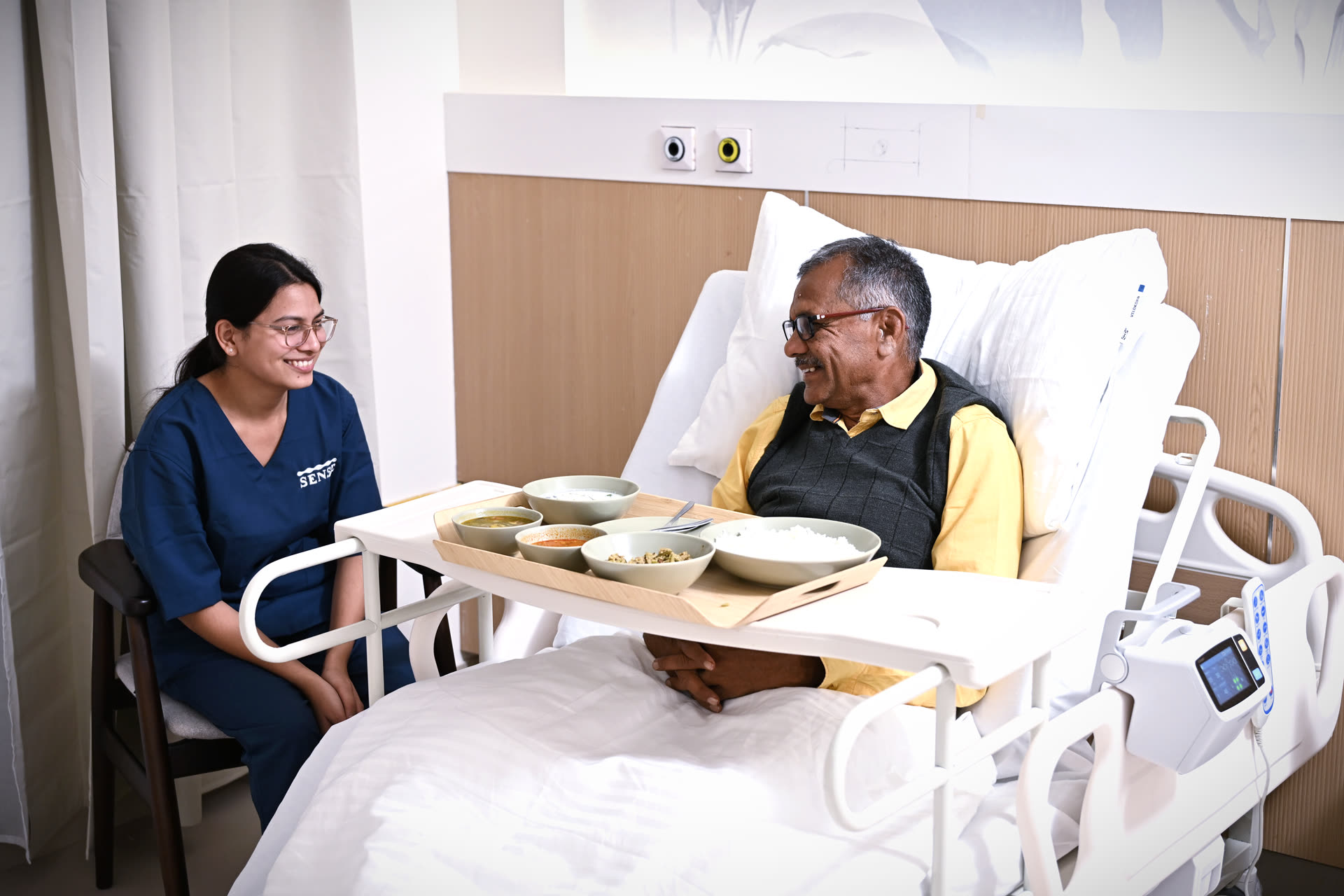
HBOT at SENSE Health, Bangalore
At SENSE Health, HBOT is integrated into a comprehensive rehabilitation programme — not offered in isolation. We combine it with Robotic Gait Training (RAGT), rTMS brain stimulation, physiotherapy, occupational therapy, and speech therapy, so that HBOT supports, rather than replaces, active therapy.
- →Medically supervised HBOT sessions with trained clinical staff
- →Can be combined with RAGT and rTMS when clinically appropriate
- →Personalised protocols based on diagnosis, phase of recovery, and goals
- →Available for inpatients (24/7 care) and outpatients
- →Located at AVR Heights, 100 Feet Road, HRBR Layout 1st Block, Kalyan Nagar, Bengaluru
Frequently Asked Questions
What is Hyperbaric Oxygen Therapy (HBOT)?
HBOT involves breathing 100% pure oxygen inside a pressurised chamber. The increased pressure allows oxygen to dissolve directly into blood plasma at much higher concentrations, so more oxygen reaches the tissues. Whether this helps brain tissue recover after stroke is still being studied.
How does HBOT help stroke recovery?
It may help some people, but HBOT is not yet a standard, guideline-recommended stroke treatment. A Cochrane review of 11 trials (705 people) found no good evidence that HBOT improves outcomes in acute ischaemic stroke, though benefit was not ruled out. In chronic stroke, a trial of 59 patients from one centre reported improvements after 40 sessions, but it had no sham (placebo) group (Efrati et al., 2013). Animal (pre-clinical) studies suggest HBOT may support brain repair, but this has not been proven in patients.
Is HBOT safe for stroke patients?
A 2024 meta-analysis of 8 trials with 493 patients with acute ischaemic stroke (Li et al., BMC Neurology) found fewer adverse events with HBOT by the end of treatment (4 trials; OR = 0.42, p = 0.03), but no difference over follow-up of up to 6 months. The most common side effects of HBOT are ear and sinus pressure and temporary short-sightedness; seizures are rare (see our HBOT safety guide). Evidence for functional benefit is still limited, so we use HBOT as an add-on to rehabilitation after individual assessment.
When is HBOT most effective for stroke?
The best timing is not known. Animal studies suggest the first hours after stroke may matter most, but a Cochrane review found no good evidence of benefit in acute ischaemic stroke, and studies in chronic stroke are small and not placebo-controlled. At SENSE Health, the timing is determined by your clinical team based on your individual condition.
Where can I get HBOT in Bangalore?
SENSE Health, a dedicated stroke and neuro rehabilitation hospital, offers HBOT alongside RAGT and rTMS. Located at AVR Heights, 100 Feet Road, HRBR Layout 1st Block, Kalyan Nagar, Bengaluru 560043. Call +91 9663334659.
“I Have Completed All Five Sessions”
His son brought him to SENSE Health with paralysis. His rehabilitation included hyperbaric oxygen therapy (HBOT), along with therapy and close care from our team.
“The first two times, I came out thinking, ‘I won’t do it anymore.’ But now everything is going very well, and I have completed all five sessions.”Read his story →
Start HBOT Therapy in Bangalore
Book a free consultation at SENSE Health, Kalyan Nagar to see if HBOT is right for your recovery.
WhatsApp Us Call +91 96633 34659