Robotic Gait Training
in Bangalore (RAGT)
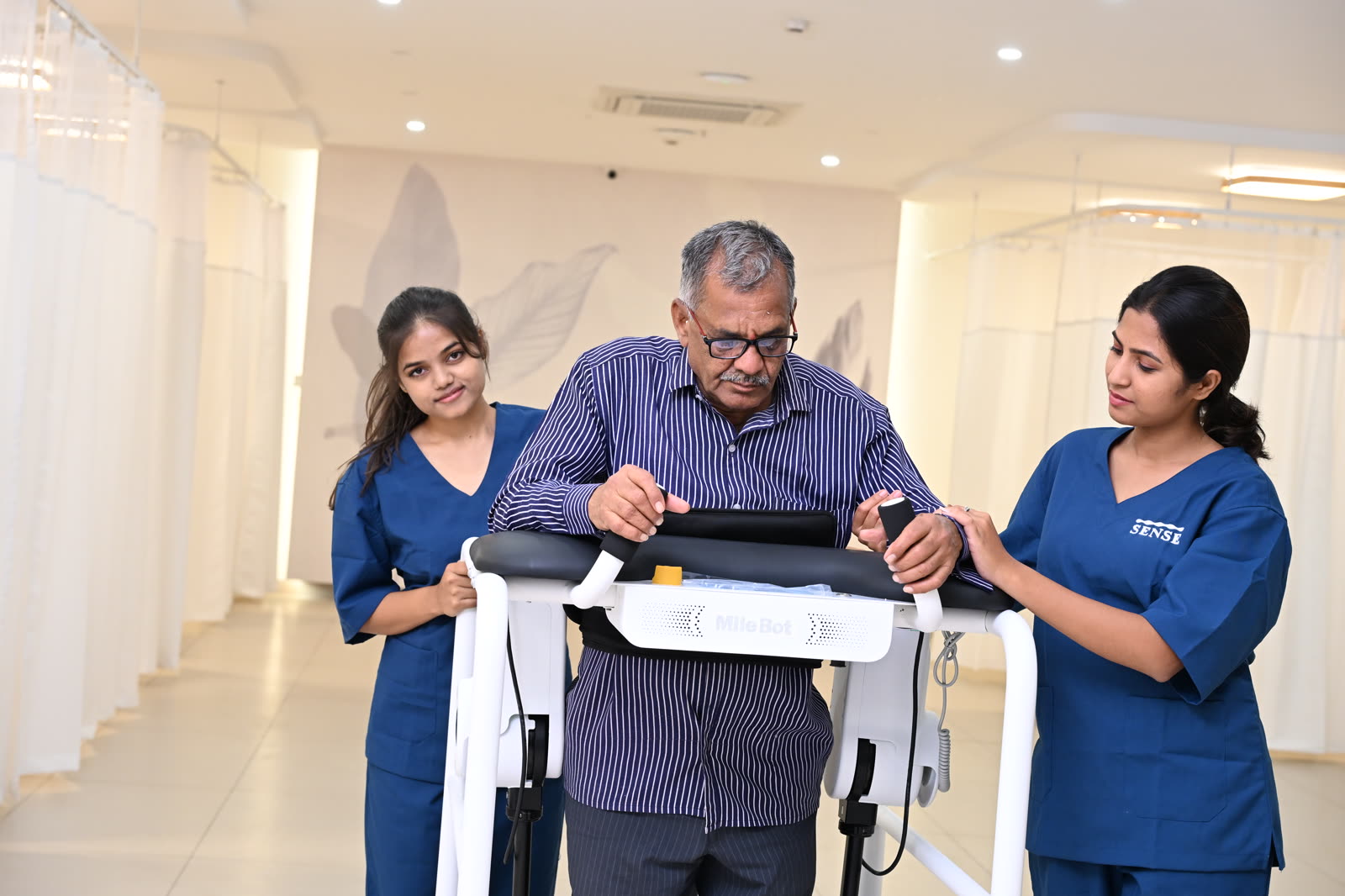
SENSE Health is one of the few dedicated stroke and neuro rehabilitation hospitals in Bangalore offering Robotic-Assisted Gait Training (RAGT) — a robot-guided walking therapy, used alongside physiotherapy, that gives many repeated, precisely guided steps per session to help people relearn walking after stroke, spinal cord injury and other neurological conditions.
A 2025 meta-analysis of 23 randomised controlled trials (907 patients, Journal of Clinical Medicine) found that combining RAGT with conventional rehabilitation significantly improved gait function, speed, balance, and daily living activities compared to conventional therapy alone.
What Is Robotic-Assisted Gait Training?
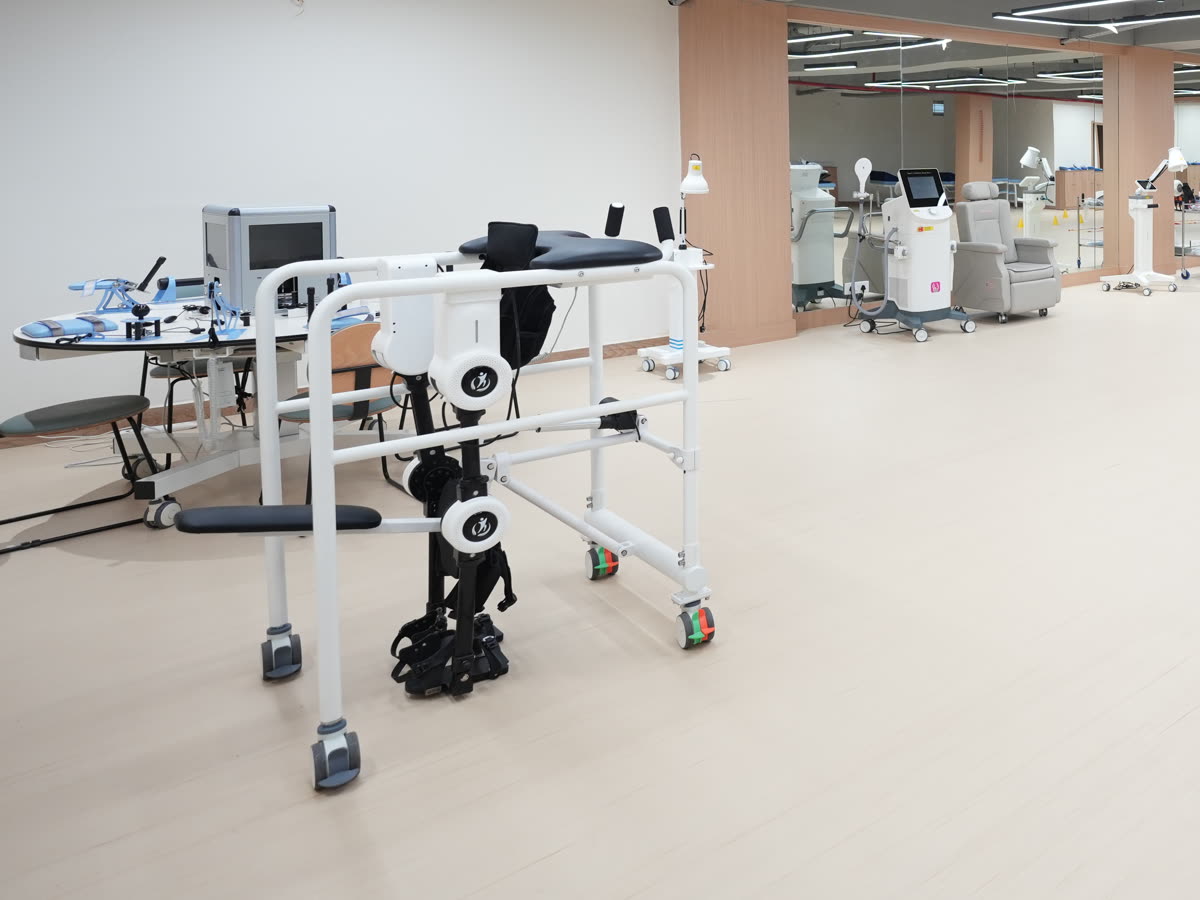
Robotic-Assisted Gait Training uses a powered exoskeleton worn on the legs to guide patients through precise, repetitive walking movements. The robot supports body weight while moving the limbs through a normal gait pattern — delivering hundreds of consistent, correct steps that the patient may not yet be able to perform independently.
This repetitive, high-intensity practice is thought to support neuroplasticity — the brain's ability to form new neural pathways — helping the nervous system relearn walking patterns. How much a person recovers depends on their injury and the rest of their rehabilitation.
Unlike conventional physiotherapy, which is limited by therapist fatigue, RAGT delivers a consistent, high-repetition training stimulus with less therapist fatigue, so more walking practice can fit into each session.
What the Clinical Evidence Shows
A 2025 meta-analysis found RAGT + conventional rehab significantly improved gait function (SMD 0.51, p=0.001), gait speed (SMD 0.47, p=0.010), and balance (MD 4.58, p<0.001).
Source: J Clin Med 2025Activities of daily living scores improved significantly (SMD 0.35, p=0.001) in patients receiving RAGT alongside conventional rehabilitation.
Source: J Clin Med 2025In the 2025 meta-analysis, gains in walking speed and balance were most pronounced in trials of 15 or fewer sessions; a 2024 review of 24 trials in subacute stroke found the clearest gains with 4-week programmes. The best number of sessions is not yet known.
Source: J Clin Med 2025; J NeuroEng Rehabil 2024Sources: Lee & Kim, J Clin Med 2025 — RAGT in Stroke Rehabilitation (meta-analysis) · Hu et al., J NeuroEng Rehabil 2024 — RAGT in Subacute Stroke (meta-analysis) · Mehrholz et al., Cochrane Review 2025
Who Can Benefit from RAGT in Bangalore?
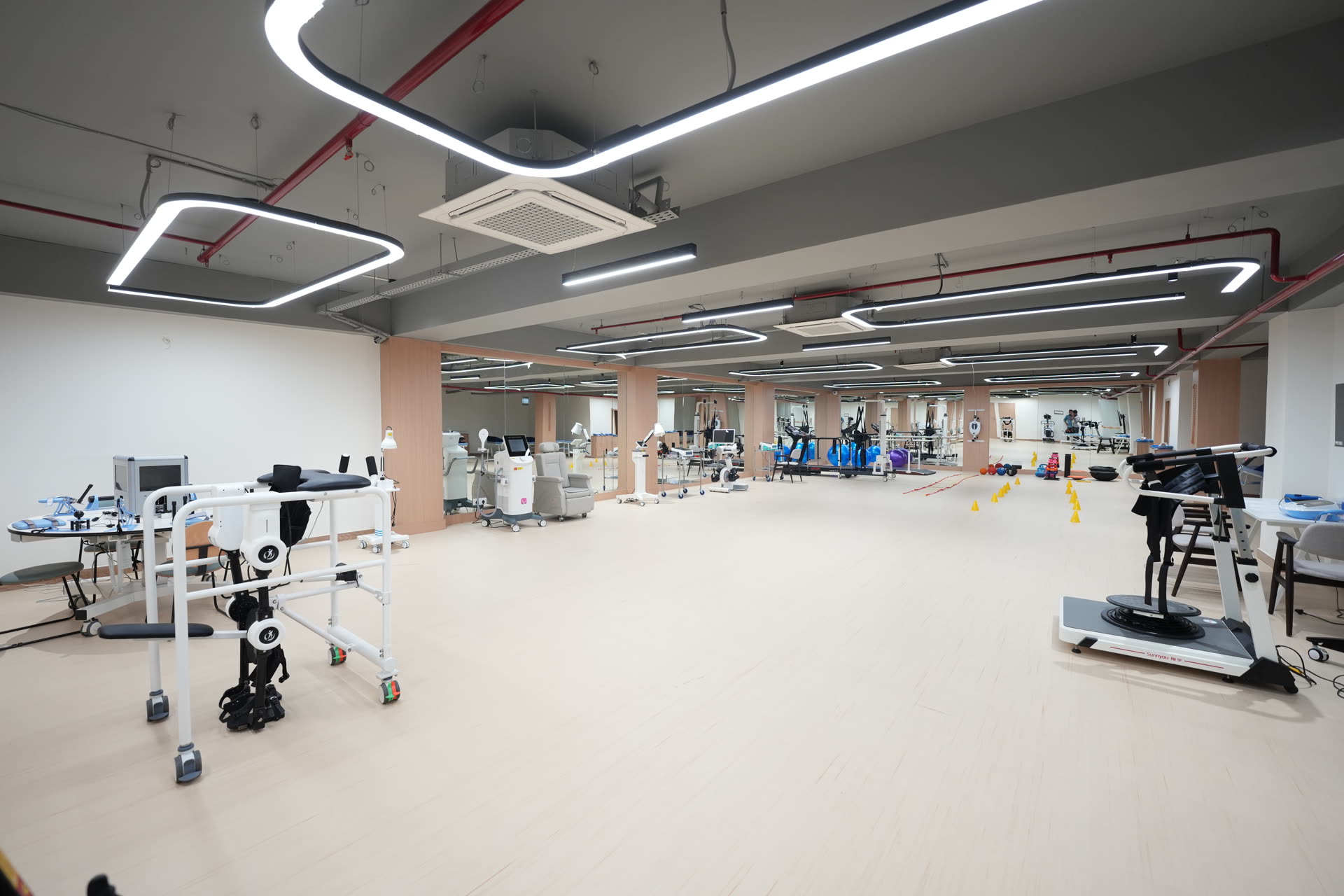
RAGT at SENSE Health, Bangalore
At SENSE Health, robotic gait training is not offered in isolation. It is part of a wider programme of physiotherapy and occupational therapy, with speech therapy, HBOT or rTMS added when the medical team judges them clinically appropriate.
- →High-repetition, robot-guided walking practice in every RAGT session
- →Can be combined with other therapies, such as HBOT or rTMS, when clinically appropriate
- →Supervised by specialist physiotherapists and rehabilitation physicians
- →Personalised intensity and duration based on your condition and progress
- →Available for inpatients (24/7 care) and outpatients at Kalyan Nagar, HRBR Layout
Frequently Asked Questions
What is Robotic-Assisted Gait Training (RAGT)?
A powered robotic exoskeleton guides the legs through many repeated walking steps per session, alongside physiotherapy. This repetitive practice is thought to support neuroplasticity — the brain's ability to form new neural pathways. A 2025 Cochrane review of 101 trials (4,224 people) found that stroke survivors who had electromechanical or robot-assisted gait training plus physiotherapy were probably more likely to become independent in walking than those who had gait training without these devices (about one extra person walking independently for every nine treated). It did not meaningfully improve walking speed or distance.
Is robotic gait training better than manual physiotherapy?
A 2025 meta-analysis of 23 randomised controlled trials (907 patients, Journal of Clinical Medicine) found that combining RAGT with conventional rehabilitation significantly improved gait function, speed, and balance compared to conventional therapy alone. RAGT works as an add-on to physiotherapy, not a replacement: one multicentre trial found conventional gait training gave greater gains in walking speed than robotic training when one replaced the other. Results were more consistent with footplate-type (end-effector) robots, especially in the subacute phase (7 days to 6 months after stroke), than with exoskeleton-type robots, whose results varied more between trials.
How many RAGT sessions are needed?
The best number of sessions is not yet known. In a 2025 meta-analysis, gains in walking speed and balance were most pronounced in trials of 15 or fewer sessions, while a 2024 review in subacute stroke found the clearest gains with 4-week programmes. At SENSE Health, the number of sessions is set at assessment, and progress is measured against agreed walking goals.
Who qualifies for RAGT at SENSE Health Bangalore?
RAGT may be suitable for stroke survivors, people with incomplete spinal cord injury, and some people with traumatic brain injury, Parkinson's disease or other neurological conditions affecting walking. The evidence is strongest for stroke. A free assessment determines whether it is suitable.
Where is SENSE Health located?
SENSE Health is at AVR Heights, 100 Feet Road, HRBR Layout 1st Block, Kalyan Nagar, Bengaluru 560043. Open Monday to Saturday, 9AM to 7PM. Call +91 9663334659.
Home from Germany After a Brain Haemorrhage
Six months ago, while living in Germany, he had a brain haemorrhage. Back in Bengaluru, his intensive rehabilitation at SENSE Health includes robotic gait training, physiotherapy, and arm and hand therapy, with his mother and brother beside him.
“Earlier he didn’t have that hope. Now that he has started moving, he has hope in his life again.”Watch his family tell the story →
Start Robotic Gait Training in Bangalore
Book a free assessment at SENSE Health, Kalyan Nagar to find out if RAGT is right for you.
WhatsApp Us Call +91 96633 34659