PEMF Therapy & High-Intensity
Electromagnetic Therapy in Bangalore
SENSE Health, a dedicated stroke and neuro rehabilitation hospital in Bangalore, offers High-Intensity Electromagnetic Therapy (HIEMT), a much stronger form of magnetic stimulation than standard Pulsed Electromagnetic Field (PEMF) therapy, delivering up to 6 Tesla. We use it as an add-on to physiotherapy for muscle strengthening, pain, pelvic-floor weakness, and post-surgical and neurological rehabilitation.
✔ High-Intensity Electromagnetic Therapy (HIEMT) is available at SENSE Health, Kalyan Nagar, Bengaluru .
A 2025 review of 7 studies (Neurourology and Urodynamics) found that high-intensity electromagnetic chair therapy reduced leakage episodes in women with urinary incontinence, although the studies were small and varied and better trials are still needed.
✔ Medically reviewed by Dr. Manikanta
What Is PEMF Therapy?
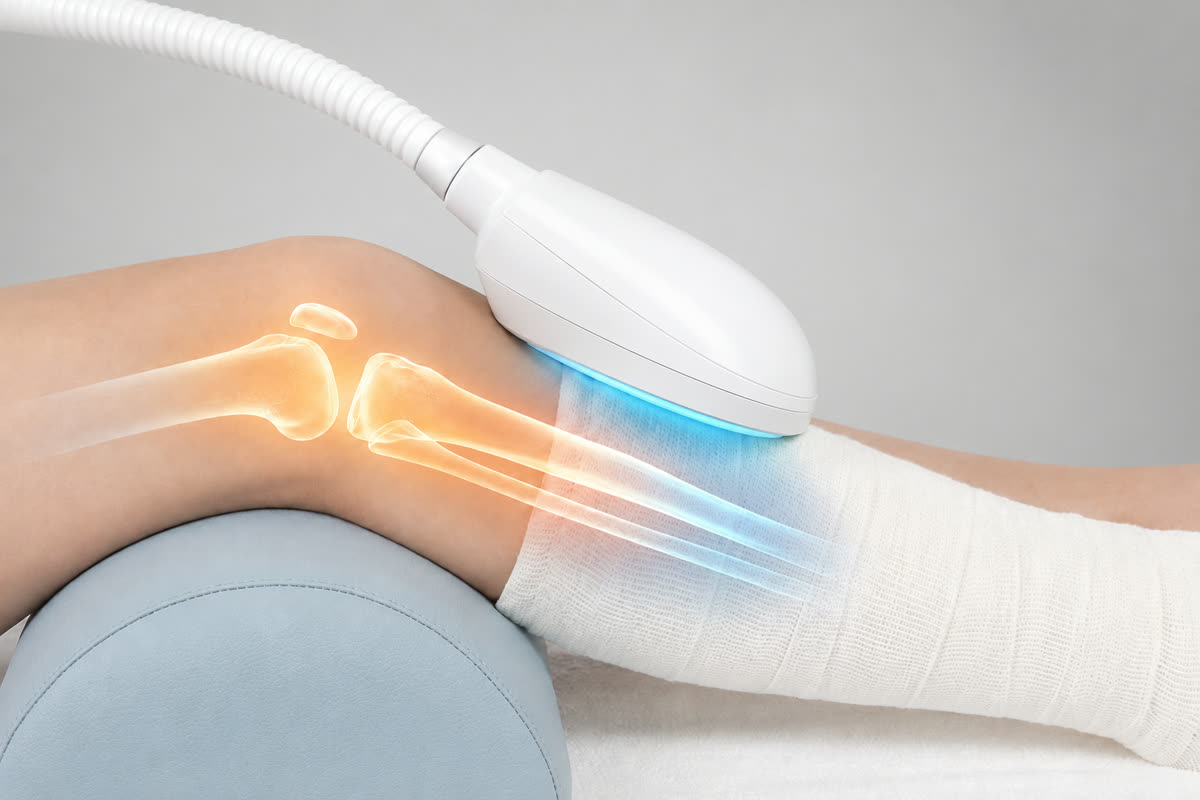
Pulsed Electromagnetic Field (PEMF) therapy delivers precisely timed electromagnetic pulses that pass through clothing and skin into the tissues underneath. Low-intensity PEMF has been studied mainly for bone healing and pain; laboratory research suggests it may affect cell signalling and inflammation, but how much this helps patients varies by condition.
High-Intensity Electromagnetic Therapy (HIEMT) uses much stronger magnetic fields (up to 6 Tesla on our device). Fields this strong make muscles contract, and studies of high-intensity devices describe these as supramaximal muscle contractions, meaning stronger than most people can produce voluntarily. It is used as an add-on for muscle strengthening, pelvic-floor weakness and, with more limited evidence, spasticity after stroke.
PEMF bone-growth stimulators were first approved by the US FDA for fracture non-union in 1979 (PMA P790002), and PEMF has been studied for decades since, with the most consistent evidence for bone healing. These approvals and studies cover low-intensity PEMF devices, not HIEMT.
What the Clinical Evidence Shows
In a 2025 trial of 120 patients with joint and soft-tissue pain, two weeks of a low-intensity wearable PEMF wrap with heat reduced pain by 36% vs 10% with standard care (p<0.0001). The trial was not blinded, was funded by the device maker, and did not test HIEMT.
Source: Pain and Therapy — Hackel et al. (2025)A meta-analysis of 22 randomised trials (1,468 patients) found that, in the 14 trials reporting healing, PEMF improved fracture healing rates from 64.3% (control) to 79.7% (PEMF), with a relative risk of 1.22 and significant pain relief. These trials used PEMF bone stimulators, not HIEMT.
Source: Bioelectromagnetics — Meta-analysis (2020)In a 2024 double-blind trial of 37 patients with acute stroke, a low-intensity PEMF device (about 1 mT) was linked to smaller MRI lesions at 45 days (23.3 → 11.9 cm³, p=0.023). The groups started with different lesion sizes, and the difference in 90-day recovery was not shown to be significant. Not tested with HIEMT.
Source: Journal of Stroke (2024), Capone et al. — research letterSources: PMC — PEMF for Joint & Soft Tissue Pain (2025) · PubMed — PEMF & Bone Healing Meta-Analysis (2020) · Journal of Stroke — PEMF Neuroprotection (2024)
How HIEMT Works at SENSE Health
🏥 High-Intensity Electromagnetic Therapy (HIEMT) is available at SENSE Health, Kalyan Nagar, Bengaluru.
Our medical-grade HIEMT device delivers up to 6 Tesla of focused electromagnetic energyto the muscles and nerves under the coil — without skin contact, gels, or electrodes. No anaesthesia required.
-
→
Post-Fracture Rehabilitation: Used alongside physiotherapy to strengthen muscles weakened after a fracture or surgery. There are no trials showing that HIEMT itself speeds bone healing.
-
→
Muscle Preservation: Produces strong muscle contractions without the patient having to work the muscle, which may help keep muscles active after surgery or immobilisation until active exercise is possible. Trials in these patients are few.
-
→
Pain Management: Used alongside physiotherapy for joint and soft-tissue pain. Evidence for high-intensity devices in pain is limited, and pain medicines should only be changed by your doctor.
-
→
Spasticity Control: Used as an experimental add-on for spasticity after stroke. A Cochrane review (4 trials, 139 people) found a possible small reduction in elbow spasticity, but no clear effect on daily activities or arm function.
-
→
Neuroplasticity (Research Stage): One small study of a low-intensity electromagnetic field in 48 stroke patients found higher blood levels of growth factors linked to brain repair (BDNF and VEGF). This has not been shown for HIEMT.
Who Can Benefit from PEMF / HIEMT?
PEMF vs High-Intensity Electromagnetic Therapy (HIEMT)
| Feature | PEMF (Standard) | HIEMT (High-Intensity) |
|---|---|---|
| Magnetic field intensity | Low to medium (mT range) | High — up to 6 Tesla |
| Muscle contraction | Usually none | Strong contractions (described in studies as supramaximal) |
| Main uses studied | Bone healing, pain | Pelvic-floor weakness and incontinence, muscle strengthening; spasticity (limited evidence) |
| Skin contact required | No | No |
| Anaesthesia required | No | No |
| At SENSE Health | ✓ Available | ✓ Available at SENSE Health |
Urinary Incontinence —
You Don't Have to Live Like This
You plan your day around where the toilets are. You hesitate to laugh too hard, sneeze, or exercise. You've quietly stopped doing things you love — social gatherings, travel, even a simple walk in the park — because of the fear. The constant worry of leakage is exhausting. And the shame of it, the feeling that this is just something you have to silently accept, can be isolating in a way that's hard to put into words.
You Are Not Alone — and This Is Not Your Fault
Urinary incontinence affects millions of people — women after childbirth, men after prostate surgery, the elderly, stroke survivors, and people with neurological conditions. It is a medical condition, not a personal failing. And yet so many suffer in silence, too embarrassed to speak to a doctor, or resigned to the belief that nothing can help.
Most people think the only options are pads, restrictive diets, or surgery. They don't know that a non-invasive treatment — done fully clothed, without probes, without undressing — may reduce leakage for some people.
At SENSE Health, Bangalore, we offer High-Intensity Electromagnetic Therapy (HIEMT) for urinary incontinence — and we want you to know that reclaiming your confidence and your freedom is possible.
How High-Intensity Electromagnetic Therapy Works for Incontinence
Urinary incontinence is most often caused by weak pelvic floor muscles — the group of muscles that support the bladder and control the release of urine. Childbirth, ageing, hormonal changes, neurological conditions, and surgery can all weaken these muscles over time.
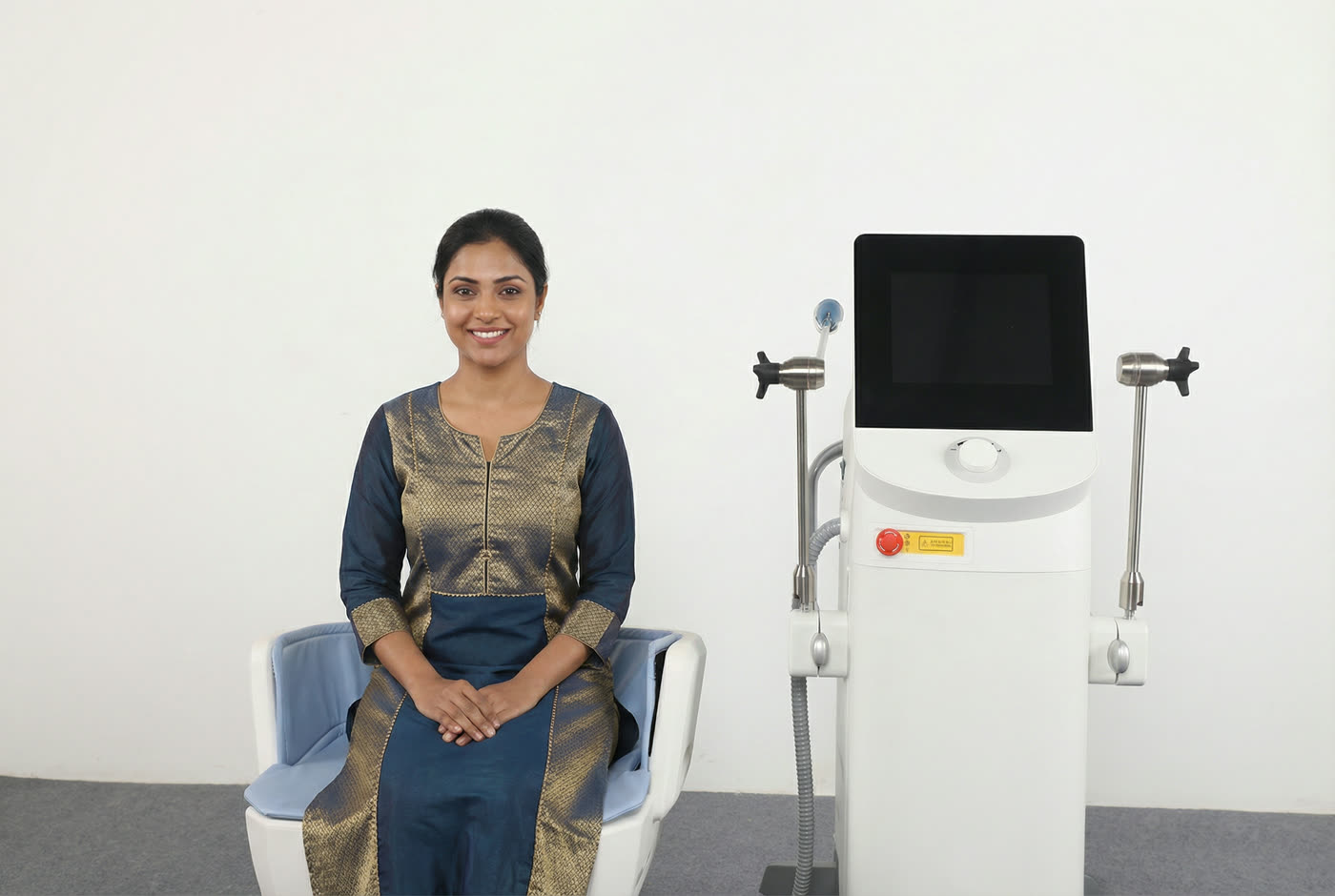
High-Intensity Electromagnetic Therapy (HIEMT) uses focused electromagnetic energy to make the pelvic floor muscles contract repeatedly and strongly while you sit fully clothed. The aim is to strengthen these muscles and improve bladder control. It works alongside, not instead of, pelvic floor exercises taught by a therapist.
The treatment is done fully clothed, seated in a chair. No probes. No undressing. No surgery. No anaesthesia. In the published study below, each session took 28 minutes, twice a week for 3 weeks (6 sessions); your plan will be set after assessment.
For stroke and neurological patients with bladder problems, the evidence is much more limited: most studies, including the one below, excluded people with stroke or other neurological disease. Our doctors will assess whether it is suitable for you.
What the Clinical Evidence Shows
Pad test results dropped from 4.2g to 0.6g — an 85.7% reduction — at 6-month follow-up (calculated from average pad weights) in a 19-patient study of women with stress urinary incontinence, with no comparison group.
Source: Biomedicines 2024 (Long et al.)13 of 19 women (68.4%) reported no leakage 6 months after 6 sessions, in a small study without a control group.
Source: Biomedicines 2024 (Long et al.)ICIQ-SF scores fell from 9.4 to 5.4 (a 42.5% improvement) 6 months after HIFEM treatment, reflecting less impact on daily life.
Source: Biomedicines 2024 (Long et al.)Sources: PMC — HIFEM Technology for Female Stress Urinary Incontinence (2024) · PubMed — Meta-Analysis: HIFEM for Urinary Incontinence
How Pelvic Floor Strengthening Is Meant to Work (Illustration)
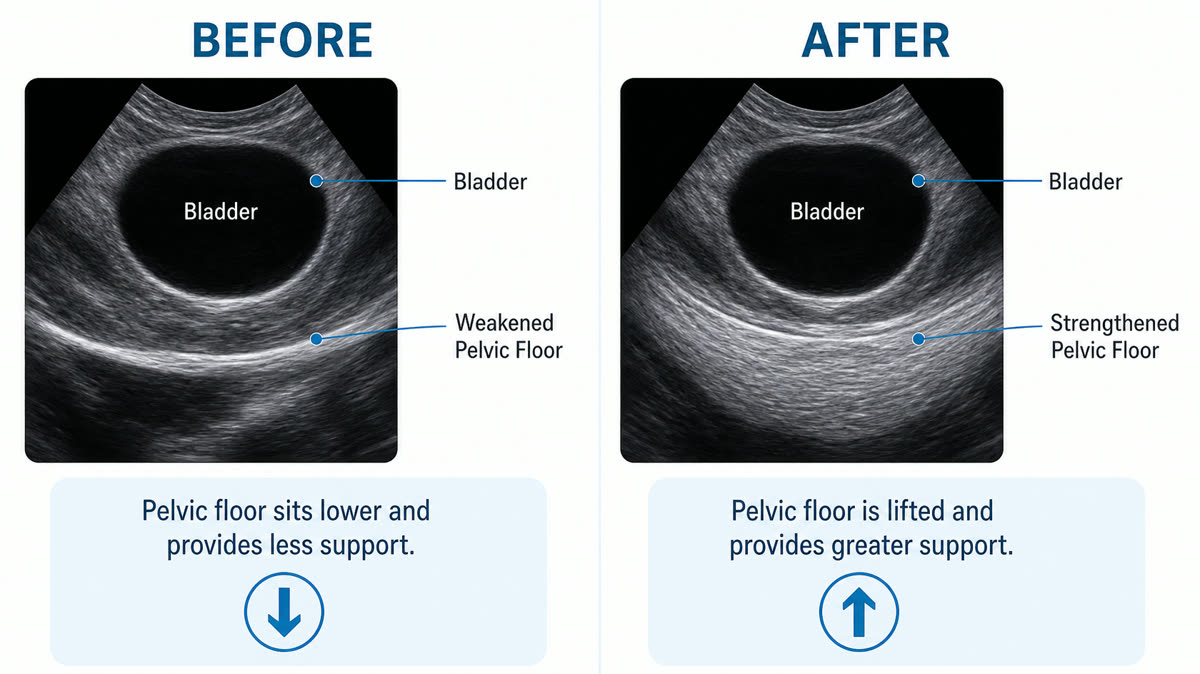
Illustration only, not a patient scan or a promised result. In the study above, bladder-neck position on ultrasound did not change significantly after treatment.
Who Can Benefit
You Deserve to Live Freely Again
You deserve to laugh without hesitation. To travel without anxiety. To sleep through the night. To be present in a moment without the quiet fear that takes the joy out of everything. Treatment, including non-surgical options, helps many people, and we will talk you through what is realistic for you.
At SENSE Health, our team understands the emotional weight of this condition. We treat you with complete privacy, dignity, and care. Your first conversation with us is confidential and carries no obligation.
Talk to Us — ConfidentiallyFrequently Asked Questions
What is the difference between PEMF and HIEMT?
PEMF (Pulsed Electromagnetic Field) therapy uses lower-intensity magnetic pulses primarily for pain relief, bone healing, and anti-inflammatory effects. HIEMT (High-Intensity Electromagnetic Therapy) uses much stronger fields (up to 6 Tesla) that make muscles contract strongly. The two have been studied for different uses, and results from one cannot be assumed for the other.
Is PEMF / HIEMT safe?
Both are non-invasive, contact-free therapies performed without anaesthesia, needles, or skin penetration. Studies of high-intensity pelvic-floor chairs report mainly mild, short-lived discomfort. People with a pacemaker or other implanted electronic device, metal implants near the treatment area, or who are pregnant are usually not treated, so our doctors screen you first. At SENSE Health, all sessions are conducted under clinical supervision.
What does the evidence say about PEMF for fracture healing?
A systematic review of 22 RCTs with 1,468 patients (Peng et al., Bioelectromagnetics, 2020) found PEMF improved fracture healing rates from 64.3% to 79.7% (relative risk 1.22) and reduced pain. These trials used low-intensity PEMF bone stimulators, not HIEMT, so the result cannot be assumed for HIEMT.
Can PEMF help after a stroke?
The evidence is limited. A small 2024 double-blind, sham-controlled trial of 37 patients with acute ischaemic stroke (Capone et al., Journal of Stroke) used a low-intensity device (about 1 mT). Lesions on MRI shrank in the treated group (p=0.023), but the groups started with very different lesion sizes, and the difference in 90-day recovery (10 of 11 vs 12 of 18) was not shown to be significant. A Cochrane review of high-intensity magnetic stimulation after stroke (4 trials, 139 people) found too little evidence for routine use. At SENSE Health, HIEMT is used only as an add-on to stroke rehabilitation, after assessment.
How many sessions are needed?
Treatment duration depends on the condition being treated. In the incontinence study above, women received 6 sessions over 3 weeks; for other conditions, the number is decided by the clinical team after assessment. At SENSE Health, a personalised plan is created after your initial assessment.
Where can I get PEMF / HIEMT therapy in Bangalore?
SENSE Health at AVR Heights, 100 Feet Road, HRBR Layout 1st Block, Kalyan Nagar, Bengaluru 560043 offers High-Intensity Electromagnetic Therapy (HIEMT). Open Monday to Saturday, 9AM to 7PM. Call +91 9663334659.
Start PEMF Therapy in Bangalore
Book a free consultation at SENSE Health, Kalyan Nagar to find out if PEMF or HIEMT is right for your recovery.
WhatsApp Us Call +91 96633 34659