Head injury rehabilitation is a planned, team-based programme that helps a person recover movement, thinking, communication, swallowing and independence after a traumatic brain injury (TBI). Most people with a mild head injury recover well with good information and follow-up, while those with moderate or severe injuries benefit from formal, multidisciplinary rehabilitation, according to a Cochrane review of 19 studies. The earlier the right level of care is matched to the person's needs, the better placed the family is for the months ahead.
This guide is written for families in North and East Bengaluru whose loved one has just come through a road accident. It explains what doctors mean by "mild", "moderate" and "severe", the problems you may notice, the warning signs that need an emergency visit, and how recovery usually unfolds.
How Common Are Road-Accident Head Injuries in Bengaluru?
India's Ministry of Road Transport and Highways reported 4,87,707 road accidents in 2024, which killed 1,77,175 people and injured 4,71,441 more. Two-wheeler riders made up the largest share of deaths at 46.2%. Among India's million-plus cities, Bengaluru recorded the second-highest number of road accidents (4,769) and road deaths (894) in 2024, after Delhi.
Head injury is a large part of this burden. In a 2008 review by Dr G. Gururaj of NIMHANS, Bengaluru, nearly 60–70% of people admitted to hospital with traumatic brain injury in India had been hurt in road crashes. Behind every one of those admissions is a family trying to understand what comes next.
How Is the Severity of a Head Injury Graded?
Doctors most often use the Glasgow Coma Scale (GCS), a 3-to-15 score based on eye opening, speech and movement. Traditionally:
- Mild TBI: GCS 13–15 (concussion is a type of mild TBI)
- Moderate TBI: GCS 9–12
- Severe TBI: GCS 8 or below
These labels are a starting point, not a prediction. A 2025 report from the US National Institute of Neurological Disorders and Stroke (NINDS) classification initiative notes that this three-way split overlooks real differences between patients, and recommends recording more detail.
One important detail is post-traumatic amnesia (PTA): the period after injury when the person is confused and cannot form new day-to-day memories. Its duration, when measured prospectively with validated tools, is strongly linked to long-term outcome. Families are often surprised that a person can be awake and talking yet still in PTA, repeating questions or not remembering visitors.
What Problems Can a Head Injury Leave Behind?
Every brain injury is different, but these are after-effects that rehabilitation teams commonly work on (many also appear on the US National Institute of Neurological Disorders and Stroke list of TBI symptoms):
- Thinking (cognitive) changes: poor attention, slow processing, memory gaps, difficulty planning or solving problems
- Behaviour and mood: irritability, agitation, impulsivity, anxiety, low mood, reduced motivation
- Fatigue: a heavy, brain-based tiredness that is not fixed by one night's sleep
- Headaches, dizziness and balance problems, sometimes with blurred vision or sensitivity to light and noise
- Movement problems: weakness on one or both sides, poor coordination, and spasticity (stiff, tight muscles)
- Swallowing difficulty (dysphagia), especially after a long ICU stay or a tracheostomy
- Communication difficulties: slurred speech, word-finding problems, or trouble following conversation and social cues
- Sleep disturbance and seizures in some people
Agitation in the early weeks is frightening for families and can be part of PTA. A calm, low-stimulation room, a familiar face and a consistent routine usually help more than crowds of visitors.
Disorders of consciousness
After a severe TBI, some people remain in a coma, an unresponsive wakefulness syndrome (previously "vegetative state") or a minimally conscious state, where there are definite but inconsistent signs of awareness. The American Academy of Neurology guideline advises treating any confounding medical problems and carrying out repeated, standardised assessments to improve diagnostic accuracy. It also notes that a traumatic cause and a minimally conscious state are linked to more favourable outcomes, and that prognosis is not universally poor.
Head Injury Warning Signs After Discharge
The NICE head injury guideline (NG232, 2023) gives clear written advice on when someone should go back to hospital urgently.
Emergency: Call 108 or 112, or go to the nearest emergency department, if there is drowsiness lasting more than an hour when they would normally be awake, any loss of consciousness, a seizure, any vomiting, a painful headache that will not go away, new confusion, trouble speaking or understanding, new weakness in an arm or leg, loss of balance, problems with eyesight, clear fluid coming from the ears or nose, or bleeding from an ear.
NICE also advises that someone with a recent head injury should not be left alone for the first 24 hours after discharge, should avoid alcohol, and should not take sleeping pills or sedatives unless a doctor has prescribed them. If the person takes blood thinners, tell the emergency doctor straight away: for people on anticoagulants or antiplatelet medicines (other than aspirin alone), NICE advises considering a CT head scan within 8 hours of the injury even when there are no other warning signs.
Milder symptoms such as headache, dizziness, irritability, poor concentration and tiredness are common after a minor head injury and usually settle within two weeks. If they do not, NICE advises seeing a doctor, and suggests considering referral to a specialist or a multidisciplinary neurorehabilitation team for problems that persist.
Does Rehabilitation After a Head Injury Really Work?
Yes, for the right person at the right intensity. The Cochrane review Multi-disciplinary rehabilitation for acquired brain injury in adults of working age (Turner-Stokes et al., 2015) included 19 studies with 3,480 people. It found:
- For predominantly mild injury, strong evidence that most people recover well when given appropriate information, without needing additional specific treatment
- For moderate to severe injury, strong evidence of benefit from formal rehabilitation, and limited evidence that starting early gives better outcomes
- For people already in rehabilitation, strong evidence that more intensive programmes lead to earlier functional gains, and moderate evidence that continued outpatient therapy helps sustain them
The authors were also honest about limits: the best balance between intensity and cost is not yet known, and trials cannot tell us exactly which treatment suits which patient over the long term.
For thinking problems, a systematic review by the American Congress of Rehabilitation Medicine's Cognitive Rehabilitation Task Force (Cicerone et al., 2019) supports practice standards for attention training after TBI, compensatory strategies for mild memory problems, training for social-communication difficulties, metacognitive strategy training for planning and problem-solving, and comprehensive-holistic neuropsychological rehabilitation.
What Are the Stages of Recovery After a TBI?
| Phase | Main focus | Who is usually involved |
|---|---|---|
| Acute hospital | Saving life, surgery if needed, preventing secondary damage | Neurosurgeon, intensivist, ICU nurses |
| Inpatient rehabilitation | Medical stability, swallowing, mobility, PTA and behaviour, family training | Rehab doctor, nurses, physio, OT, speech therapist |
| Outpatient or home | Building endurance, thinking skills, daily activities | Physio, OT, speech therapist, family |
| Community and return to work | Work, study, driving decisions, social life | OT, treating doctors, employer or college |
Not everyone passes through every phase, and many people move back and forth. A person with a mild injury may need only advice and a follow-up check; a person with a severe injury may spend weeks in inpatient rehabilitation.
Where Does Technology Fit In?
Technology can add to, but never replace, hands-on therapy and good nursing.
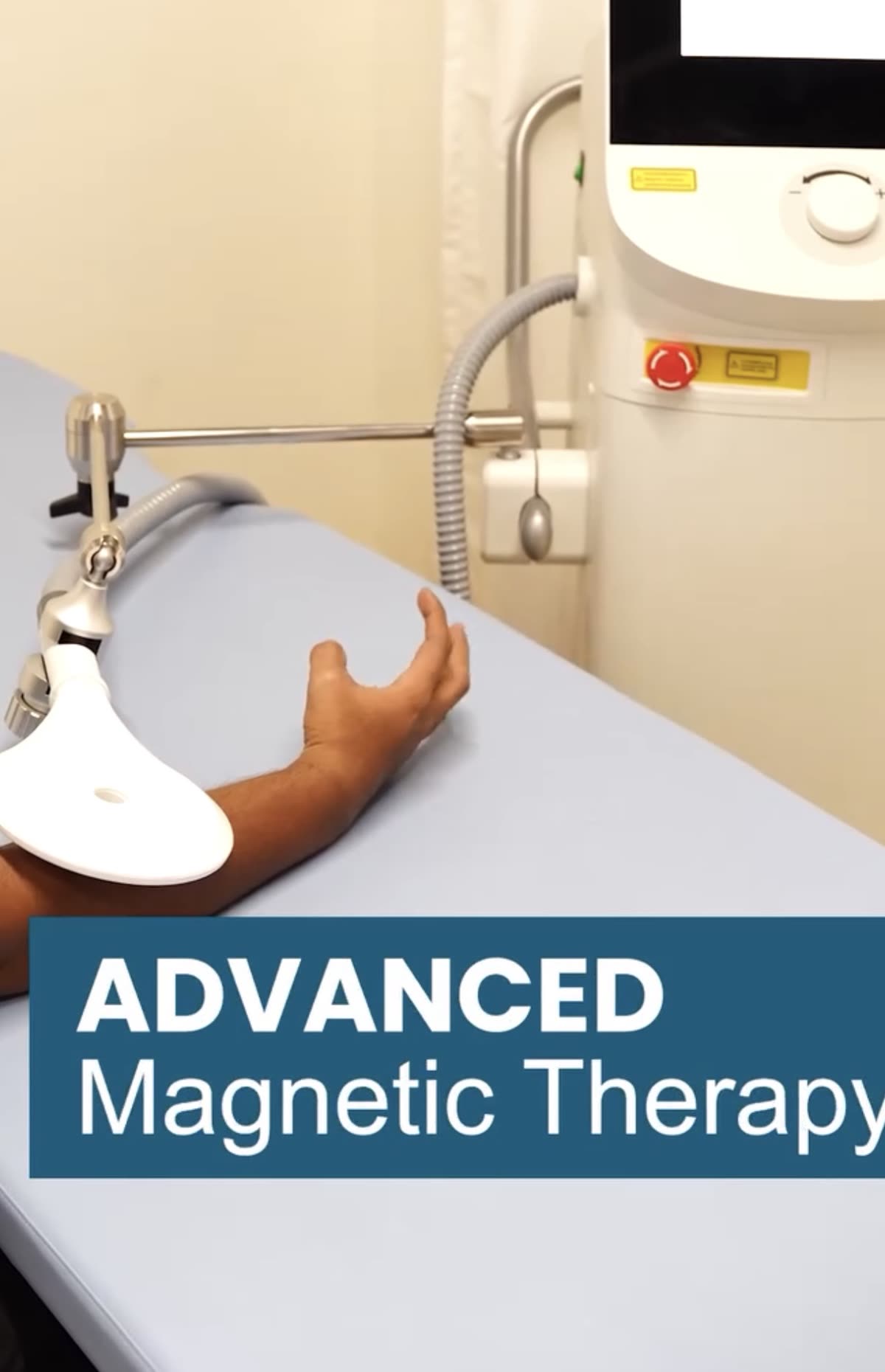
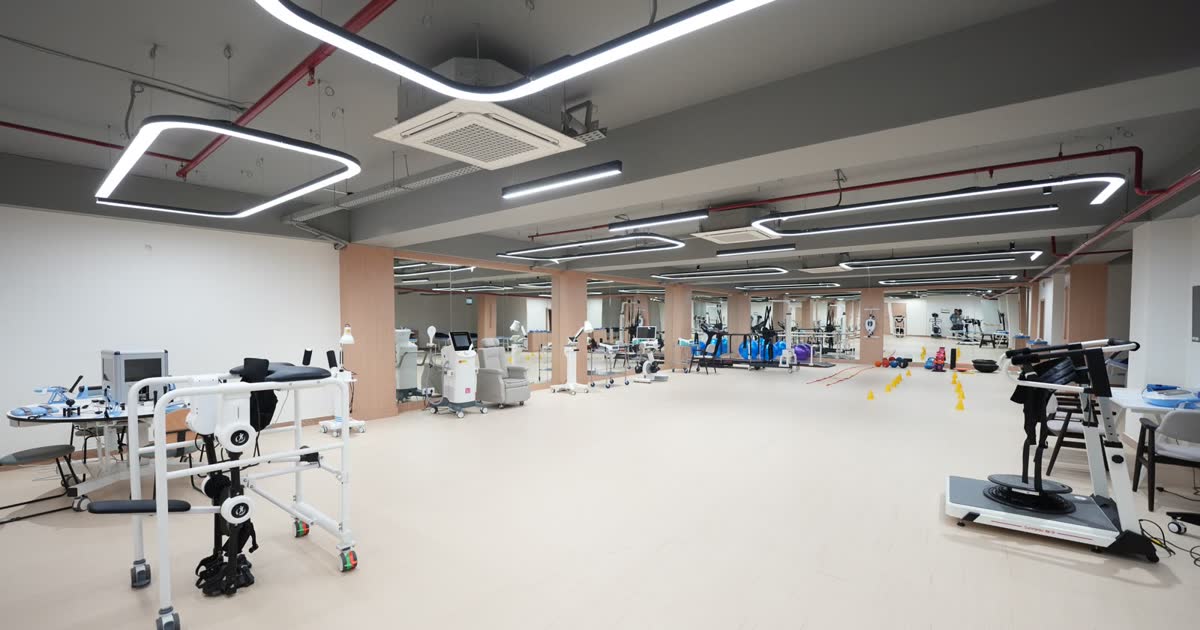
Robotic-assisted gait training (RAGT). Robots let a therapist deliver many repetitions of walking practice safely. Most trial evidence comes from stroke: a 2025 Cochrane review of 101 studies found that robot-assisted training combined with physiotherapy probably makes independent walking more likely. In TBI, research is at an earlier stage, with feasibility studies still under way, so we use robotic gait training as an adjunct within a wider programme.
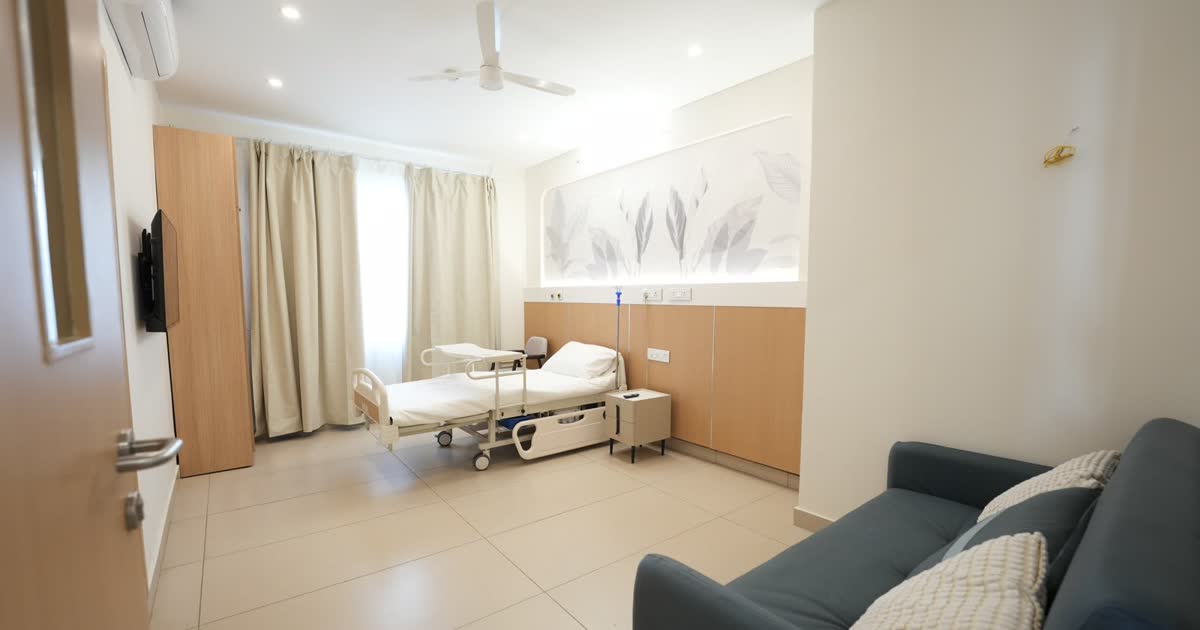
Smart ICU monitoring. In the first weeks out of intensive care, some people with TBI remain medically fragile, with breathing, swallowing or fall risks. Our Smart ICU monitoring with Cloudphysician adds 24/7 remote video and vital-sign monitoring to our 24/7 doctors and nursing. Families facing a long ICU stay may also find our guide to life after the ICU useful.
Hyperbaric oxygen therapy (HBOT). HBOT for brain injury is still investigational and is not a standard of care. A Cochrane review of seven trials in acute TBI (Bennett et al., 2012) found HBOT might reduce deaths, but there was little evidence that survivors had a good outcome, and it concluded that routine use "cannot be justified". Small trials in long-lasting post-concussion symptoms have produced conflicting results. Read more in Is Hyperbaric Oxygen Therapy Safe?
Returning to Work, College and Driving
Return should be gradual and planned around fatigue, attention and safety. An occupational therapist can test real-life skills such as using a phone, managing money or travelling across the city before the person tries them alone.
On driving, NICE advises that after a minor head injury a person should not drive, cycle or operate machinery until they feel completely better. After a moderate or severe injury, or any seizure, driving must be discussed with the treating doctor first. Do not assume it is safe just because the person feels ready; attention, reaction time and judgement can all be affected after a brain injury.
How SENSE Health Supports Head Injury Recovery
When comparing rehabilitation centres, look for a team that assesses thinking and behaviour, not only walking; manages swallowing safely; involves the family in goals; and can handle medical issues day and night.
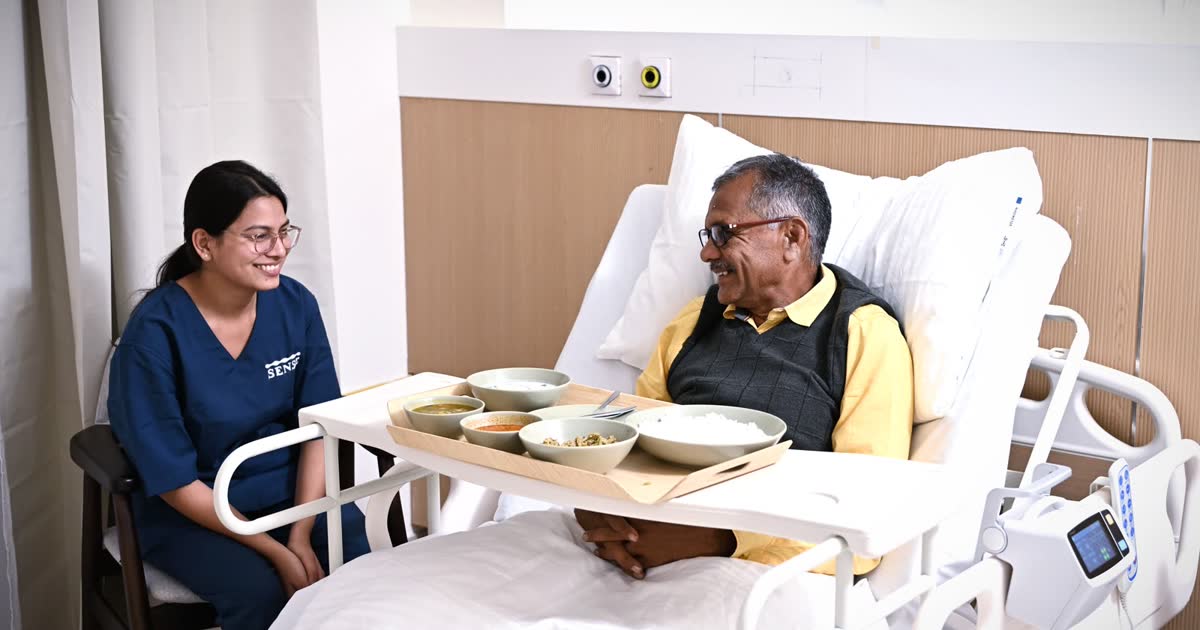
At SENSE Health, TBI is among the conditions we rehabilitate. Depending on need, a programme may include physiotherapy, occupational therapy, speech-language and swallow therapy, robotic-assisted gait training, management of muscle stiffness (see our guide to spasticity), clinical nutrition, and home physiotherapy across Bengaluru once the person is ready to go home. Your neurosurgeon or neurologist continues to guide medical care.
Prevention: Why Helmets Matter
A Cochrane review (Liu et al., 2008) estimated that motorcycle helmets reduce the risk of head injury by around 69% and the risk of death by around 42%. Yet in 2024, MoRTH recorded 54,122 people killed in India while not wearing a helmet. Whether you ride across the city or just to the corner shop, a properly fastened helmet for both rider and pillion is the simplest protection there is.
Getting Help in Kalyan Nagar and North-East Bengaluru
SENSE Health is at AVR Heights, 100 Feet Road, HRBR Layout 1st Block, Kalyan Nagar, Bengaluru 560043, easy to reach for families from Hennur, Banaswadi, Kammanahalli, Hebbal and Horamavu. The initial consultation is free.
If your family member is still in hospital, we can discuss an inpatient rehabilitation assessment before discharge. Please bring or share:
- The discharge summary and the CT or MRI reports
- Details of any surgery, tracheostomy or feeding tube
- Current medicines, including any seizure medicines or blood thinners
- A short note or video of what the person can do now
If your family member is already home, our OPD is open Monday to Saturday, 9 AM to 7 PM. For insurance, ask our admissions team to check your policy and help with pre-authorisation.
Call +91 96633 34659, WhatsApp us, email listen@sensehealth.co.in, or get directions.
Sources
- Ministry of Road Transport and Highways, Transport Research Wing. Road Accidents in India 2024. Government of India. 2026.
- Gururaj G. Road traffic deaths, injuries and disabilities in India: current scenario. National Medical Journal of India. 2008.
- Menon DK, Silverberg ND, et al. Clinical assessment on days 1–14 for the characterization of traumatic brain injury: recommendations from the 2024 NINDS TBI Classification and Nomenclature Initiative Clinical/Symptoms Working Group. Journal of Neurotrauma. 2025.
- Giacino JT, et al. Practice guideline update recommendations summary: disorders of consciousness. Neurology. 2018.
- National Institute for Health and Care Excellence. Head injury: assessment and early management (NG232). NICE. 2023.
- National Institute for Health and Care Excellence. Suggested written discharge advice cards (NG232). NICE. 2023.
- Turner-Stokes L, et al. Multi-disciplinary rehabilitation for acquired brain injury in adults of working age. Cochrane Database of Systematic Reviews. 2015.
- Cicerone KD, et al. Evidence-based cognitive rehabilitation: systematic review of the literature from 2009 through 2014. Archives of Physical Medicine and Rehabilitation. 2019.
- Mehrholz J, et al. Electromechanical-assisted training for walking after stroke. Cochrane Database of Systematic Reviews. 2025.
- Buarque JC, et al. Robot-assisted gait training after severe traumatic brain injury for walking ability and social participation: protocol for a feasibility study. BMJ Open. 2025.
- Bennett MH, Trytko B, Jonker B. Hyperbaric oxygen therapy for the adjunctive treatment of traumatic brain injury. Cochrane Database of Systematic Reviews. 2012.
- Harch PG. Systematic review and dosage analysis: hyperbaric oxygen therapy efficacy in mild traumatic brain injury persistent postconcussion syndrome. Frontiers in Neurology. 2022.
- National Institute of Neurological Disorders and Stroke. Traumatic Brain Injury (TBI). NINDS, NIH.
- Liu BC, et al. Helmets for preventing injury in motorcycle riders. Cochrane Database of Systematic Reviews. 2008.
This article is for general education and does not replace advice from your own doctor. If symptoms are sudden or severe, call 108 or go to the nearest emergency department.