Bangalore's First
AI-Powered Smart ICU
Rehabilitation
 Forbes Asia 100 · 2025
SENSE Health has partnered with Cloudphysician to bring 24/7 AI-powered patient monitoring to post-ICU rehabilitation in Bengaluru — the first rehabilitation hospital in Bangalore to do so. Smart ICUs already run in acute-care hospitals; SENSE Health brings the same monitoring into rehabilitation.
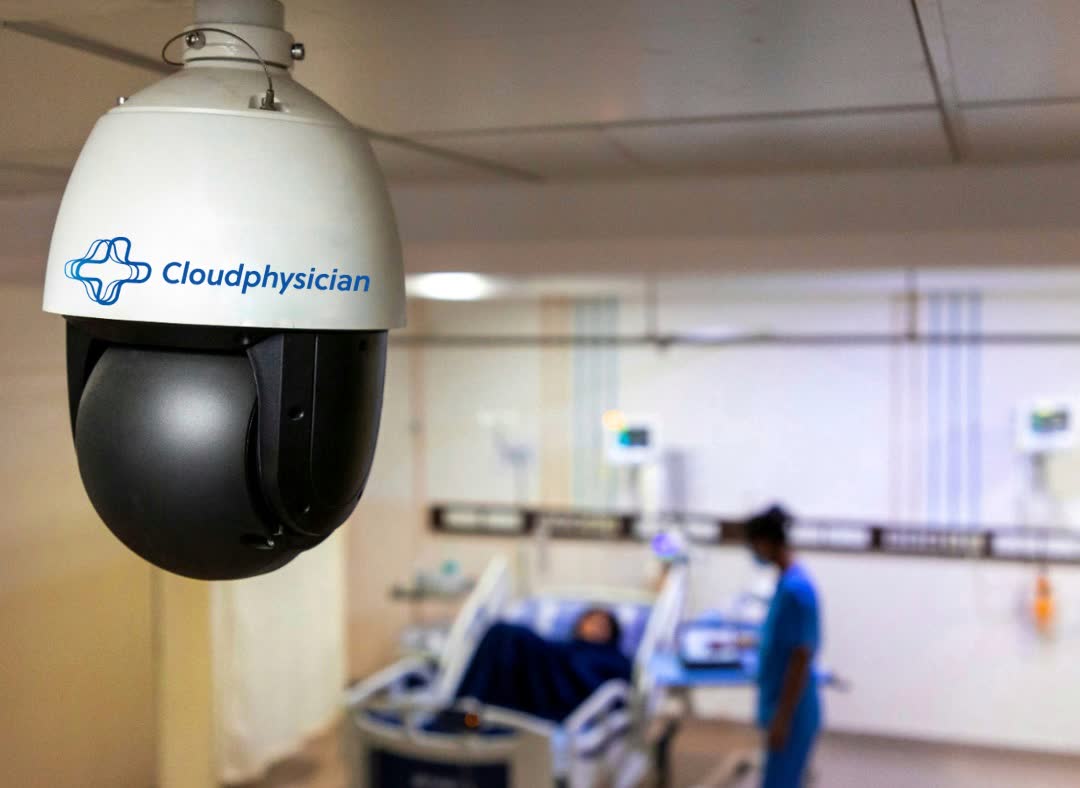
Our AINA-powered Smart ICU continuously analyses live video, vital signs, and medical records to detect warning signs early — fall risk, respiratory distress, delirium, pressure ulcer risk — and alerts our care team instantly, day or night.
What Happens After ICU Discharge?
The ICU discharge feels like a milestone. But for many patients — and their families — it marks the beginning of a vulnerable phase of recovery.
Standard rehabilitation centres rely on scheduled nursing rounds and manual checks. Between those checks — hours can pass without anyone noticing that a patient's breathing has changed, that they're attempting to get up unaided at 3 AM, or that early signs of infection are developing.
These missed moments are where complications happen. Post-intensive care syndrome (PICS) means new or worsening problems with physical strength, thinking and memory, or mood after a critical illness. Patients are fragile. The gap between ICU-level monitoring and standard rehab oversight is real — and it has consequences.
The clinical reality
A review of 41 studies found that about 1 in 3 ICU survivors is readmitted to hospital within 90 days (McPeake et al., Anaesthesia 2022), and in a US study of 406 survivors, 64% had a new problem with movement, thinking or mood three months after discharge (Marra et al., Crit Care Med 2018).
 ×
We are closing the gap between ICU-level monitoring and rehabilitation recovery — by bringing Cloudphysician's clinical AI, built by critical-care doctors, to our rehabilitation hospital in Bangalore.
Bangalore's most advanced neuro rehabilitation hospital — combining RAGT, HBOT, rTMS, and expert therapy under one roof.
- →98% patient satisfaction (SENSE patient feedback forms, 2025–26)
Physician-founded and named in Forbes Asia’s 100 to Watch 2025 — powering Smart ICU deployments across India, with expansion into the US reported in 2026.
- →300+ hospitals served (Cloudphysician)
- →200,000+ patients treated (Cloudphysician)
- →Up to 40% lower ICU mortality (Cloudphysician-reported)
Together: Rehabilitation expertise + Ambient AI intelligence = closer watch over every patient's recovery.
Key Takeaways — Smart ICU at SENSE Health
- 24/7 AI-powered monitoring of video, vital signs, and medical records — never resting, never blinking
- Cloudphysician's AINA detects fall risk, respiratory distress, delirium, pressure ulcer risk, and infection signals in real time
- Cloudphysician reports up to 40% lower ICU mortality in the hospitals it serves
- Cloudphysician states its data pipelines are HIPAA-compliant, and its website displays SOC 2 and ISO 27001 badges (cloudphysician.ai)
- Cloudphysician describes its system as hardware-agnostic, working with existing monitors, cameras and tablets (Cloudphysician)
- Cloudphysician says its AI is trained on one of the world's largest multimodal clinical datasets from high-acuity inpatient care (cloudphysician.ai)
- Named in Forbes Asia’s 100 to Watch 2025; Cloudphysician reports 200,000+ patients treated
What Is Smart ICU Rehabilitation?
Smart ICU rehabilitation combines the physical recovery programmes of an advanced rehabilitation hospital with the continuous monitoring capabilities of an intensive care unit — but in a setting designed for healing, not just survival.
Cloudphysician's AINA AI co-pilot serves as an ever-present clinical observer. It simultaneously analyses what it sees through bedside cameras, what the patient's vital signs are showing, and what the electronic medical record says — cross-referencing all three in real time using disease-specific machine learning models that, according to Cloudphysician, are built on one of the world's largest bedside video datasets, annotated by physicians and nurses (Cloudphysician).
When something changes — even subtly — the system alerts the care team immediately. This is not a camera recording system. It is a clinical assistant that links what it sees with the patient's data and flags concerns so our doctors and nurses can act.
Smart ICU monitoring is one part of our 24/7 emergency response team: on-site doctors trained in emergency management, with ICU experience, backed by Cloudphysician's intensivists through remote tele-ICU.
How Smart ICU Monitoring Works
Three data streams. One intelligent system. Continuous protection, around the clock.
AI Cameras Monitor Continuously — 24/7
Bedside cameras capture live video of the patient. The AINA system analyses posture, movement, breathing effort, bed-rail position, and behavioural cues in real time — detecting what the human eye cannot track continuously across every bed, every hour.
AINA AI Fuses Video, Vitals & Medical Records
Simultaneously, the system cross-references live vital sign streams and the patient's EMR — understanding not just what it sees right now, but what it means in the context of this specific patient's diagnosis, history, medications, and risk profile.
Care Team Alerted Instantly — Before It Escalates
When the AI detects a clinical concern, it alerts the SENSE Health care team immediately — with specific information about what was detected and why. Intervention happens at the earliest possible moment, when it is most effective and least invasive.
What the AI Detects
Fall Risk Detection
Cloudphysician reports that its AI flags high-risk movements, unattended bed exits and lowered bed rails so staff can step in. In hospitals, about 1–3% of falls cause a fracture, and even minor injuries can delay rehabilitation.
Respiratory Distress
Monitors visible breathing patterns, accessory muscle use, and respiratory rate changes — flagging visible signs of increased breathing effort for early review by the care team.
Delirium Signals
Identifies behavioural cues of ICU-acquired delirium — agitation, disorientation, abnormal motor activity — so the team can assess early, look for the cause and use non-drug measures first, as NICE guidance recommends.
Pressure Ulcer Prevention
Cloudphysician reports that its AI logs patient repositioning automatically, helping nursing staff keep to repositioning schedules (NICE advises at least every 6 hours for at-risk adults and every 4 hours for high-risk adults). A pressure ulcer can mean weeks of wound care and delayed therapy.
Infection Risk Signals
Cloudphysician reports that its AI monitors hand hygiene before central line access and breaches in sterile technique, and flags early signs of central line infection for clinical review.
Documentation Automation
Supports nursing documentation, so your care team can spend more time on hands-on patient care and therapy.
Cloudphysician’s Reported Impact
Cloudphysician's technology, used in 300+ hospitals, reports these outcomes at scale.
Figures reported by Cloudphysician (cloudphysician.ai, accessed October 2026) and the NITI Aayog Frontier Tech Hub (a company-submitted case story that cites the up-to-40% figure; neither source names the study or comparison behind it). For context, independent reviews of tele-ICU programmes found ICU mortality about 17–20% lower on average (Young et al., Arch Intern Med 2011; Chen et al., J Intensive Care Med 2018). These figures describe ICU deployments, not outcomes of SENSE Health patients.
A fall in hospital can mean fractures, surgery, a longer stay and weeks of lost rehabilitation. Continuous monitoring is designed to catch an unsafe attempt to get up before it becomes a fall.
A hospital-acquired pressure ulcer can take weeks of wound care and interrupts therapy. Regular repositioning, which NICE recommends for patients at risk, helps prevent it, and automatic repositioning logs help nursing staff keep to schedule.
Who Benefits from Smart ICU Rehabilitation?
Smart ICU monitoring is particularly valuable for patients whose recovery requires both intensive physical rehabilitation and continuous clinical vigilance.
About Cloudphysician
Forbes Asia 100 · 2025Cloudphysician was founded in 2017 by Dhruv Joshi and Dileep Raman — critical-care doctors who trained at the Cleveland Clinic in the US and returned to India to bridge the shortage of ICU expertise (Cloudphysician).
Cloudphysician reports that its technology is used in 300+ hospitals, has treated 200,000+ patients, and is associated with up to 40% lower ICU mortality (Cloudphysician; NITI Aayog) with 24/7 proactive management and timely interventions.
The technology is trained on one of the world's largest multimodal clinical datasets from high-acuity inpatient care , according to Cloudphysician, with clinical events annotated by physicians and nurses. Cloudphysician says its AI video co-pilot analyses real-time video without needing to store it, that hospital data stays within the hospital's environment, and that its pipelines are HIPAA-compliant; its website also displays SOC 2 and ISO 27001 badges (Cloudphysician).
Read the partnership announcement →
Why we chose Cloudphysician
"Our patients come to SENSE Health at the most vulnerable moment of their lives. They have survived the ICU — now they need to rebuild. We chose Cloudphysician because their technology was built by physicians who understand exactly what can go wrong in those early weeks of recovery, and what it takes to prevent it. The partnership aligns with our core belief: we do not give up on patients, and we do not settle for ordinary."
— Dr. Manikanta, Founder, SENSE Health
Frequently Asked Questions
What is a Smart ICU rehabilitation centre?
A Smart ICU rehabilitation centre combines advanced physical rehabilitation therapies with continuous AI-powered patient monitoring — similar to ICU-level oversight but in a recovery-focused setting. At SENSE Health, Cloudphysician's AINA system analyses live video, vital signs, and medical records 24/7, alerting care teams instantly to any warning sign such as fall risk, respiratory distress, pressure ulcer risk, or delirium. This bridges the dangerous gap between ICU discharge and full recovery.
How does AI patient monitoring work at SENSE Health?
SENSE Health uses Cloudphysician's AINA AI co-pilot, which analyses live video feeds from bedside cameras alongside vital sign data and the patient's electronic medical record in real time. Disease-specific AI models detect clinical warning signs — including fall risk, respiratory distress signals, pressure ulcer development, signs of delirium, and infection risk indicators — and immediately alert the on-duty care team so they can intervene before the situation escalates.
Is the AI monitoring system safe and private?
Cloudphysician states that its technology is HIPAA-compliant, and its website displays SOC 2 and ISO 27001 badges. According to Cloudphysician, the system can run on-premise or in the cloud, analyses real-time video without needing to store it, and keeps hospital data within the hospital's environment.
How is Smart ICU rehabilitation different from regular rehabilitation?
Standard rehabilitation centres rely on scheduled nursing checks and manual observation — meaning warning signs between rounds can be missed. Smart ICU rehabilitation at SENSE Health adds continuous 24/7 AI monitoring that never rests or blinks, and processes video, vitals, and medical history simultaneously. The aim is to spot problems earlier so the team can act sooner. Cloudphysician reports up to 40% lower ICU mortality in the hospitals it serves.
What is Cloudphysician and why did SENSE Health partner with them?
Cloudphysician is a physician-founded health-technology company recognised in the Forbes Asia 100 to Watch 2025. Cloudphysician reports that its technology is used in 300+ hospitals and has treated 200,000+ patients (cloudphysician.ai). SENSE Health partnered with Cloudphysician because their AI was built by intensivists who understand exactly what happens — and what can go wrong — in post-ICU recovery.
Does SENSE Health offer 24/7 patient monitoring?
Yes. SENSE Health's Smart ICU programme, powered by Cloudphysician, provides continuous 24/7 AI-powered monitoring of inpatient rehabilitation patients. The AINA system monitors video, vital signs, and medical data around the clock, with the care team alerted immediately if any clinical concern arises — day or night.
Which patients are best suited for Smart ICU rehabilitation at SENSE Health?
Smart ICU rehabilitation is ideal for patients who: were recently discharged from hospital ICU or step-down units; have complex, unstable medical conditions alongside rehabilitation needs; are elderly and at moderate-to-high fall risk; have post-ICU syndrome with muscle weakness or cognitive changes; or have conditions such as stroke, TBI, spinal cord injury, or cardiac surgery that require close monitoring during early recovery.
How do I enrol in SENSE Health's Smart ICU rehabilitation programme?
Contact SENSE Health by calling +91 9663334659, WhatsApp, or emailing listen@sensehealth.co.in. Our care team will conduct a free initial consultation to assess whether Smart ICU rehabilitation is appropriate for your loved one's condition. We are located at AVR Heights, 100 Feet Road, HRBR Layout 1st Block, Kalyan Nagar, Bengaluru 560043. Open Monday to Saturday, 9 AM to 7 PM.
Your loved one deserves the safest recovery possible.
Speak with our care team today. We will assess whether Smart ICU rehabilitation is right for your situation — at no charge.
AVR Heights, 100 Feet Road, HRBR Layout 1st Block, Kalyan Nagar, Bengaluru 560043 · Mon–Sat, 9 AM–7 PM