Bell's palsy is a sudden weakness of one side of the face linked to inflammation of the facial nerve, and most people recover fully. The most important treatment is medical: a doctor should see you quickly, because oral steroids work best when started within 72 hours, and the eye on the affected side must be protected. Physiotherapy with tailored facial exercises may help some people, particularly when recovery is slow or incomplete, but the evidence for it is still limited.
Rule out stroke first. Sudden facial droop can be a stroke. Call 108 or go to the nearest emergency department immediately, especially if there is arm or leg weakness, slurred or confused speech, vision loss, severe headache or dizziness.
Doctors often check the forehead: Bell's palsy usually affects the whole half of the face, including the forehead, so the person cannot raise that eyebrow. A stroke often spares the forehead, because that part of the face receives nerve signals from both sides of the brain (Heckmann et al., 2019). But this is a rule of thumb, not a home test. Mild, mainly mouth-level weakness can be hard to tell apart even for doctors, so only a doctor's examination can confirm it is Bell's palsy. Never wait at home to see if it settles.
What Causes Bell's Palsy, and Who Gets It?
Bell's palsy is a diagnosis of exclusion: doctors make it only after ruling out other causes of facial weakness, such as stroke, tumours, shingles (herpes zoster) and Lyme disease. The American Academy of Otolaryngology–Head and Neck Surgery (AAO-HNS) guideline notes it is more common between ages 15 and 45, and in people with diabetes, upper respiratory infections, weakened immunity, or during pregnancy (Baugh et al., 2013).
Typical symptoms, developing over hours to about three days, include:
- Drooping of one side of the mouth and face
- Inability to close the eye fully or raise the eyebrow on that side
- Drooling, difficulty keeping food or water in the mouth
- Altered taste, pain behind the ear, or sensitivity to sounds on that side
What Is the First Treatment for Bell's Palsy?
The AAO-HNS Clinical Practice Guideline for Bell's palsy (2013) makes these key recommendations (Baugh et al., 2013):
- Oral steroids within 72 hours of onset for patients aged 16 and above. This is a strong recommendation.
- Antiviral medicine alone should not be used. Antivirals combined with steroids within 72 hours are an option, offering at most a small possible benefit.
- Eye protection for anyone whose eye does not close fully. This is also a strong recommendation.
- No recommendation for or against physical therapy, acupuncture or surgical decompression, because the evidence was not strong enough.
The steroid evidence is solid. A Cochrane review of seven trials (895 people) found that incomplete recovery at six months or more was 17% with steroids versus 28% without, meaning about 10 people need treatment to prevent one incomplete recovery. Steroids also reduced later abnormal linked movements (synkinesis) (Madhok et al., 2016).
Steroids are not right for everyone. People with diabetes, for example, need their doctor to weigh the risks. Do not start steroids from a pharmacy on your own.
Why eye care matters so much
When the eyelid cannot close, the cornea (the clear front of the eye) dries out and can be damaged. Doctors commonly advise artificial tear drops in the day, an eye ointment, and a moisture-retaining eye shield at night (Heckmann et al., 2019; NHS). On Bengaluru roads, protecting the eye from dust and wind with glasses is sensible too. A red, painful eye or blurred vision needs prompt review.
How Long Does Bell's Palsy Take to Recover?
The outlook is usually good. In the Copenhagen Facial Nerve Study, which followed people without treatment, recovery began within three weeks in about 85% of patients, and 71% regained normal facial function (Peitersen, 2002). The AAO-HNS guideline summarises that most people show some recovery within two to three weeks and recover completely within three to four months. Without treatment, nearly 70% of people with complete paralysis and up to 94% with incomplete paralysis recover fully, so as many as 30% may not (Baugh et al., 2013).
Recovery timeline at a glance
| Time since onset | What to expect | What to do |
|---|---|---|
| First 72 hours | Weakness reaches its peak | See a doctor urgently; steroids if advised; protect the eye |
| Weeks 1–3 | Many people notice first flickers of movement | Continue eye care; gentle exercises if your therapist advises |
| Around 3 weeks | If no improvement at all | Return to your doctor for review |
| Months 1–4 | Most people recover steadily | Keep up a tailored home exercise programme |
| 3 months and beyond | If recovery is incomplete | See a facial nerve specialist (ENT or neurologist) |
| Later months | Some develop tightness or synkinesis | Specialist retraining; botulinum toxin in selected cases |
Timelines vary between people, and this table is a guide, not a promise.
Does Physiotherapy Help Bell's Palsy?
This is where honesty matters. The Cochrane review "Physical therapy for Bell's palsy", last updated in 2011, included 12 trials with 872 participants. It concluded that there is no high-quality evidence of significant benefit or harm from any physical therapy. However, there was low-quality evidence that tailored facial exercises can help improve facial function, mainly for people with moderate paralysis and chronic cases, and may reduce later problems in acute cases (Teixeira et al., 2011).
In short: exercises may help, are low-risk, and seem most useful when recovery is slow, partial or long-standing. They do not replace steroids and eye care.
What facial physiotherapy usually involves
- Assessment of each facial muscle, eye closure, smile, lip seal and any unwanted movements
- Tailored facial exercises: usually slow, controlled movements matched to your pattern of weakness
- Mirror biofeedback: practising in front of a mirror so you can see and correct the movement; the German review notes exercises are often done under a physiotherapist's guidance or with self-observation in a mirror (Heckmann et al., 2019)
- Neuromuscular retraining: teaching the brain to activate the right muscles in isolation
- Gentle massage and stretching of tight muscles
- Eating and drinking tips to manage drooling and food collecting in the cheek
- Managing synkinesis later on, such as the eye closing when you smile, through specific retraining exercises; specialists sometimes add botulinum toxin injections (Heckmann et al., 2019)
What about electrical stimulation?
Evidence for electrical stimulation is weak. The Cochrane review found it gave no benefit over placebo for incomplete recovery at six months, based on one moderate-quality study (Teixeira et al., 2011). It remains controversial, partly over concerns that it might worsen synkinesis, although a small 2023 controlled study of 38 adults did not find this (Di Pietro et al., 2023). For these reasons, some clinicians avoid routine electrical stimulation, especially in the early phase. Be cautious about any clinic that relies on machines alone.
When Should You See an ENT or Neurologist Again?
The AAO-HNS guideline advises reassessment or referral to a facial nerve specialist for new or worsening neurological signs, new eye symptoms, or incomplete recovery three months after onset (Baugh et al., 2013). Go back to your doctor if:
- There are no signs of recovery by about 3 weeks, or recovery is still incomplete at 3–4 months
- Both sides of the face are affected, which needs investigation for other causes such as Guillain-Barré syndrome
- The palsy comes back after recovering, or keeps worsening
- You develop hearing loss or another ear problem
- There is severe ear pain, or a rash or blisters in or around the ear, which can suggest Ramsay Hunt syndrome (shingles affecting the facial nerve)
- Other new neurological symptoms appear, such as limb weakness, double vision or numbness
A German review advises that hearing problems or any abnormality of the ear warrant an ENT examination, and that shingles should be considered when pain is severe, even without blisters (Heckmann et al., 2019).
Facial Palsy Care at SENSE Health
What to look for in a therapist: a careful assessment, gentle and specific exercises, attention to eye care, a written home programme you can follow in the mirror, and willingness to send you back to your doctor if recovery stalls.
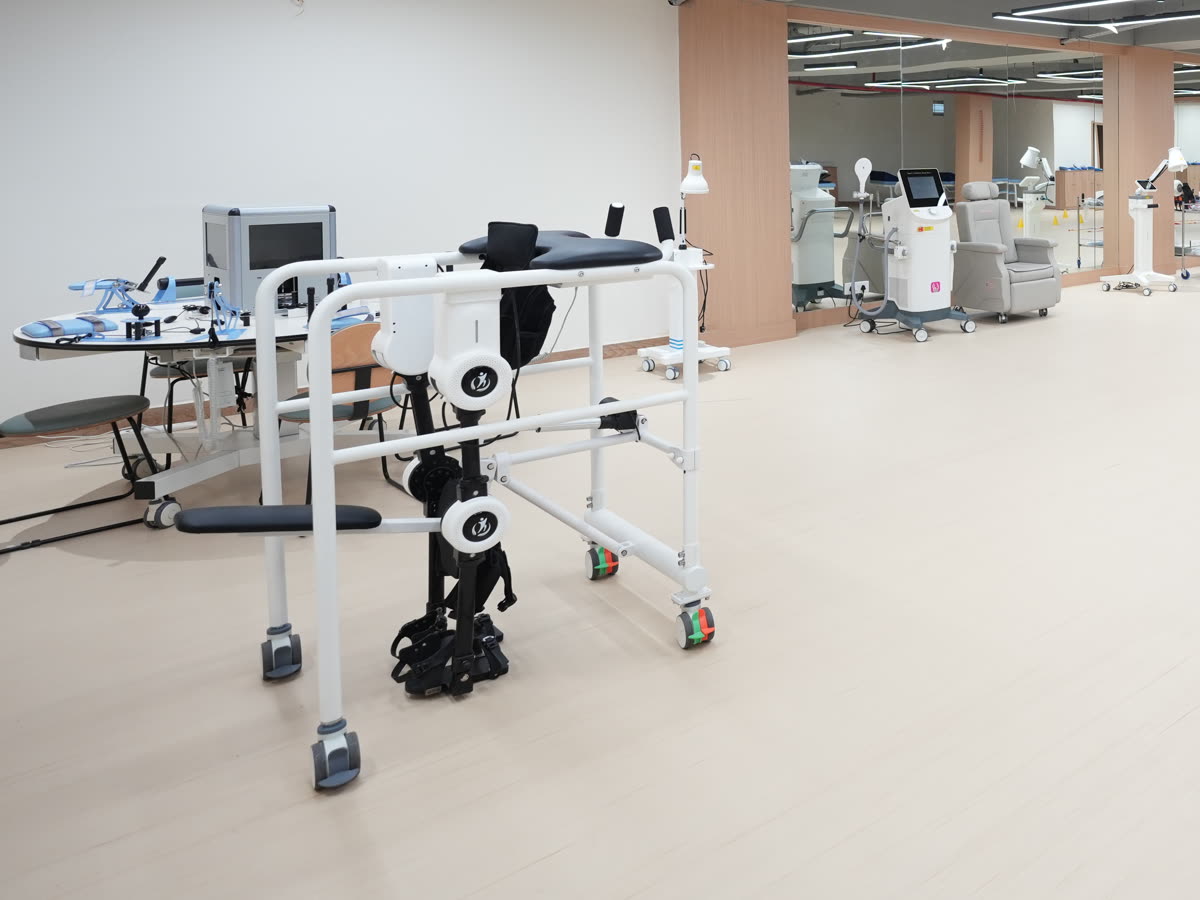
At SENSE Health, ask our physiotherapists whether a facial muscle assessment and home exercise programme is suitable for you, at our OPD or through home physiotherapy across Bengaluru. We work alongside your ENT surgeon or neurologist, who should guide your medical treatment. If facial weakness came with other symptoms and a stroke has been diagnosed, our stroke rehabilitation guide explains the very different recovery path. You can see our full range of services.
Visiting Us in Kalyan Nagar
SENSE Health is at AVR Heights, 100 Feet Road, HRBR Layout 1st Block, Kalyan Nagar, Bengaluru 560043, convenient for families in Banaswadi, Kammanahalli, Hennur, Horamavu and Indiranagar. The initial consultation is free.
Please bring:
- Your doctor's diagnosis and prescription (including steroid and eye-drop details)
- The date your symptoms started
- A few phone photos or short videos showing your face at rest, smiling and closing the eyes, ideally from different days
Ask us whether a facial movement and eye-closure assessment, with a home routine to practise between visits, is right for you.
OPD hours: Monday to Saturday, 9 AM to 7 PM.
Call +91 96633 34659, WhatsApp us, email listen@sensehealth.co.in, or get directions.
Sources
- Baugh RF, et al. Clinical practice guideline: Bell's palsy. Otolaryngology–Head and Neck Surgery (AAO-HNS). 2013.
- Madhok VB, et al. Corticosteroids for Bell's palsy (idiopathic facial paralysis). Cochrane Database of Systematic Reviews. 2016.
- Teixeira LJ, Valbuza JS, Prado GF. Physical therapy for Bell's palsy (idiopathic facial paralysis). Cochrane Database of Systematic Reviews. 2011.
- Peitersen E. Bell's palsy: the spontaneous course of 2,500 peripheral facial nerve palsies of different etiologies. Acta Oto-Laryngologica Supplementum. 2002.
- Heckmann JG, et al. The diagnosis and treatment of idiopathic facial paresis (Bell's palsy). Deutsches Ärzteblatt International. 2019.
- Di Pietro A, et al. Efficacy of adding selective electrical muscle stimulation to usual physical therapy for Bell's palsy: immediate and six-month outcomes. European Journal of Translational Myology. 2023.
- NHS. Bell's palsy. NHS UK.
This article is for general education and does not replace advice from your own doctor. If symptoms are sudden or severe, call 108 or go to the nearest emergency department.