Most people with Guillain-Barré syndrome (GBS) make a substantial recovery: around 60–80% can walk independently six months after the illness starts, and improvement often continues through the first year and beyond. Recovery is usually slow, though, and rehabilitation is what carries a person from the ICU bed back to walking, working and caring for themselves. Early chest care, careful positioning, graded strengthening and fatigue management all matter.
What Is Guillain-Barré Syndrome?
GBS is a condition in which the body's immune system attacks the peripheral nerves, the nerves outside the brain and spinal cord. It is the most common cause of acute flaccid paralysis worldwide. About two-thirds of patients report an infection in the six weeks before GBS starts (Leonhard et al., 2019), most often a respiratory infection, and the bacterium Campylobacter jejuni is one of the best-known triggers (Shahrizaila et al., 2021).
Typically, tingling or numbness and weakness start in the legs and spread to the arms and face, though patterns vary. Most people reach their weakest point within two weeks (Leonhard et al., 2019). Some develop weakness of the breathing and swallowing muscles, facial weakness, or swings in blood pressure and heart rate.
Who treats GBS in the acute phase?
Acute GBS is treated in hospital by neurologists and critical care teams, not in a rehabilitation centre. The two proven treatments, intravenous immunoglobulin (IVIg) and plasma exchange, are equally effective. Trials show benefit when IVIg is started within two weeks of weakness and plasma exchange within four weeks (Leonhard et al., 2019). If you suspect GBS, go immediately to a hospital emergency department with a neurology team, and call 108 if there is any difficulty breathing or swallowing.
How Serious Is GBS? ICU, Ventilation and Outlook
GBS can be life-threatening in its early weeks. According to a 2019 international guideline in Nature Reviews Neurology (Leonhard et al.):
- About 20% of people with GBS develop respiratory failure and need a ventilator. Others are admitted to ICU for fast-progressing weakness, swallowing problems, a weak cough or unstable blood pressure and heart rhythm.
- Death occurs in 3–10% of cases even with the best care, usually from heart or breathing complications, and these can happen during the recovery phase as well as the acute phase.
- Around 60–80% walk independently at six months. Even people who were completely paralysed or ventilated for long periods often show extensive recovery, especially in the first year.
- Residual problems are common, including weakness, nerve pain and fatigue, but some improvement can continue for more than five years.
A Lancet review similarly notes that most patients do well with treatment, but a substantial proportion are left with some disability (Shahrizaila et al., 2021).
What Happened in the 2025 Pune GBS Outbreak?
In early 2025, Pune saw an unusually large cluster of GBS cases. A peer-reviewed investigation of the outbreak described 230 cases between January and March 2025, with 12 deaths. The outbreak followed a wave of diarrhoeal illness. Campylobacter jejuni infection was confirmed in about half of the cases tested, and norovirus in about one-fifth. Contamination was found in water samples, with a possible link to poultry (Viswanathan et al., 2026). Another report from the same group noted that the outbreak was contained by March 2025 through urgent water and sanitation improvements, and that many patients needed prolonged hospital stays and rehabilitation (Tandale et al., 2026).
GBS remains rare, and most diarrhoeal illnesses do not lead to it. Simple hygiene still helps reduce the infections that can trigger it. The WHO advises boiling or disinfecting drinking water when its safety is in doubt, cooking poultry thoroughly, and washing hands well with soap (WHO).
The GBS Rehabilitation Timeline
Every person's course is different. Some people with mild GBS walk out of hospital within weeks; others need many months of therapy. Use this table as a general map, not a prediction.
| Phase | Typical goals | Therapies |
|---|---|---|
| ICU / acute | Protect lungs, joints and skin | Chest physiotherapy, positioning, gentle passive movements, swallow checks |
| Early ward rehab | Sit, balance, start moving | Bed mobility, sitting balance, assisted standing, breathing exercises |
| Inpatient rehab | Stand, transfer, walk with support | Graded strengthening, gait training, orthoses, hand therapy |
| Outpatient / home | Walk safely, return to daily tasks | Progressive exercise, stairs practice, home and work adaptations |
| Long-term | Manage fatigue and pain, stay active | Pacing, fitness programme, return-to-work planning, psychological support |
What Does GBS Rehabilitation Involve?
The guideline describes rehabilitation, with a rehabilitation specialist, physiotherapist and occupational therapist, as a crucial step towards recovery (Leonhard et al., 2019).
Breathing and chest care
When breathing muscles are weak, or a person has been on a ventilator, secretions can build up and cause pneumonia. Chest physiotherapy includes positioning, breathing exercises, assisted coughing and airway clearance techniques. Our article on chest vibration therapy for phlegm clearance explains one of these methods.
Positioning and contracture prevention
Weak, immobile limbs are at risk of joint stiffness (contractures), pressure sores and nerve pressure injuries (Leonhard et al., 2019). Regular turning, careful positioning, gentle range-of-motion exercises and splints where needed protect the body while the nerves heal.
Swallow assessment
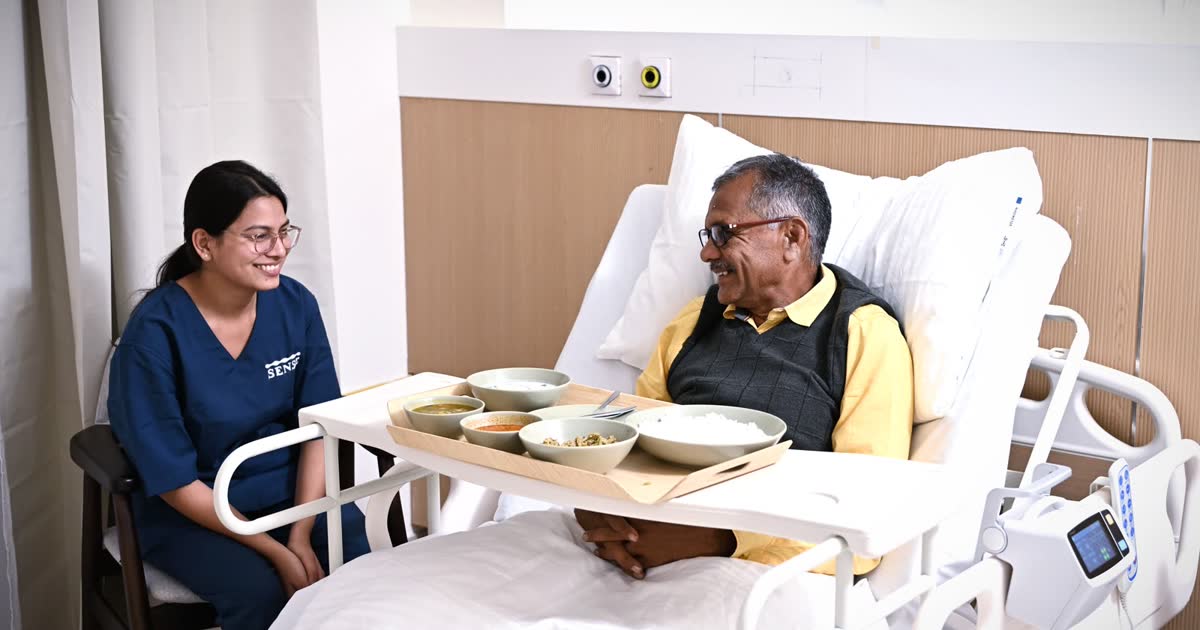
If the throat muscles are affected, swallowing may not be safe. A speech-language or swallow therapist assesses this before food and drink are started, and guides safe textures and techniques.
Graded strengthening and gait training
As nerves recover, muscles are rebuilt step by step: from assisted movements, to sitting and standing practice, to walking with a frame or sticks. Ankle-foot orthoses (supportive braces) can help if foot drop persists. Higher-intensity rehabilitation may help even in the later stages. In a randomised trial of 79 people in the chronic phase after GBS, a high-intensity outpatient programme over 12 months reduced disability more than a lower-intensity one (Khan et al., 2011).
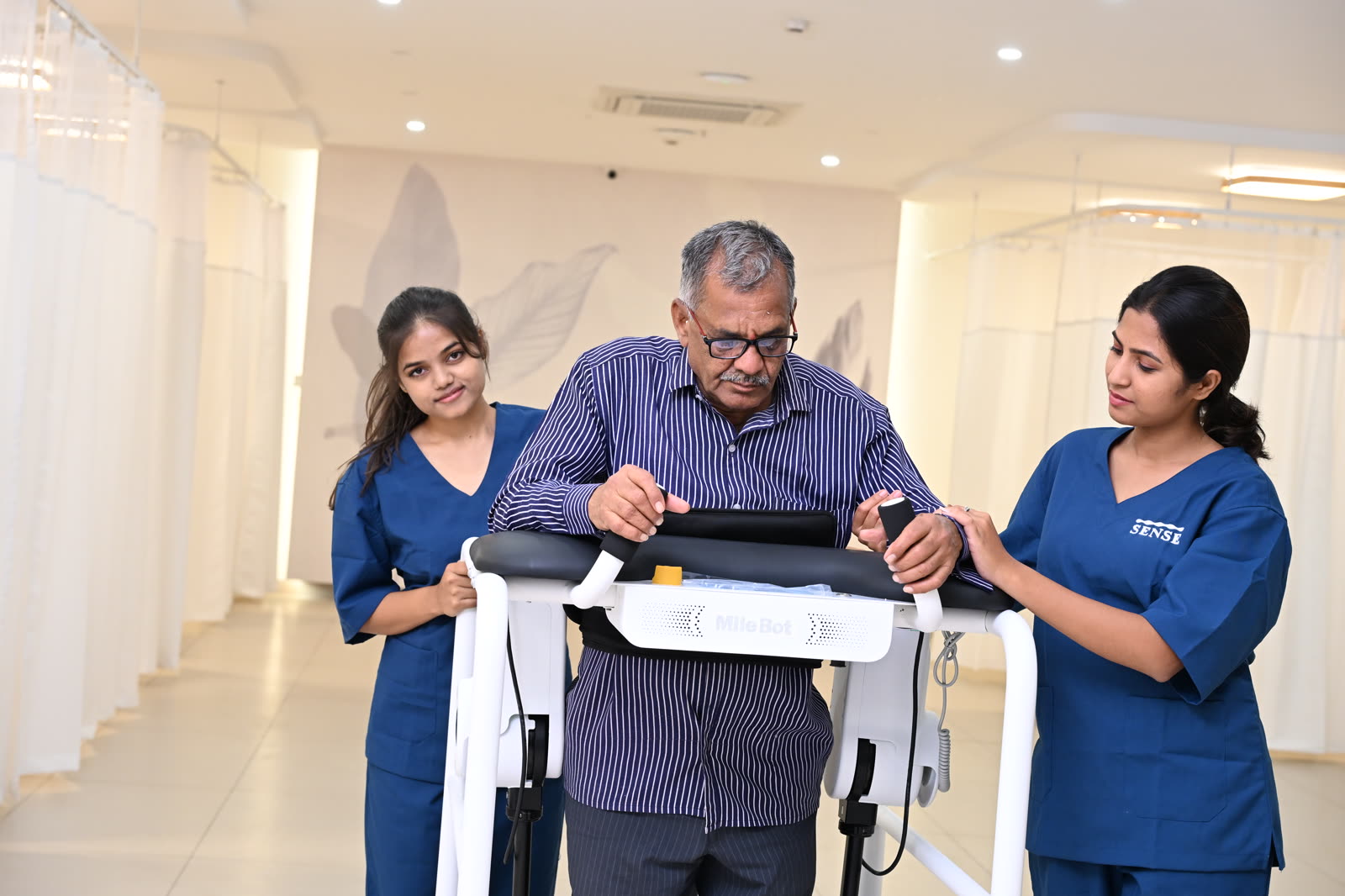
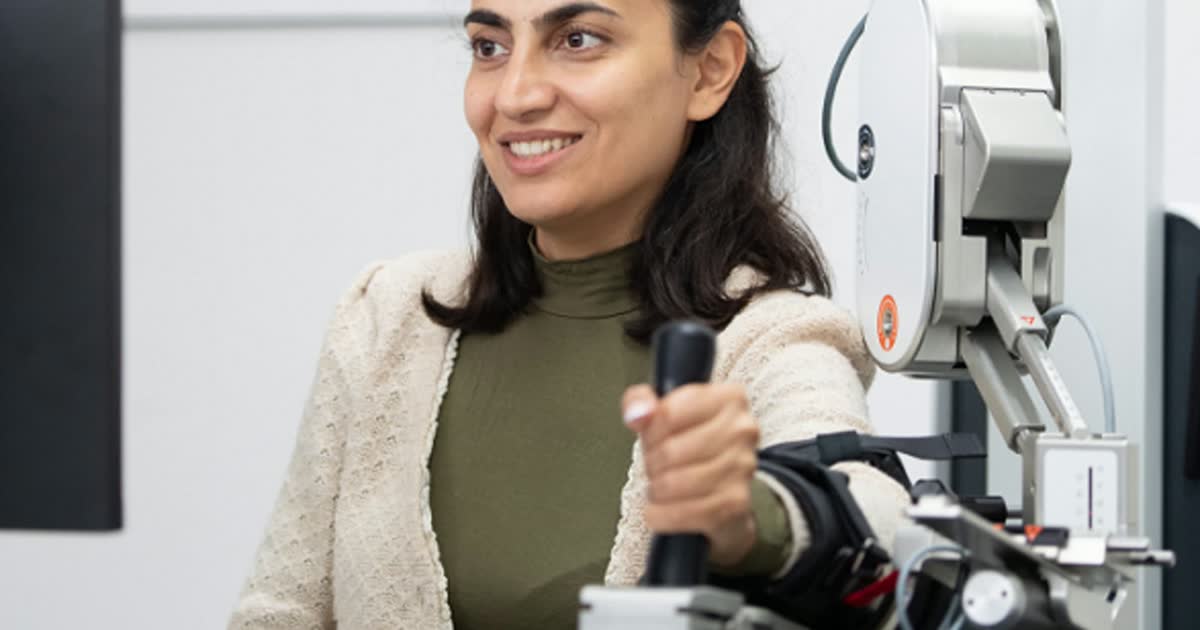
Robotic gait training may be used as part of gait training, especially when a person needs body-weight support to practise walking safely. However, evidence specific to GBS is limited to case reports, such as a 2024 report on an older patient where it was feasible and safe (Chen et al., 2024). Read more about robotic gait training.
Hand function and daily living
Occupational therapists work on grip, fine finger control, dressing, bathing and eating, and suggest aids such as built-up cutlery or grab bars during recovery.
Fatigue, pain and pacing
Fatigue is found in 60–80% of people with GBS and is often one of the most disabling long-term complaints. A graded, supervised exercise programme has been shown to reduce fatigue, but overwork can worsen fatigue, so intensity must be monitored (Leonhard et al., 2019). Pacing means spreading activity through the day, building up gradually, and resting before exhaustion.
Pain is also common: severe pain is reported in at least one-third of people a year after GBS starts (Leonhard et al., 2019). Your doctor can treat nerve pain with medicines; therapy, positioning and gentle activity help too.
Emotional support
Anxiety, depression and even hallucinations are frequent in GBS, particularly in the ICU (Leonhard et al., 2019). Being suddenly paralysed while fully awake is frightening. Counselling, family involvement and contact with others who have recovered from GBS can help.
Warning Signs During Recovery
Emergency: Call 108 or go to the nearest emergency department for difficulty breathing, breathlessness at rest or while talking, a weak cough, choking or trouble swallowing, or weakness that is spreading quickly.
Some people worsen again after first improving, known as a treatment-related fluctuation; this happens in about 6–10% of people. In around 5% of people with GBS, repeated relapses lead doctors to change the diagnosis to a chronic form called acute-onset CIDP (Leonhard et al., 2019). Tell the neurologist promptly about any new weakness, numbness, palpitations or dizziness on standing.
GBS Rehabilitation at SENSE Health
When choosing a centre after hospital discharge, look for close medical monitoring in the early weeks, daily physiotherapy and occupational therapy, chest care, swallow assessment, and a team that understands fatigue and does not push too hard too soon.
At SENSE Health, GBS is among the complex neurological conditions we rehabilitate. For patients stepping down from ICU, our Smart ICU monitoring with Cloudphysician provides 24/7 remote video and vital-sign monitoring alongside our 24/7 doctors and nursing. Therapy includes physiotherapy, chest vibration and respiratory therapy, occupational therapy, swallow therapy, robotic-assisted gait training, clinical nutrition, and home physiotherapy across Bengaluru once the person is ready to go home. Your neurologist continues to guide medical treatment. Families can also read our guide to recovery after an ICU stay.
Arranging an Assessment in North-East Bengaluru
SENSE Health is at AVR Heights, 100 Feet Road, HRBR Layout 1st Block, Kalyan Nagar, Bengaluru 560043, convenient for families from Hennur, Banaswadi, Kammanahalli, Horamavu and Ramamurthy Nagar. The initial consultation is free.
If your family member is still in hospital, we can discuss an inpatient transfer assessment. Please share:
- The discharge summary, nerve conduction report and treatment details (IVIg or plasma exchange dates)
- Current breathing support, tracheostomy or feeding tube details, if any
- Current medicines, including pain medicines
- A short note or video of what the person can do now (sit, stand, walk)
For people already home, our OPD is open Monday to Saturday, 9 AM to 7 PM. For insurance, ask our admissions team to check your policy and help with pre-authorisation.
Call +91 96633 34659, WhatsApp us, email listen@sensehealth.co.in, or get directions.
Sources
- Leonhard SE, et al. Diagnosis and management of Guillain-Barré syndrome in ten steps. Nature Reviews Neurology. 2019.
- Shahrizaila N, Lehmann HC, Kuwabara S. Guillain-Barré syndrome. The Lancet. 2021.
- Viswanathan R, et al. A large community outbreak of Guillain-Barré syndrome in Pune City, India, 2025. American Journal of Tropical Medicine and Hygiene. 2026.
- Tandale BV, et al. Is there a causal nexus between norovirus infection and Guillain-Barré syndrome: the lessons learnt from GBS outbreak in Pune, India, 2025. Journal of the Neurological Sciences. 2026.
- World Health Organization. Campylobacter fact sheet. WHO.
- Khan F, et al. Outcomes of high- and low-intensity rehabilitation programme for persons in chronic phase after Guillain-Barré syndrome: a randomized controlled trial. Journal of Rehabilitation Medicine. 2011.
- Chen FY, et al. Additional rehabilitative robot-assisted gait training for ambulation in geriatric individuals with Guillain-Barré syndrome: a case report. Medicina. 2024.
This article is for general education and does not replace advice from your own doctor. If symptoms are sudden or severe, call 108 or go to the nearest emergency department.