Spinal cord injury (SCI) rehabilitation is the structured programme that follows spinal surgery or stabilisation: it builds whatever movement can return, teaches the person and family to manage bladder, bowel, skin and breathing safely, and trains the skills (transfers, wheelchair use, standing or walking where possible) that make independent life realistic. How much movement returns depends mainly on whether the injury is complete or incomplete, and most neurological recovery happens in the first three to six months. The complications that threaten life after SCI are largely preventable with good routines, which is why rehabilitation is as much about education as exercise.
Autonomic dysreflexia is a medical emergency in people injured at T6 or above: a sudden pounding headache, sweating or flushing above the injury, blurred vision or a blocked nose with a sharp rise in blood pressure. Sit the person upright, loosen tight clothing, check the catheter or bladder and bowel for the cause, and if the blood pressure stays high or the cause cannot be found, call 108 or 112 immediately.
How Common Is Spinal Cord Injury?
The Global Burden of Disease study estimated 20.6 million people living with SCI worldwide in 2019 and about 0.9 million new injuries that year; falls and road injuries were the leading causes, and neck-level injuries outnumbered lower injuries (GBD Spinal Cord Injuries Collaborators, 2023). India has no national SCI registry, so estimates are modelled: GBD 2021 data put India's share at about 15.6% of the roughly 574,500 new cases worldwide in 2021, roughly 89,000 new injuries a year (Wei et al., 2026), with falls responsible for about 70% of Indian cases (Yuan et al., 2025).
What Do the ASIA Grades Mean?
Doctors classify SCI with the ASIA Impairment Scale (AIS), part of the International Standards revised in 2019 (Rupp et al., 2021).
| AIS grade | What it means | What it usually implies for recovery |
|---|---|---|
| A (complete) | No movement or sensation in the lowest sacral segments | About 70% stay complete in the first year; walking recovery is uncommon |
| B (sensory incomplete) | Some sensation but no movement below the injury | Better chance of improvement than A; still highly variable |
| C (motor incomplete, weak) | Some movement, but most key muscles are weak | Substantial but unpredictable recovery; many regain some walking |
| D (motor incomplete, strong) | Most key muscles can move against gravity | Best prognosis; most regain walking, though speed and endurance vary |
| E (normal) | Normal movement and sensation after a confirmed injury | Monitor for pain, spasticity and bladder issues |
In a European cohort, about 70% of people first graded AIS A and 90% graded AIS D stayed in the same grade during the first year, while the AIS grade improved in about 30% of patients overall (Spiess et al., 2009). An international expert panel concluded that almost everyone recovers some movement below the injury, that recovery in motor-incomplete injuries (AIS C and D) is more substantial and more variable, and that the vast majority of recovery occurs in the first three months with a little continuing up to 18 months or longer (Fawcett et al., 2007).
A prediction rule from a European Lancet study (developed in 492 of 1,442 patients with one-year follow-up) uses age (under or over 65) and four bedside tests within 15 days of injury (thigh and calf muscle strength, light-touch sensation at the knee and ankle) to estimate the chance of walking independently at one year with excellent accuracy (van Middendorp et al., 2011). Ask the rehabilitation doctor to go through this examination with you.
How Is Progress Measured?
The Functional Independence Measure (FIM) scores 18 daily tasks from 18 (fully dependent) to 126 (fully independent). In a US database of 47,153 people with traumatic SCI, the average inpatient stay was about 26 days and total FIM scores rose from the high 50s at admission to the low-to-mid 80s at discharge, a gain of roughly 26 points, with more than 70% discharged home (Granger et al., 2012). The Spinal Cord Independence Measure (SCIM III) was designed for SCI and, in a 425-patient international study, was more sensitive than FIM to changes in breathing, bladder and bowel management and mobility (Itzkovich et al., 2007).
The Phases of SCI Rehabilitation
| Phase | Typical timing | Priorities |
|---|---|---|
| Acute | First days to 2–3 weeks | Spinal stabilisation or surgery, breathing support if needed, bladder catheter, skin protection, early gentle movement |
| Inpatient rehabilitation | Weeks to a few months | Daily therapy, sitting tolerance, transfers, wheelchair skills, standing and gait training where possible, bladder and bowel programmes, family training |
| Transition home | Around discharge | Ramps and bathroom changes, equipment, carer competence in catheter care, skin checks and bowel routine |
| Community and long-term | Months to years | Fitness, work or study, spasticity and pain review, annual urological and skin checks, mental health |
Bladder Management
Most people with SCI cannot empty the bladder normally. The options are intermittent catheterisation (a clean catheter four to six times a day, keeping each volume under about 500 ml), an indwelling urethral or suprapubic catheter changed monthly, or reflex voiding into a condom catheter for some men (MSKTC, Bladder Management Options Following SCI). Intermittent catheterisation is usually preferred when the person or a carer can do it reliably; indwelling urethral catheters carry a higher risk of bladder stones (about 3 in 10 users), and an overfilled bladder is the most common trigger of autonomic dysreflexia. Genitourinary disease is the leading cause of readmission after SCI (NSCISC, 2026), so the routine matters: fluids, timing, hand hygiene, and regular kidney and bladder checks.
Bowel Programme
A neurogenic bowel is managed with a scheduled routine: a fixed time each day or alternate day, usually after a meal, adequate fibre and fluids, a commode where possible, and, depending on the level of injury, digital stimulation, suppositories or laxatives as set out in the clinical practice guideline (Johns et al., 2021). Constipation is a common trigger of autonomic dysreflexia, so the programme is a safety measure as well as a dignity measure.
Pressure Injuries: Prevention Every Day
Skin that cannot feel pressure breaks down quickly. Model Systems guidance: in a wheelchair, shift weight every 15 to 30 minutes for at least 30 to 90 seconds; turn on a regular schedule in bed at night; check the skin daily over the tailbone, buttocks, hips, heels and shoulder blades; keep skin clean and dry. The same guidance states that 95% of pressure sores are preventable (MSKTC, Preventing Pressure Sores). Skin disease is the second most common cause of rehospitalisation after SCI (NSCISC, 2026).
Autonomic Dysreflexia: The Emergency Every Family Must Know
People with injuries at T6 or above can develop autonomic dysreflexia (AD): a sudden rise in blood pressure (20 to 40 mmHg above the usual systolic reading) triggered by something painful or irritating below the injury that the person cannot feel: a full bladder or kinked catheter, constipation, pressure sores, ingrown toenails, tight clothing or fractures. Symptoms include a pounding headache, sweating and flushing above the injury, nasal congestion, blurred vision and a slow pulse (MSKTC, Autonomic Dysreflexia).
First steps: sit the person upright, loosen clothing and leg-bag straps, check and empty the bladder (unkink or change the catheter), check the bowel and skin, and monitor blood pressure every few minutes. If it stays high or no cause is found, it is an emergency.
Breathing and Chest Care in Cervical Injuries
Neck injuries weaken the diaphragm and chest muscles and make coughing ineffective, so secretions build up. Respiratory disease, mostly pneumonia, is the leading cause of death both in the first year and in later years after SCI (NSCISC, 2026). A clinical practice guideline sets out the elements of care: lung function monitoring, assisted coughing, secretion clearance, breathing exercises and, where needed, ventilator support (Consortium for Spinal Cord Medicine, 2005). At SENSE Health, chest physiotherapy and vibration-assisted secretion clearance are part of the programme, with oxygen, ICU/HDU care and ventilator support available when required.
Spasticity, Pain and Mood
Spasticity affected 65% of people in a Canadian registry at discharge and was problematic enough to need treatment in about a third, with one in five having ongoing functional limitation from it up to five years after injury; it was most common in cervical and thoracic motor-incomplete injuries (Holtz et al., 2017). Management follows the same ladder as after stroke: positioning and stretching, physiotherapy, oral medicines, botulinum toxin for focal spasticity and, rarely, a baclofen pump. A sudden worsening often signals a hidden problem such as a urine infection or pressure sore.
Depression is diagnosed in about 22% of people after SCI, far above the general population (Williams & Murray, 2015). Grief, money worries and the loss of privacy that comes with needing help for bladder and bowel care are normal and should be talked about; mood screening, counselling and peer contact belong in the plan from the first week. Our post-ICU recovery guide covers the emotional side of long hospital stays.
Does Robotic Gait Training Help in SCI?
It depends on the injury. A 2012 Cochrane review of five trials found no clear advantage of any walking-training approach, including robotic training, over another (Mehrholz et al., 2012). A more recent meta-analysis of 23 randomised studies (690 people), mostly in incomplete injuries, found small improvements in daily activities, leg strength and walking distance, with greater effects in the subacute phase and in programmes longer than two months (Park et al., 2024).
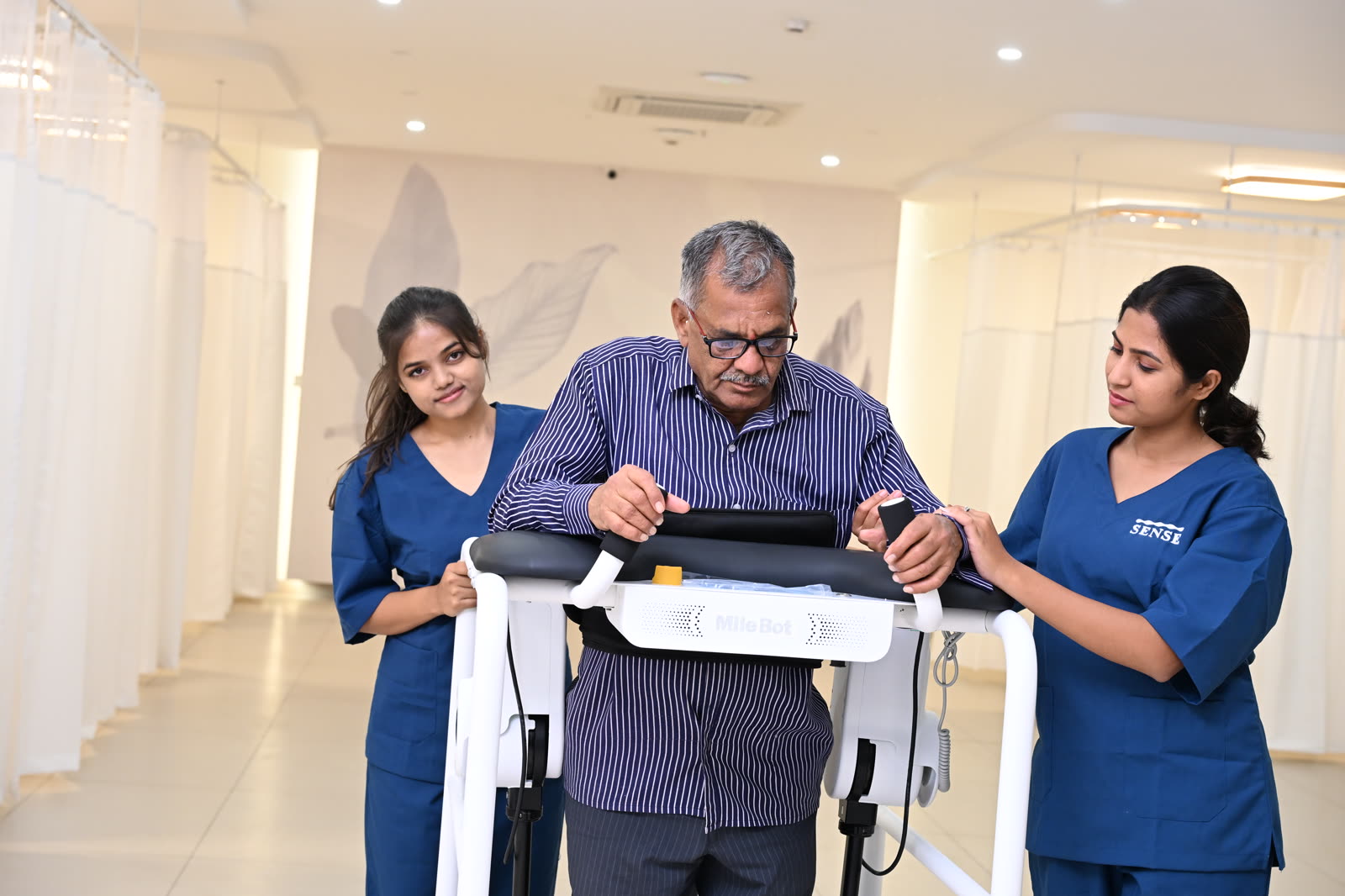
In practice, robotic-assisted gait training (RAGT) is most useful for motor-incomplete injuries (AIS C and D) with some leg movement, as a way to practise many safe, repeated steps alongside overground walking. For complete injuries, families should not expect it to restore independent walking; anyone promising otherwise is overselling.
SCI Rehabilitation at SENSE Health
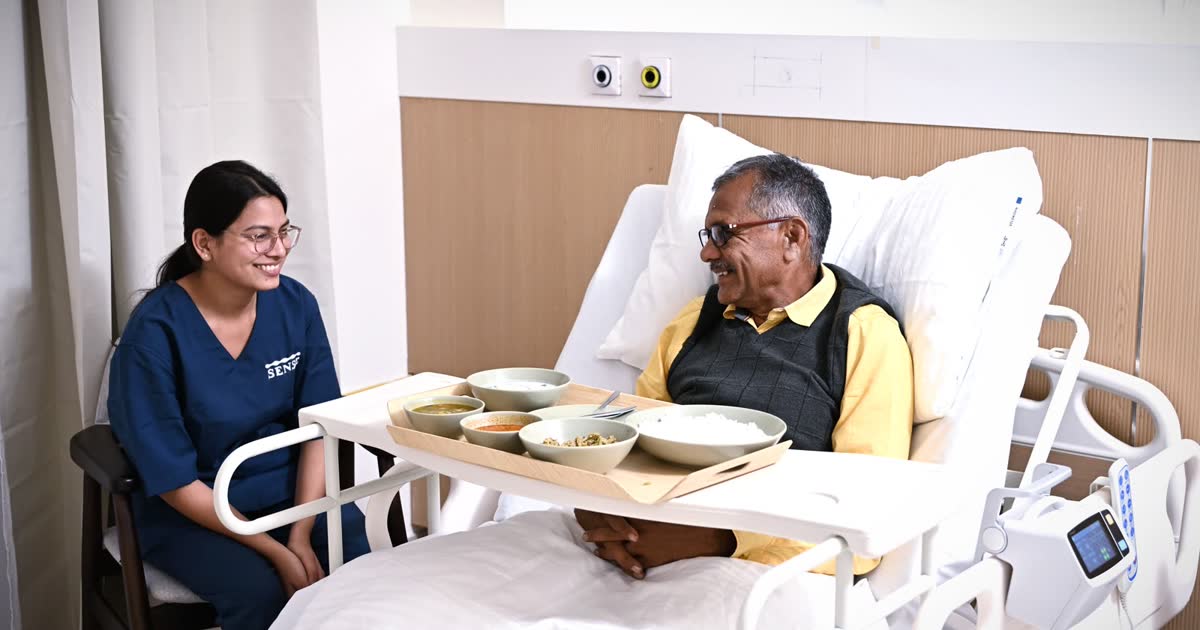
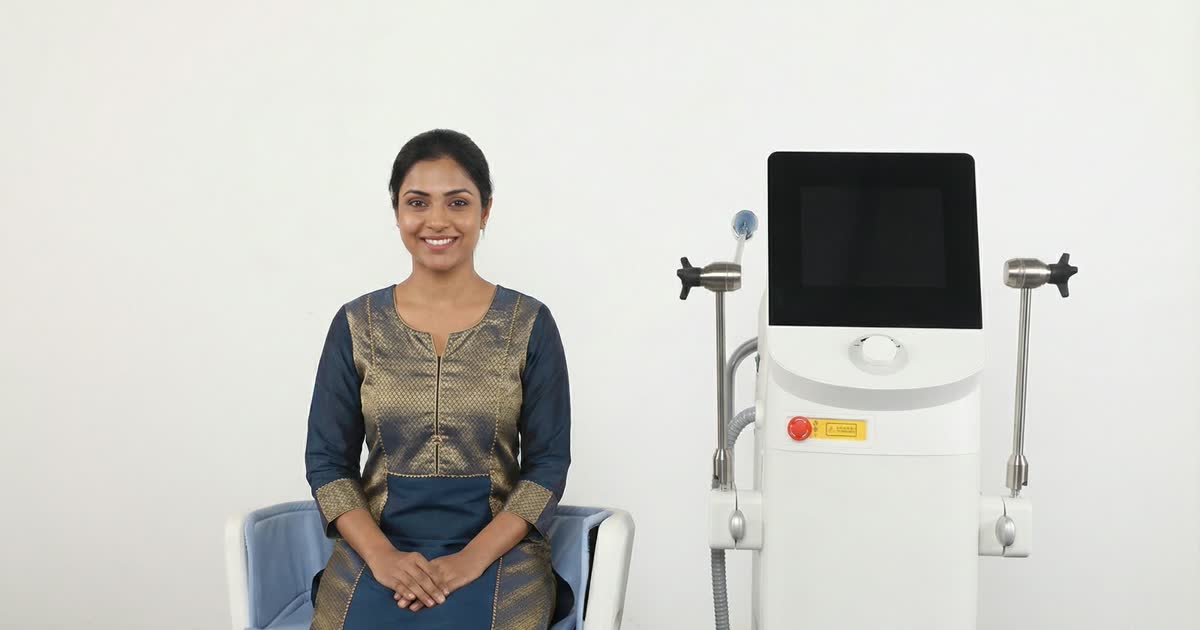
SENSE Health in Kalyan Nagar provides inpatient and outpatient SCI rehabilitation led by our consultant physiatrist, Dr. Vaibhav Shivram Lokhande, with physiotherapists, occupational therapists, nurses, a clinical nutritionist and our neurologist. Inpatients have 24/7 doctors and a 24/7 emergency response team, with ICU/HDU, oxygen and ventilator support available when clinically required. Services include manual and robotic gait training, NMES, chest physiotherapy, spasticity management and pelvic-floor magnetic therapy (see our guide to pelvic floor magnetic stimulation). Before admission you receive a written package sheet listing what the chosen inpatient package includes and what is charged separately when clinically needed (for example ICU/HDU care, ventilator support, medicines and investigations), explained and signed before you decide. Families facing other causes of paralysis may find our Guillain-Barré syndrome recovery guide useful.
Visiting Us in Kalyan Nagar
SENSE Health is at AVR Heights, 100 Feet Road, HRBR Layout 1st Block, Kalyan Nagar, Bengaluru 560043, close to Banaswadi, Kammanahalli and Hennur, and reachable from Indiranagar, Hebbal and Horamavu. Bring the discharge summary or operation notes, MRI reports, the ASIA examination if recorded, the current catheter and bowel routine, and the medicine list. Expect a free initial consultation, a neurological, functional, skin and bladder assessment, and a frank discussion of whether inpatient rehabilitation, OPD therapy or home-based support fits best.
OPD hours: Monday to Saturday, 9 AM to 7 PM.
Call +91 96633 34659, WhatsApp us, email listen@sensehealth.co.in, or get directions.
Sources
- GBD Spinal Cord Injuries Collaborators. Global, regional, and national burden of spinal cord injury, 1990–2019: a systematic analysis for the Global Burden of Disease Study 2019. Lancet Neurology. 2023.
- Wei Y, et al. An analysis of the burden of spinal cord injury differences between global epidemiology and trends to America, China and India. Global Spine Journal. 2026.
- Yuan K, et al. Comparative analysis and forecast of spinal cord injury burden in BRICS countries (1990–2021): insights from the Global Burden of Disease Study 2021. Frontiers in Public Health. 2025.
- Rupp R, et al. International Standards for Neurological Classification of Spinal Cord Injury: revised 2019. Topics in Spinal Cord Injury Rehabilitation. 2021.
- Spiess MR, et al. Conversion in ASIA impairment scale during the first year after traumatic spinal cord injury. Journal of Neurotrauma. 2009.
- Fawcett JW, et al. Guidelines for the conduct of clinical trials for spinal cord injury as developed by the ICCP panel: spontaneous recovery after spinal cord injury and statistical power needed for therapeutic clinical trials. Spinal Cord. 2007.
- van Middendorp JJ, et al. A clinical prediction rule for ambulation outcomes after traumatic spinal cord injury: a longitudinal cohort study. Lancet. 2011.
- Granger CV, et al. The Uniform Data System for Medical Rehabilitation: report of patients with traumatic spinal cord injury discharged from rehabilitation programs in 2002–2010. American Journal of Physical Medicine & Rehabilitation. 2012.
- Itzkovich M, et al. The Spinal Cord Independence Measure (SCIM) version III: reliability and validity in a multi-center international study. Disability and Rehabilitation. 2007.
- Model Systems Knowledge Translation Center. Bladder Management Options Following Spinal Cord Injury. MSKTC.
- Johns J, et al. Management of neurogenic bowel dysfunction in adults after spinal cord injury: clinical practice guideline for health care providers. Topics in Spinal Cord Injury Rehabilitation. 2021.
- Model Systems Knowledge Translation Center. Skin Care and Pressure Sores, Part 2: Preventing Pressure Sores. MSKTC. 2009.
- National Spinal Cord Injury Statistical Center. Traumatic Spinal Cord Injury Facts and Figures at a Glance, 2026 SCI Data Sheet. NSCISC, University of Alabama at Birmingham. 2026.
- Model Systems Knowledge Translation Center. Autonomic Dysreflexia. MSKTC.
- Consortium for Spinal Cord Medicine. Respiratory management following spinal cord injury: a clinical practice guideline for health-care professionals. Journal of Spinal Cord Medicine. 2005.
- Holtz KA, et al. Prevalence and effect of problematic spasticity after traumatic spinal cord injury. Archives of Physical Medicine and Rehabilitation. 2017.
- Williams R, Murray A. Prevalence of depression after spinal cord injury: a meta-analysis. Archives of Physical Medicine and Rehabilitation. 2015.
- Mehrholz J, Kugler J, Pohl M. Locomotor training for walking after spinal cord injury. Cochrane Database of Systematic Reviews. 2012.
- Park JM, et al. Robot-assisted gait training in individuals with spinal cord injury: a systematic review and meta-analysis of randomized controlled trials. Annals of Rehabilitation Medicine. 2024.
This article is for general education and does not replace advice from your own doctor. If symptoms are sudden or severe, call 108 or go to the nearest emergency department.