Many people with urinary incontinence improve without surgery. The proven first step is supervised pelvic floor muscle training for at least three months for stress or mixed leakage, or bladder training for urgency, together with simple changes to caffeine, fluids and weight. Pelvic floor magnetic stimulation, where you sit fully clothed on a special chair, is a newer option with encouraging but still limited evidence. It is best used as an add-on to pelvic floor training after a proper medical assessment, not as a replacement for either.
Leakage is common and rarely discussed. In the Longitudinal Ageing Study in India (LASI), about 10% of adults aged 60 and above reported leaking urine when they coughed, sneezed, laughed or lifted something. Only 3.6% reported ever being diagnosed with urinary incontinence (Leng et al., BMC Public Health, 2023). Many people simply put up with it.
What Are the Different Types of Urinary Incontinence?
The type matters because the treatment differs. The table below draws on descriptions from the NHS and the US National Institute on Aging, and on NICE first-line advice.
| Type | Typical cause | First-line approach | Where magnetic stimulation may fit |
|---|---|---|---|
| Stress: leaks on coughing, sneezing, lifting | Weak pelvic floor or sphincter after childbirth or prostate surgery; obesity | Supervised pelvic floor training for 3+ months; weight loss if BMI over 30 | Most studied use; a possible add-on to training |
| Urge (overactive bladder): sudden urge, leaks on the way | Overactive bladder muscle; caffeine, alcohol, constipation, infection | Bladder training for 6+ weeks; less caffeine; medicines if needed | Smaller trials are promising; evidence still developing |
| Mixed | Both of the above | Pelvic floor training plus bladder training | As for stress and urge |
| Overflow: dribbling, bladder never feels empty | Enlarged prostate, stones, constipation, nerve damage | Doctor or urologist to find and treat the cause | Not a treatment for overflow |
| Functional: cannot reach the toilet in time | Arthritis, weakness or confusion; bladder itself works | Easier toilet access, commode, mobility training, timed toilet visits | Rarely the main answer |
| Neurogenic | Stroke, spinal cord injury, Parkinson's, multiple sclerosis | Specialist bladder assessment and a management plan | Recent chair trials excluded these patients; decide case by case |
When Should You See a Doctor First?
The NHS advises anyone with incontinence to see a doctor, and there is no need to feel embarrassed. NICE guidance for women (NG123) recommends a urine test for every woman with incontinence, and specialist referral for certain warning signs. See a doctor promptly if you have:
- Blood in your urine, even once
- Pain in the bladder or urethra that does not go away
- Burning, fever or repeated urine infections
- Difficulty emptying your bladder, a weak stream, or a feeling that the bladder is still full
- Leakage along with new numbness, weakness or other neurological symptoms
Emergency: new trouble passing urine or loss of bladder or bowel control, with back pain, numbness around the genitals or bottom, or weakness in both legs, can mean spinal nerve compression (cauda equina syndrome). Call 108 or 112 or go to the nearest emergency department immediately.
What Treatments Work First?
Pelvic floor muscle training (PFMT)
This is the treatment with the strongest evidence. A 2018 Cochrane review by Dumoulin and colleagues pooled 31 trials involving 1,817 women. Women with stress incontinence who did pelvic floor training were about eight times more likely to report cure than those with no treatment: 56% vs 6%, which the reviewers rated high-quality evidence. Across all types of incontinence, the figure was 35% vs 6%. Side effects were rare and minor.
NICE recommends supervised training for at least three months as the first treatment for women with stress or mixed incontinence. A programme should include at least eight contractions, three times a day. NICE also advises that a clinician confirm you are contracting the right muscles before supervised training begins. If you cannot contract the pelvic floor at all, NICE says electrical stimulation or biofeedback can be considered to aid motivation and adherence.
Bladder training
For urge or mixed incontinence, NICE recommends bladder training for at least six weeks as a first-line treatment. You gradually stretch the time between toilet visits, guided by a bladder diary.
Lifestyle changes
NICE recommends:
- A trial of cutting down caffeine (tea, coffee, cola) for overactive bladder
- Adjusting fluid intake if you drink a lot or very little. Drinking too little can concentrate urine and irritate the bladder
- Losing weight if your BMI is above 30
Medicines and surgery
If these steps are not enough, a urologist or gynaecologist may discuss bladder medicines (often used together with bladder training) or procedures such as a sling for stress incontinence. Men with leakage after prostate surgery should keep their urologist involved. These are reasonable options, and choosing to try non-surgical care first does not rule them out later.
What Is Pelvic Floor Magnetic Stimulation?
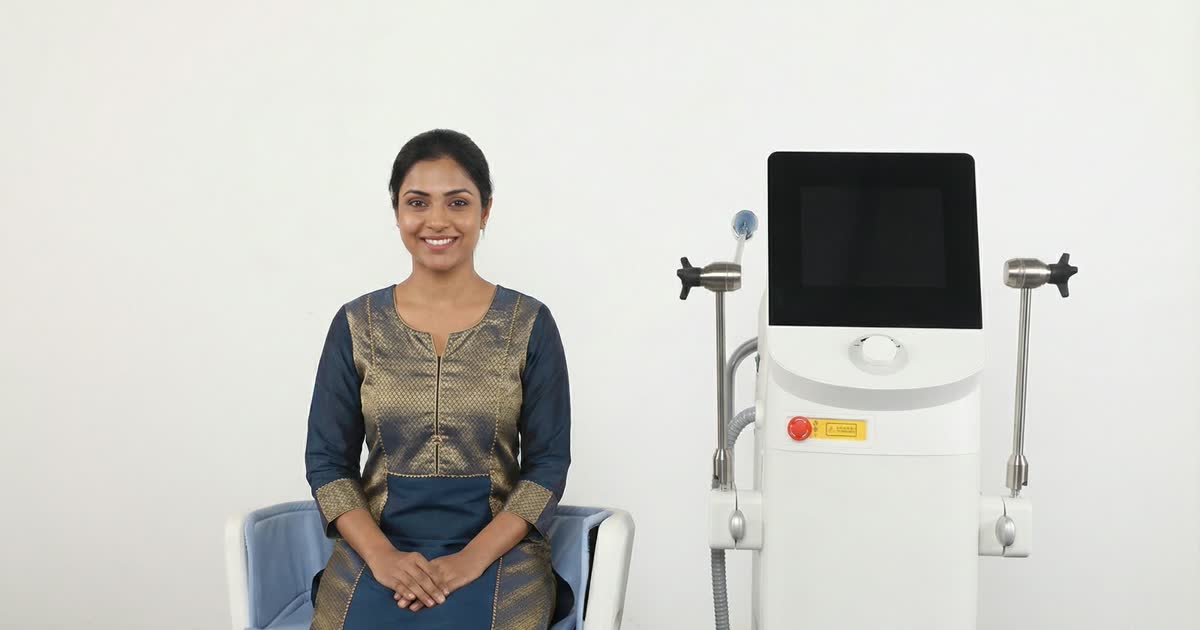
Pelvic floor magnetic stimulation uses a special chair that delivers pulsed magnetic fields. As the European Association of Urology (EAU) describes it, the patient sits on the device while repeated magnetic pulses stimulate the nerves to the pelvic floor, making the muscles contract and relax. Newer, stronger devices are often called HIFEM (high-intensity focused electromagnetic) chairs.
You stay fully clothed and there are no probes. In two of the HIFEM studies below, sessions lasted 28 minutes, and courses in recent trials ranged from six sessions over three weeks to twelve sessions over six weeks. In the United States, some of these chairs have FDA 510(k) clearance for urinary incontinence in women and men. Clearance means a device is judged equivalent to devices already on the market. It does not prove the chair works better than exercise.
What Does the Research Actually Show?
The evidence is promising but early. Here is a fair summary of the main studies, including two cited on our own service page:
- Long et al., Biomedicines, 2024: 19 women with stress incontinence had six 28-minute sessions over three weeks. At six months, average leakage on a pad test fell from 4.2 g to 0.6 g, symptom scores improved, and 13 of 19 women (68%) improved significantly. No significant side effects were observed. The authors point out the limits: a small sample, a single centre, a short follow-up and no control group, which makes it hard to know how much of the change was due to the chair.
- Leonardo et al., Neurourology and Urodynamics, 2025: this meta-analysis pooled seven studies in women. Compared with control groups, HIFEM reduced leakage episodes and improved symptom scores. However, it did not show a significant difference in pelvic floor contraction strength. The authors flagged high heterogeneity and possible bias, and called for better-blinded trials.
- A 2026 randomised trial (Kilicoz Bakar et al.) compared pelvic floor training alone with pelvic floor training plus HIFEM in 44 women with stress incontinence. Both groups improved. The combined group improved more on several measures, although not all differences held up after statistical correction.
- A 2026 sham-controlled trial (Lukanović et al.) in 70 women with urge incontinence found greater symptom improvement at six months with real stimulation than with a sham, and no serious side effects. The authors note that over a third of the sham group did not complete follow-up.
- A 2026 umbrella review of 15 systematic reviews found improvements over sham in pad tests and symptom scores, with only mild, short-lived side effects. Its authors noted that the evidence varied in quality, used very different protocols, and rarely followed patients beyond six months.
For men after prostate surgery, a 2026 review found limited but generally positive evidence: stimulation may speed recovery of continence compared with exercises alone, with similar long-term results. For neurogenic bladder, the chair trials above excluded people with neurological conditions such as stroke, spinal cord injury or multiple sclerosis, so decisions should be made case by case.
What Do Clinical Guidelines Say?
NICE NG123 (2019), the UK guideline on incontinence in women, makes no recommendation for or against magnetic stimulation. It recommends supervised pelvic floor training and bladder training first, and advises against routinely adding electrical stimulation to pelvic floor training.
The current EAU guideline goes further. It advises not offering electromagnetic stimulation for stress incontinence outside a well-regulated research study (a strong recommendation), based on an earlier double-blind trial in 70 women that found no benefit over sham.
The newer high-intensity chairs now have more recent trial data, summarised above, which these guidelines have not yet fully weighed. The honest position is this: magnetic stimulation is one option, used alongside pelvic floor training, for people who have been properly assessed and understand that the evidence is still developing. It is not a substitute for exercises, for a medical diagnosis, or for surgery when surgery is the right choice.
Who Should Not Have Magnetic Stimulation?
Based on manufacturer safety recommendations used in recent trials (Lukanović 2026; Kilicoz Bakar 2026) and a safety review (Pavčnik 2023), magnetic stimulation is generally avoided if you have:
- A pacemaker, defibrillator or other implanted electronic device (such as a medication pump), or a heart rhythm disorder
- Metal implants in or near the treatment area
- Pregnancy
- Epilepsy
- An active urinary tract infection
- Recent pelvic surgery or childbirth
- Blood clots (thrombosis) or a pelvic cancer
Reported side effects are usually mild and temporary, such as tingling, muscle soreness or more frequent bowel movements. Always tell the team about every implant, surgery and medicine before a session.
How SENSE Health Approaches Bladder Leakage
At SENSE Health in Kalyan Nagar, our pelvic floor magnetic stimulation chair sits within a wider rehabilitation programme. That programme includes physiotherapy and, for older adults, our senior care services. We begin with an assessment that screens for warning signs and implants, then look at your type of leakage, mobility and daily routine.
Ask us about a supervised pelvic floor exercise programme and bladder diary support. We will explain whether the chair is suitable for you as an add-on. If your symptoms point to a problem that needs a urologist or gynaecologist first, we will say so. People who have leakage after a spinal cord injury, or alongside memory problems (see our dementia care guide), need a more individual plan, and we will discuss it openly with you.
Getting Help in Kalyan Nagar and North-East Bengaluru
Your first consultation is free and private. To make it useful, please bring:
- A three-day bladder diary: what you drink, when you pass urine, and when you leak (NICE recommends at least three days)
- Any urine test reports and scan results
- A list of all medicines, including Ayurvedic and over-the-counter products
- Details of any pacemaker, metal implant, recent surgery or possible pregnancy
Families come to us from Kalyan Nagar, HRBR Layout, Banaswadi, Kammanahalli, Hennur and Hebbal for OPD care. If leakage is part of a bigger recovery after stroke or illness, we can also discuss an inpatient rehabilitation assessment.
- OPD hours: Monday to Saturday, 9 AM to 7 PM
- Address: AVR Heights, 100 Feet Road, HRBR Layout 1st Block, Kalyan Nagar, Bengaluru 560043
- Call: +91 96633 34659
- WhatsApp: WhatsApp us
- Directions: Open in Google Maps
Sources
- Leng S, Jin Y, Vitiello MV, et al. Self-reported insomnia symptoms are associated with urinary incontinence among older Indian adults: evidence from the Longitudinal Ageing Study in India (LASI). BMC Public Health. 2023.
- NHS. Urinary incontinence. NHS. Accessed 2026.
- National Institute on Aging. Urinary Incontinence in Older Adults. NIH. Accessed 2026.
- National Institute for Health and Care Excellence. Urinary incontinence and pelvic organ prolapse in women: management (NG123). NICE. 2019.
- NHS. Sciatica: when to get urgent help. NHS. Accessed 2026.
- Dumoulin C, Cacciari LP, Hay-Smith EJC. Pelvic floor muscle training versus no treatment, or inactive control treatments, for urinary incontinence in women. Cochrane Database of Systematic Reviews. 2018.
- European Association of Urology. EAU Guidelines on Non-neurogenic Female LUTS: Disease Management. EAU. Accessed 2026.
- US Food and Drug Administration. 510(k) Summary K241516: BTL-398. FDA. 2025.
- Long CY, Lin KL, Yeh JL, et al. Effect of High-Intensity Focused Electromagnetic Technology in the Treatment of Female Stress Urinary Incontinence. Biomedicines. 2024.
- Leonardo K, Rahardjo HE, Afriansyah A. Noninvasive High-Intensity Focused Electromagnetic Therapy in Women With Urinary Incontinence: A Systematic Review and Meta-Analysis. Neurourology and Urodynamics. 2025.
- Kilicoz Bakar M, Ozkocak G, Algun ZC. Comparison of High-Intensity Electromagnetic Therapy and Pelvic Floor Muscle Exercises in Women with Urinary Incontinence: A Randomized Controlled Trial. International Journal of Women's Health. 2026.
- Lukanović D, Antič A, Pavčnik M, et al. Magnetic Stimulation in the Treatment of Urgency Urinary Incontinence: A Randomized Sham-Controlled Clinical Trial. International Urogynecology Journal. 2026.
- Mohammad-Rahimi M, Sahebari M, Salehi-Pourmehr H, Tahmasbi F. Mapping the Evidence on Peripheral Magnetic Stimulation for Urinary Incontinence: A Systematic Umbrella Review. Neuromodulation. 2026.
- Wong R, Welk B. A rapid evidence assessment for extracorporeal magnetic stimulation to treat urinary incontinence in men. Canadian Urological Association Journal. 2026.
- Pavčnik M, Antić A, Lukanović A, et al. Evaluation of Possible Side Effects in the Treatment of Urinary Incontinence with Magnetic Stimulation. Medicina (Kaunas). 2023.
This article is for general education and does not replace advice from your own doctor. If symptoms are sudden or severe, call 108 or go to the nearest emergency department.