Physiotherapy and rehabilitation cannot stop or reverse Parkinson's disease, but they can make walking, balance, speech and daily tasks safer and easier. Cochrane reviews of dozens of trials show that physiotherapy and regular exercise improve walking speed, balance and movement scores. Most of the proven gains are short-term, so practice needs to continue alongside the medicines your neurologist prescribes.
Parkinson's is common in India. The Global Burden of Disease analysis for Indian states estimated that about 7.7 lakh people in India were living with Parkinson's disease in 2019, and that it becomes much more common after the age of 50 (India State-Level Disease Burden Initiative, 2021). Often it is a spouse or adult child who first notices the shuffle, the softer voice or the near-fall on the stairs.
What Can Parkinson's Rehabilitation Do, and What Can't It Do?
Medicines such as levodopa treat the chemical side of Parkinson's. Rehabilitation works on what the person can do: walk, turn, rise from a chair, speak clearly and swallow safely.
- A 2013 Cochrane review of 39 trials (1,827 people) found that physiotherapy improved walking speed, walking distance, balance, functional mobility and movement scores in the short term (under three months) compared with no therapy (Tomlinson et al.).
- The same review found no clear difference in fear of falling (measured on a falls-efficacy scale) or in quality of life, and noted that most trials were not of high quality. Benefits are real but often modest.
Rehabilitation cannot slow the underlying disease. Be wary of anyone who promises that it will.
What Is Freezing of Gait, and How Do You Get Unstuck?
Freezing of gait is the sudden feeling that the feet are "glued to the floor" even though the person wants to walk. The European Physiotherapy Guideline for Parkinson's Disease notes that it most often happens when starting to walk, turning, passing through a doorway or narrow space, or walking while talking. Most episodes last less than 10 seconds, and freezing mainly happens when medicines are wearing off (Keus et al., 2014).
Practical tricks called cues help many people. A cue is an outside signal that helps the brain restart a movement it can no longer start automatically.
Cueing strategies to try with your physiotherapist
- Visual cues: step over strips of coloured tape on the floor, a laser line, or a carer's foot placed in front of you. Parkinson's UK suggests floor strips spaced about 35–50 cm apart in problem areas (Parkinson's UK).
- Auditory cues: walk to the beat of a metronome app or a favourite song on your phone.
- Counting: say "one, two, three, step" or "ready, steady, go", out loud or silently (Parkinson's UK).
- Weight shift: gently rock from side to side, or move your weight onto one leg, then step off with the other.
- Attention strategies: think "big steps", pick a point to walk towards, and make wide arcs when turning instead of pivoting on the spot.
The European guideline suggests practising cueing for at least three weeks, three times a week, and notes that if cues help a person, this is usually visible within a single session (Keus et al., 2014). A JAMA Neurology review catalogued 59 different strategies, so the right trick is individual (Nonnekes et al., 2019).
How Common Are Falls in Parkinson's?
Very common. A systematic review of 22 prospective studies found that about 60% of people with Parkinson's fell at least once during follow-up and about 39% fell repeatedly. Freezing of gait, fear of falling, more advanced disease and previous falls were all linked with repeated falls (Allen et al., 2013).
Fall prevention therefore belongs in every Parkinson's programme: balance training, turning practice, safe transfers, and a check of the home for loose rugs, poor lighting, wet bathroom floors and stairs. See our fall prevention and home safety guide.
Which Exercises Have the Best Evidence?
The short answer: regular exercise of almost any kind helps, and doing it consistently matters more than the exact type. A 2024 Cochrane network meta-analysis of 154 trials (7,837 participants) found beneficial effects for most types of exercise, with little evidence that one type is clearly better than another. Dance and gait or balance training showed moderate benefits on motor signs (Ernst et al., 2024).
The European guideline gives more specific direction (Keus et al., 2014):
- Treadmill training: strong recommendation for improving walking speed and stride length.
- Conventional physiotherapy (strength, balance, walking practice): strong recommendation for walking speed, muscle strength and motor scores. The guideline suggests at least 8 weeks, three times a week, for about 45 minutes.
- Tai chi: strong recommendation for motor scores, with weaker evidence for fewer falls and better balance.
- Dance (including tango): weak recommendation for balance and functional mobility.
Choose an activity the person enjoys and will keep doing, and let a physiotherapist make it safe.
What Are LSVT BIG and LSVT LOUD?
Both are structured, high-intensity programmes designed for Parkinson's. LSVT BIG trains large, exaggerated movements, because Parkinson's tends to make movements smaller and slower without the person noticing. In a randomised trial of 60 people with mild to moderate Parkinson's, 16 hours of one-to-one LSVT BIG over four weeks improved motor scores, timed-up-and-go and 10-metre walking more than Nordic walking or unsupervised home exercise. It did not improve quality-of-life scores (Ebersbach et al., 2010). Across all trials, the 2024 Cochrane network meta-analysis rated the evidence for LSVT BIG's effect on motor signs as very uncertain (Ernst et al., 2024).
LSVT LOUD applies the same idea to the voice: training the person to speak with more effort and loudness. In a 2018 randomised trial, one month of LSVT LOUD improved loudness more than articulation therapy or no treatment, and the gain was still present at seven months (Ramig et al., 2018).
If you want the formal LSVT programme, ask whether your therapist is LSVT-certified, because the published results come from that structured format.
Soft Voice and Swallowing: The Problems Families Often Miss
As many as 89% of people with Parkinson's develop speech problems (Ramig et al., 2018). A common one is hypophonia: a soft, flat voice that the person often does not realise has become quiet.
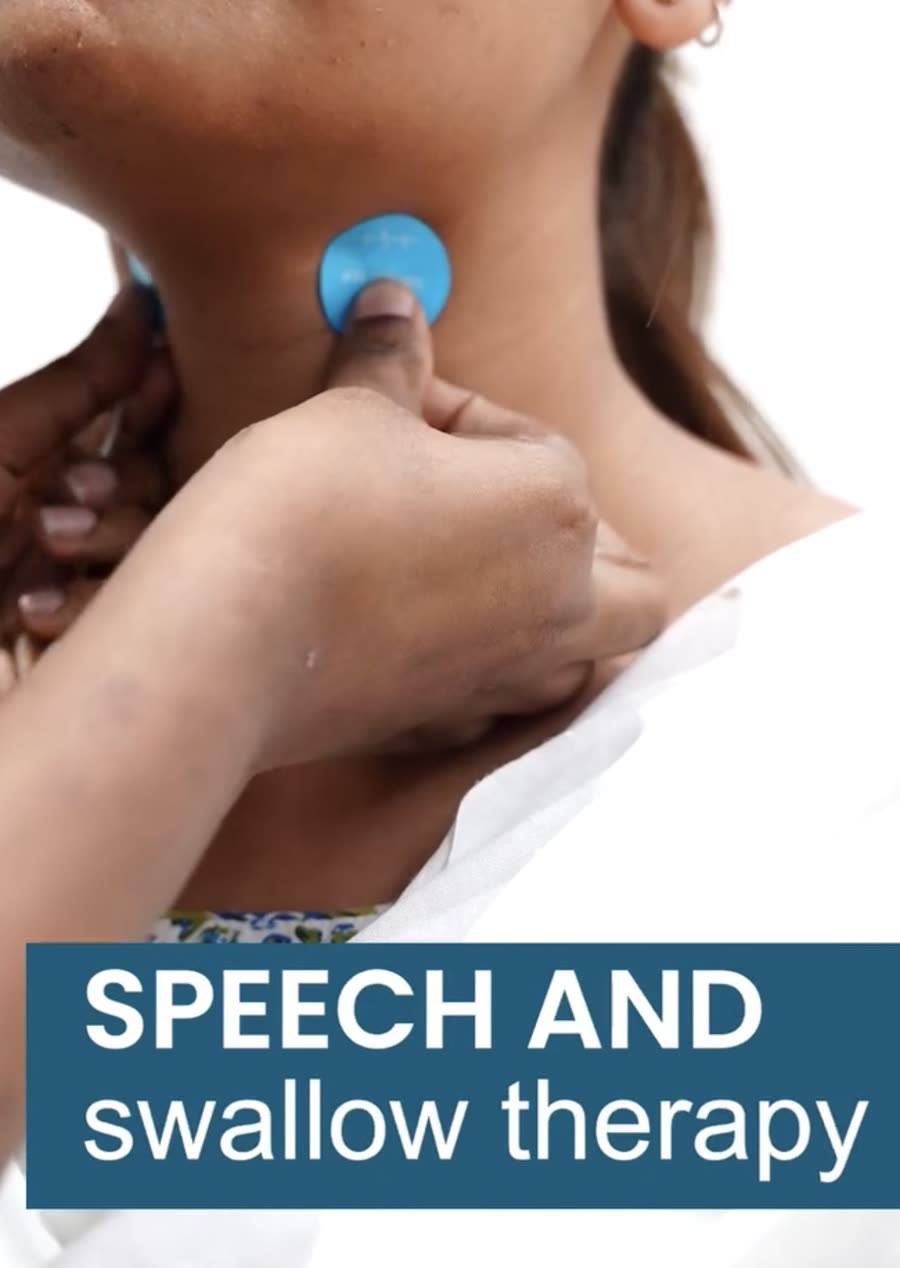
Swallowing problems (dysphagia) are even more under-reported. In a meta-analysis, about one-third of people with Parkinson's reported swallowing difficulty themselves, but when swallowing was tested objectively, about 4 in 5 showed some dysphagia (Kalf et al., 2012). Coughing during meals, a wet or gurgly voice, slow eating, weight loss or repeated chest infections are reasons to ask for a swallow assessment. Our article on swallowing therapy explains what an assessment involves.
Why Should Therapy Be Timed Around "ON" Periods?
People with Parkinson's often have "ON" periods, when medicines are working well, and "OFF" periods, when symptoms return before the next dose. The European guideline advises that physical capacity is best trained during ON periods, when the person is at their best. Strategies for freezing may be learned during ON time first, then practised in OFF states if that is when problems occur (Keus et al., 2014).
In practice, tell your therapist when you take your tablets and when you feel best, and book sessions around that. If you notice that the medicine wears off quickly, mention it to your neurologist. Never change medicine timings or doses on your own.
Do Robotic Gait Training and rTMS Help in Parkinson's?
Both are adjuncts, meaning they may add to good physiotherapy but do not replace it or your medicines.
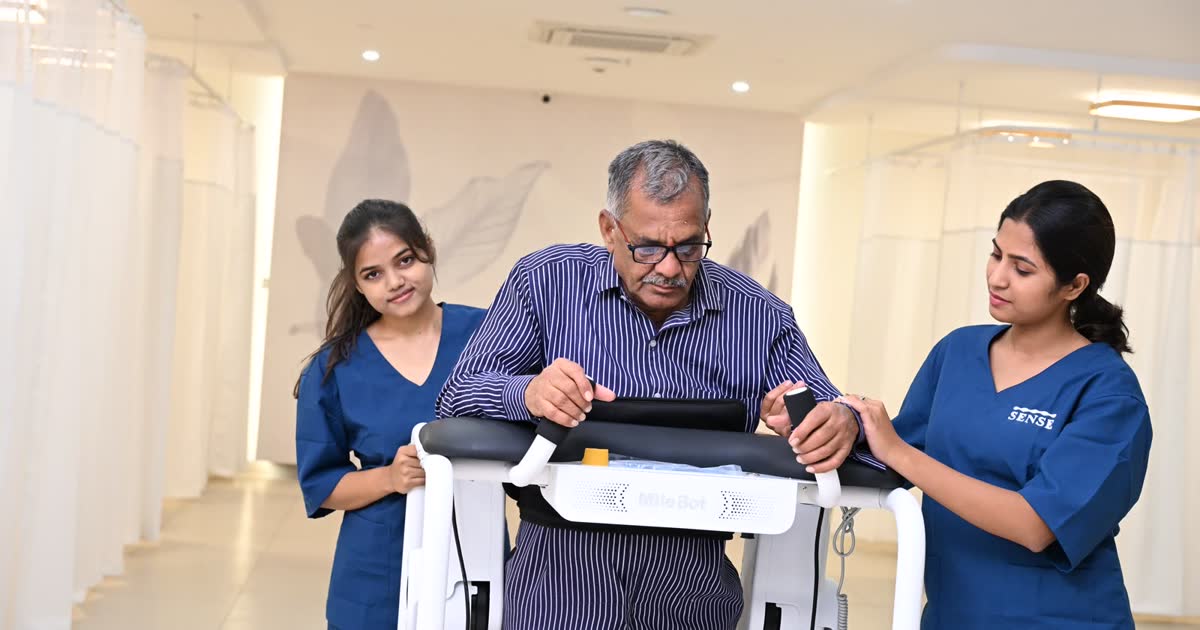
Robotic gait training uses a robotic device to support body weight and guide walking. A 2024 meta-analysis of 17 trials (670 participants) found improvements in balance, walking speed, stride length and motor scores compared with usual care, but no significant improvement in the timed-up-and-go test. The authors concluded there is not yet enough evidence that it improves all aspects of lower-limb function (Jiang et al., 2024). It can be useful for people who need support to practise walking safely. Learn more about robotic gait training.
rTMS (repetitive transcranial magnetic stimulation) uses magnetic pulses over the scalp to stimulate brain areas. A meta-analysis of 20 sham-controlled trials (470 patients) found a medium-sized benefit on motor symptoms, with results depending on the stimulation site, frequency and number of pulses (Chou et al., 2015). A 2025 update noted that effects on mood and long-term outcomes still need more research (Khattak et al., 2025). rTMS is not a standard Parkinson's treatment and should only be considered after discussion with your neurologist. Read more about rTMS therapy.
Parkinson's Problems and How Therapy Targets Them
| Problem | What therapy targets | Example approach |
|---|---|---|
| Freezing of gait | Starting and continuing steps | Floor lines, metronome beat, weight shift |
| Small, slow steps | Step length and speed | Treadmill training, "big step" practice |
| Falls and poor balance | Balance, turning, confidence | Balance training, tai chi, home safety check |
| Slow, small movements | Movement size and strength | Strength work, LSVT BIG-style amplitude training |
| Getting up from chair or bed | Transfers | Rocking before rising, step-by-step sequences |
| Soft voice | Loudness and effort | LSVT LOUD-style voice therapy |
| Coughing while eating | Safe swallowing | Swallow assessment, posture and diet changes |
When Should You See Your Neurologist or Go to Emergency?
Call 108 or go to the nearest emergency department after a fall with a head injury (especially if the person takes blood thinners), for choking or breathing difficulty, or for sudden stroke signs such as face droop, arm weakness or slurred speech.
See your neurologist promptly if there is:
- Sudden or rapid worsening of movement over days rather than months
- New hallucinations, confusion or severe sleepiness
- Frequent coughing or choking with food, or repeated chest infections
- New, frequent falls or a big change in freezing
Parkinson's Rehabilitation at SENSE Health
Look for a team that assesses walking in ON and OFF states, teaches cueing you can use at home, checks fall risk, includes speech and swallow therapy, and gives you a home exercise plan.
At SENSE Health, Parkinson's and movement disorders are among the conditions we rehabilitate. Our team offers physiotherapy, occupational therapy, speech-language therapy, swallow (dysphagia) therapy, fall-prevention and balance therapy, robotic-assisted gait training (RAGT) and home physiotherapy across Bengaluru. Ask us about LSVT BIG-style movement training, and talk to us about whether rTMS is appropriate for you; your neurologist remains in charge of your medicines.
Getting Help in Kalyan Nagar and North-East Bengaluru
SENSE Health is on AVR Heights, 100 Feet Road, HRBR Layout 1st Block, Kalyan Nagar, Bengaluru 560043, close to Banaswadi, Kammanahalli and Hennur, and reachable from Hebbal and Indiranagar. The initial consultation is free.
What to bring to your first visit:
- Your current medicine list, with the times you take each dose
- Your neurologist's notes and any recent scan reports
- A short phone video of a freezing episode or difficult turn, if you have one
- A note of any falls in the last few months
- Your walking stick or walker, and comfortable shoes
Try to book your visit for a time when your medicines are working well. If walking has become unsafe at home, or after a hospital stay or bad fall, ask us about an inpatient rehabilitation assessment; inpatients have 24/7 doctors and nursing. For insurance, ask our admissions team to check your policy.
OPD hours: Monday to Saturday, 9 AM to 7 PM.
Call +91 96633 34659, WhatsApp us, email listen@sensehealth.co.in, or get directions.
Sources
- Tomlinson CL, et al. Physiotherapy versus placebo or no intervention in Parkinson's disease. Cochrane Database of Systematic Reviews. 2013.
- Ernst M, et al. Physical exercise for people with Parkinson's disease: a systematic review and network meta-analysis. Cochrane Database of Systematic Reviews. 2024.
- Keus SHJ, et al. European Physiotherapy Guideline for Parkinson's Disease. KNGF/ParkinsonNet. 2014.
- Allen NE, Schwarzel AK, Canning CG. Recurrent falls in Parkinson's disease: a systematic review. Parkinson's Disease. 2013.
- India State-Level Disease Burden Initiative Neurological Disorders Collaborators. The burden of neurological disorders across the states of India: the Global Burden of Disease Study 1990–2019. Lancet Global Health. 2021.
- Ebersbach G, et al. Comparing exercise in Parkinson's disease: the Berlin LSVT BIG study. Movement Disorders. 2010.
- Ramig L, et al. Speech treatment in Parkinson's disease: randomized controlled trial (RCT). Movement Disorders. 2018.
- Kalf JG, et al. Prevalence of oropharyngeal dysphagia in Parkinson's disease: a meta-analysis. Parkinsonism and Related Disorders. 2012.
- Jiang X, et al. Effect of robot-assisted gait training on motor dysfunction in Parkinson's patients: a systematic review and meta-analysis. Journal of Back and Musculoskeletal Rehabilitation. 2024.
- Chou YH, et al. Effects of repetitive transcranial magnetic stimulation on motor symptoms in Parkinson disease: a systematic review and meta-analysis. JAMA Neurology. 2015.
- Khattak M, et al. Efficacy of repetitive transcranial magnetic stimulation in Parkinson's disease: an updated systematic review and meta-analysis of randomized controlled trials. Annals of Medicine and Surgery. 2025.
- Nonnekes J, et al. Compensation strategies for gait impairments in Parkinson disease: a review. JAMA Neurology. 2019.
- Parkinson's UK. Freezing. Parkinson's UK.
This article is for general education and does not replace advice from your own doctor. If symptoms are sudden or severe, call 108 or go to the nearest emergency department.