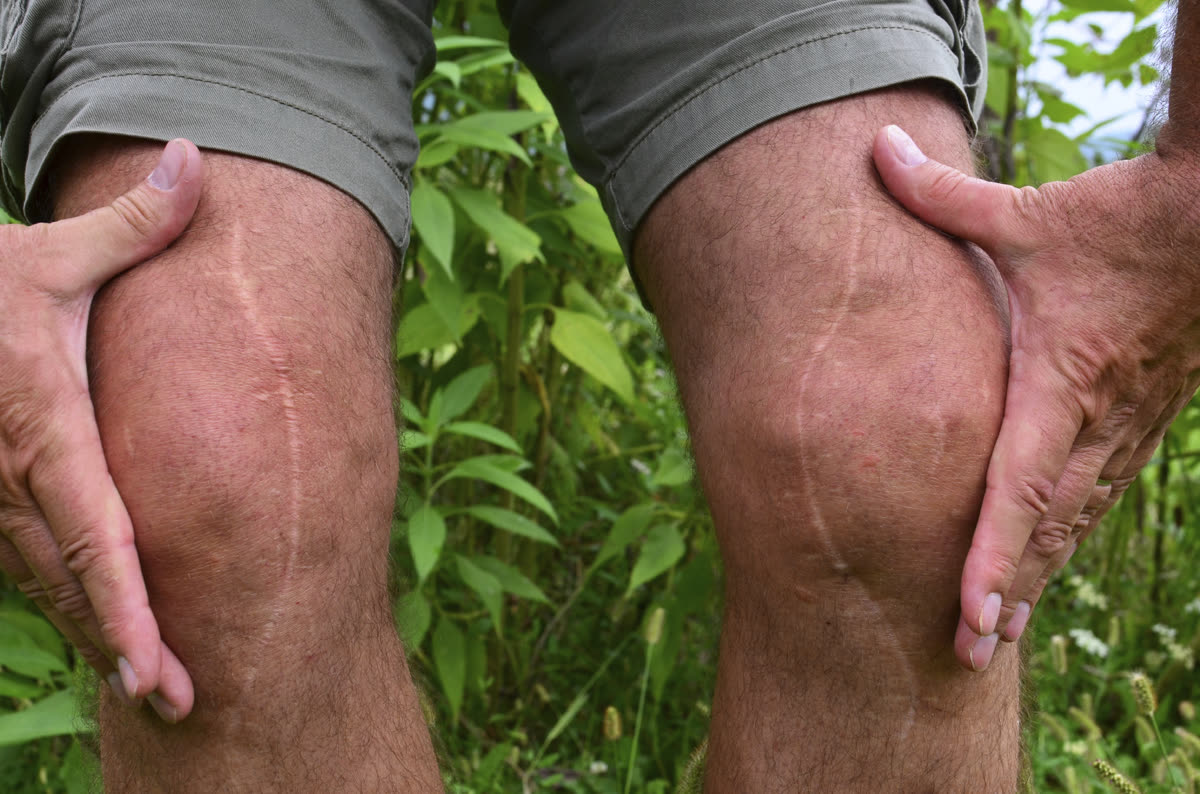
Rehabilitation after a total knee replacement (TKR) should start on the day of surgery or the next morning, continue with supervised physiotherapy for at least the first six weeks, and aim for a knee that straightens fully and bends enough for stairs, chairs and a car seat. A systematic review of five randomised trials found that getting people out of bed within 24 hours of hip or knee replacement shortened the hospital stay by about 1.8 days with no increase in complications (Guerra et al., 2015). The surgery replaces the joint; the exercise programme decides how well you use it.
After knee replacement, sudden breathlessness or chest pain can mean a clot in the lung: call 108 or 112 immediately. New calf pain or swelling needs a doctor the same day.
Why Does Rehab After Knee Replacement Matter in India?
Knee osteoarthritis, the usual reason for a TKR, is very common in India. A 2025 meta-analysis of 16 community studies estimated that about 20% of Indian adults have knee osteoarthritis (Hazra et al., 2025), and a separate meta-analysis of 14 studies put the figure among older Indians at 47% (Daniel et al., 2025). A review of India's joint registry data cited a market estimate of roughly 2 lakh knee replacements in 2020, while the voluntary ISHKS registry itself recorded about 27,000 in 2019, so the true number is uncertain but large (Vaidya et al., 2020).
Many of these patients are older, often with diabetes or heart disease, living in flats with stairs, and relying on a spouse or an attendant at home. That is exactly the group for whom a structured, supervised programme makes the difference between a knee that works and a knee that stays stiff and painful.
What Should Happen in the First 48 Hours?
- Get up early. In four of the five trials in the Guerra review, the early group sat out of bed within 24 hours and walked within 48 hours, with a walker and a physiotherapist alongside (Guerra et al., 2015). The American Physical Therapy Association's 2020 clinical practice guideline recommends an early mobility plan after TKR as best practice (Jette et al., 2020).
- Ice and elevation. A 2025 Cochrane review of 22 trials (1,839 people) found that cryotherapy in the first 48 hours lowered pain at 48 hours by about 1.6 points on a 10-point scale and increased knee range of motion at discharge by about 8 degrees, but rated the evidence low certainty and judged the benefits possibly too small to justify routine use (Aggarwal et al., 2025). Ice is cheap and safe, and the APTA guideline still recommends it for early pain relief (Jette et al., 2020).
- Move the knee. Ankle pumps, quadriceps squeezes, heel slides and knee-straightening with a rolled towel under the ankle start on day one, several times a day.
What Does a Week-by-Week Rehab Plan Look Like?
Protocols vary between surgeons, and the range-of-motion figures below are typical goals that many protocols use rather than fixed rules. A 2019 review of published TKR protocols found knee bend of roughly 96–115 degrees at six weeks across studies, and noted that progression is always individual (Dávila Castrodad et al., 2019). The American Academy of Orthopaedic Surgeons says that an average of about 115 degrees of bend is generally anticipated after surgery, and that most patients can expect to almost fully straighten the knee (AAOS).
| Phase | Typical goals | What the sessions include |
|---|---|---|
| Days 0–14 | Walk with a walker; straighten the knee fully; bend to about 90 degrees; control swelling | Ankle pumps, quad sets, straight-leg raises, heel slides, ice and elevation, wound care, stairs practice before discharge |
| Weeks 2–6 | Walker to stick; walk indoors independently; bend past 100 degrees; climb stairs step-over-step | Mini-squats, step-ups, stationary cycle, hip strengthening, balance work, scar and kneecap mobilisation |
| Weeks 6–12 | Walk outdoors without an aid; bend 110–120 degrees; normal gait; return to driving and desk work | Progressive resistance training, sit-to-stand repetitions, step-downs, longer walks |
| Months 3–12 | Full daily function, confidence on uneven ground, low-impact sport | Strength and endurance maintenance, activity-specific practice |
The APTA guideline gives its strongest recommendation to motor function training (walking, balance and task practice), a moderate recommendation to progressive, higher-intensity strengthening once the wound has healed, and a moderate recommendation for supervised physiotherapy rather than exercise sheets alone (Jette et al., 2020).
If the knee is not bending past about 90 degrees by six weeks, tell the surgeon. A stiff knee sometimes needs manipulation under anaesthesia, and the window for that is early.
Does Exercising Before Surgery (Prehabilitation) Help?
The evidence is mixed, and it is fair to say so. A 2016 meta-analysis of 22 trials (1,492 patients) found that prehabilitation slightly reduced early pain and improved early function, but concluded the effects were too small and short-lived to be clinically important, with no effect on hospital stay or quality of life (Wang et al., 2016). A 2022 meta-analysis of 16 trials (968 people) found low-certainty evidence of better knee function before surgery and for up to three months after, with no difference at 6–12 months (Gränicher et al., 2022). The APTA guideline still recommends a preoperative exercise programme, with moderate strength (Jette et al., 2020).
Our practical view: a few weeks of quadriceps and hip strengthening, walker practice and learning the post-operative exercises before surgery makes the first fortnight easier, especially for older patients. It is not a reason to delay a surgery that is already planned.
Which Add-On Therapies Are Worth It, and Which Are Not?
Indian families are often offered a long list of machines after knee replacement. Here is what the evidence supports.
| Therapy | What the evidence shows | Our practice |
|---|---|---|
| NMES (electrical stimulation of the thigh muscle) | A 2021 meta-analysis of 9 trials (691 patients) found better quadriceps strength in the first month (standardised effect 0.81) and small gains in walking, though several outcomes fell below the threshold for clinical importance (Peng et al., 2021). APTA recommends it with moderate strength. | Used in the first weeks when the quadriceps will not switch on |
| Cryotherapy (ice) | Small, low-certainty improvements in pain at 48 hours and in range of motion at discharge (Aggarwal et al., 2025) | Used routinely; cheap and safe |
| CPM machine (continuous passive motion) | A Cochrane review of 24 trials (1,445 people) found no clinically important effect on knee bend, pain, function or quality of life (Harvey et al., 2014); APTA says CPM should not be used after uncomplicated TKR | Not used; active exercise instead |
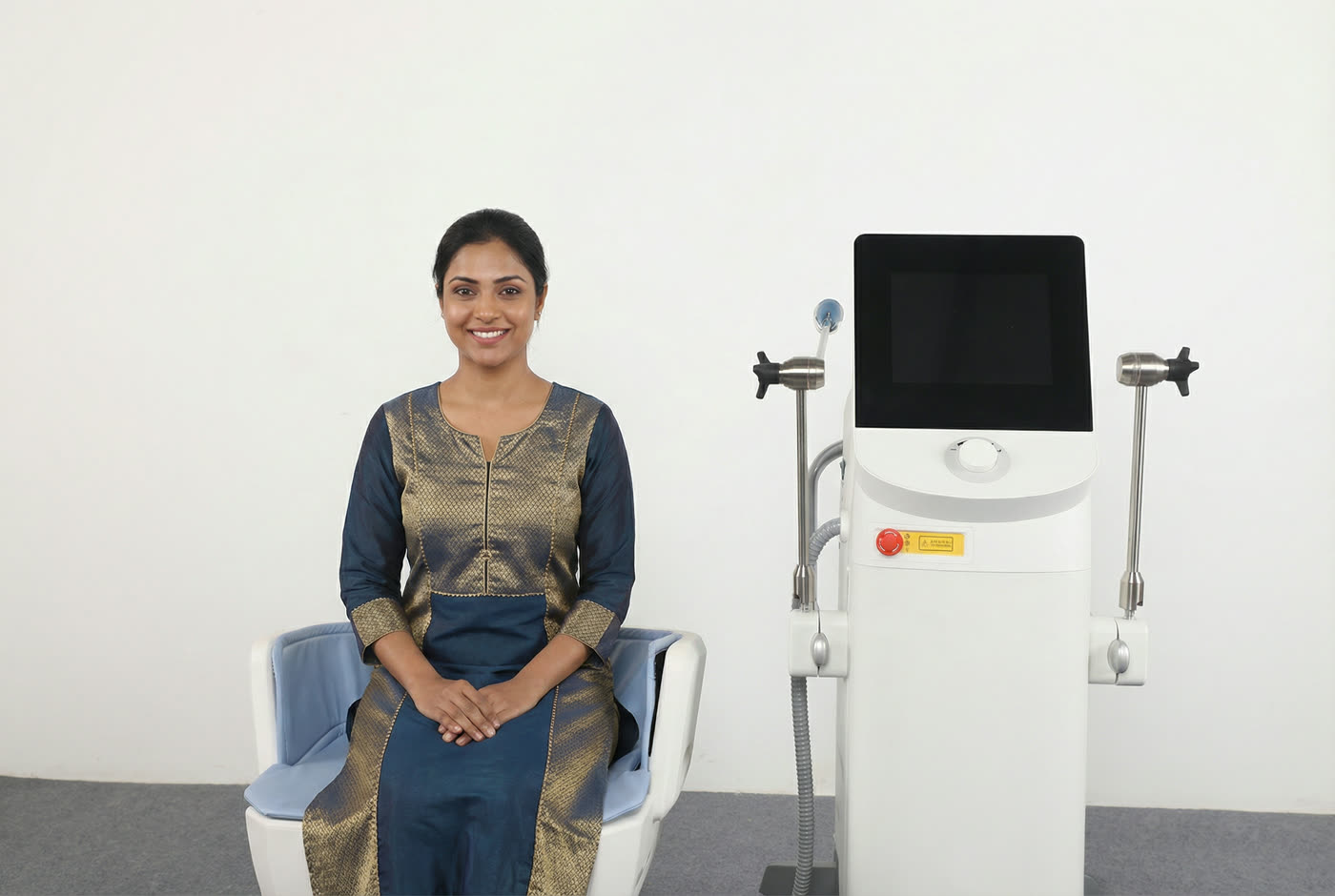
| High-intensity electromagnetic therapy (HIEMT) | One small randomised trial for post-surgical pain that we could find (foot and ankle); most magnetic-therapy pain evidence is from low-intensity PEMF devices; none in knee replacement. See our honest guide to HIEMT after surgery | Occasionally, as an adjunct for pain or muscle activation, never in place of exercise |
If a centre's plan for your knee is mostly machines and little supervised exercise, ask why.
When Can I Climb Stairs, Drive and Go Back to Work?
- Stairs: usually practised with the physiotherapist before discharge, one step at a time, holding the rail. The rule we teach is "up with the good leg, down with the operated leg". Step-over-step climbing comes in the following weeks as strength returns.
- Walking aids: the NHS advises moving from two crutches to one, then to a stick, and trying without an aid after about six weeks if you feel ready (NHS).
- Driving: the NHS advises waiting at least six weeks after a total knee replacement (NHS); the AAOS says most people resume driving at about 4 to 6 weeks, once they can sit comfortably and brake quickly (AAOS).
- Work: usually 6 to 12 weeks depending on the job (NHS).
- Activities: walking, swimming, cycling and light hiking are realistic long-term; most surgeons advise against running, jogging and jumping for life (AAOS). Do not kneel until your surgeon says you can, avoid heavy lifting for the first three months, and do not sleep with a pillow under the knee, which encourages it to stay bent (NHS).
For older patients, including those in our senior care programme, the first weeks at home are also a fall-risk period. Our home safety and fall-prevention guide lists the changes worth making before the discharge day.
Which Warning Signs Need Urgent Attention?
Blood clots. Surgery and reduced movement raise the risk of a clot in the leg (deep vein thrombosis), which can travel to the lung. Watch for throbbing or cramping pain in the calf or thigh, new swelling of the calf, ankle or foot, and red or darkened skin over the area (NHS; AAOS). If you notice these, contact your surgeon or go to hospital the same day. Take the blood-thinning medicine and wear the compression stockings exactly as prescribed; the NHS notes most people wear them for at least six weeks (NHS).
Sudden breathlessness, chest pain, or coughing with chest pain after knee replacement can mean a clot in the lung. Call 108 or 112 now.
Infection. Serious joint infection occurs in fewer than 2% of patients (AAOS), but it must be caught early. Contact the surgeon the same day for persistent fever, chills, increasing redness, warmth or swelling around the wound, discharge from the wound, or knee pain that is getting worse at rest and with activity (AAOS; NHS).
Inpatient or Home Rehabilitation After Knee Replacement?
Most people with a straightforward TKR and a helper at home do well with outpatient or home physiotherapy. Inpatient rehabilitation is worth considering when the person is frail or lives alone, has had both knees replaced, has diabetes, heart disease or a previous stroke, or has a stiff or very painful knee that is not progressing. Our comparison of home and inpatient rehabilitation was written for stroke, but the same questions apply.
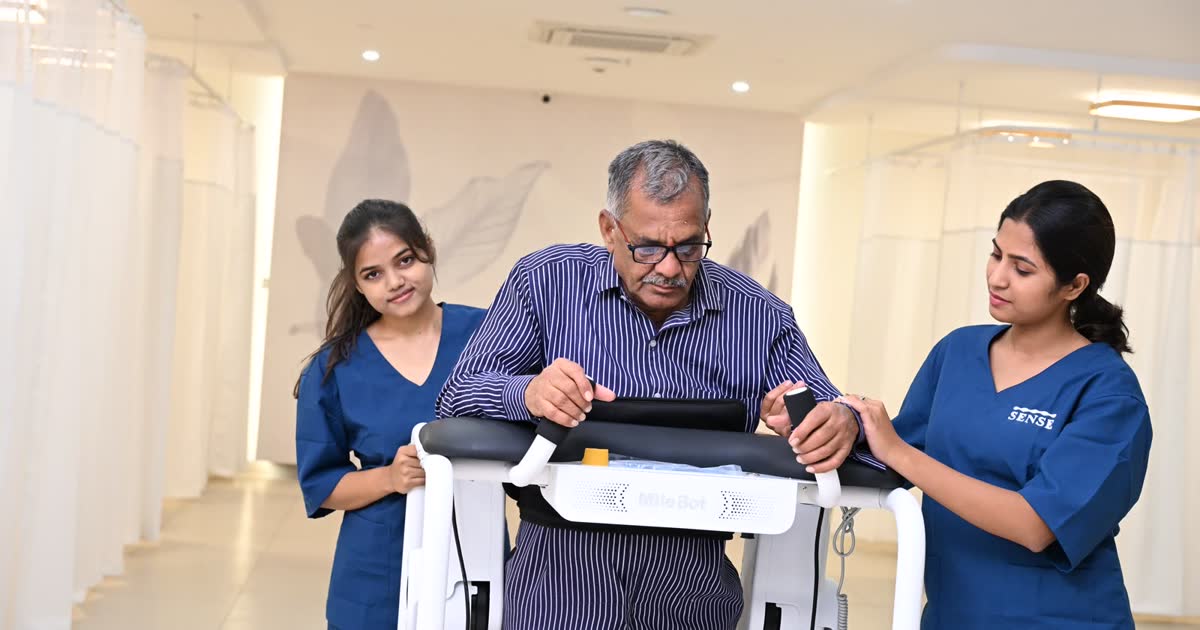
At SENSE Health, a knee replacement programme is led by our consultant physiatrist with the physiotherapy team: a baseline measurement of knee range, strength, swelling and walking; daily supervised sessions for inpatients, the number set out in the written package sheet; NMES and ice where indicated; stairs and outdoor walking practice; and a written home programme at discharge. Inpatients have 24/7 doctors and a 24/7 emergency response team, which matters in the first weeks after surgery, when clot and wound problems are most likely. Before admission, families see in writing what is included in the package and what is charged separately, and our admissions team checks insurance and helps with pre-authorisation. We also provide home physiotherapy across Bengaluru.
Getting Started in Kalyan Nagar
Book a free initial consultation by calling or WhatsApp on +91 96633 34659, or walk in during OPD hours. Bring the surgical discharge summary, the X-ray report, the medicine list (including the blood thinner and its stop date), and the surgeon's weight-bearing and wound-care instructions.
SENSE Health is at AVR Heights, 100 Feet Road, HRBR Layout 1st Block, Kalyan Nagar, Bengaluru 560043, easily reached from Indiranagar, Banaswadi and Hennur, and families come to us from Kammanahalli, Hebbal, Horamavu and Ramamurthy Nagar. OPD hours: Monday to Saturday, 9 AM to 7 PM. Email listen@sensehealth.co.in or get directions.
Sources
- Guerra ML, Singh PJ, Taylor NF. Early mobilization of patients who have had a hip or knee joint replacement reduces length of stay in hospital: a systematic review. Clinical Rehabilitation. 2015.
- Hazra S, Mondal K, Bhattacharya D, Handa G. Prevalence of Knee Osteoarthritis in India: A Systematic Review and Meta-Analysis of Population-Based Studies. Indian Journal of Orthopaedics. 2025.
- Daniel RA, Kalaivani M, Aggarwal P, Gupta SK. Prevalence of knee osteoarthritis among elderly persons in India: A systematic review and meta-analysis. Journal of Family Medicine and Primary Care. 2025.
- Vaidya SV, Jogani AD, Pachore JA, Armstrong R, Vaidya CS. India Joining the World of Hip and Knee Registries: Present Status—A Leap Forward. Indian Journal of Orthopaedics. 2020.
- Jette DU, Hunter SJ, Burkett L, et al. Physical Therapist Management of Total Knee Arthroplasty: Clinical Practice Guideline. Physical Therapy. 2020.
- Aggarwal A, Adie S, Harris IA, Naylor J. Cryotherapy following total knee replacement. Cochrane Database of Systematic Reviews. 2025.
- Dávila Castrodad IM, Recai TM, Abraham MM, et al. Rehabilitation protocols following total knee arthroplasty: a review of study designs and outcome measures. Annals of Translational Medicine. 2019.
- American Academy of Orthopaedic Surgeons. Total Knee Replacement. OrthoInfo. Accessed October 2026.
- Wang L, Lee M, Zhang Z, Moodie J, Cheng D, Martin J. Does preoperative rehabilitation for patients planning to undergo joint replacement surgery improve outcomes? A systematic review and meta-analysis of randomised controlled trials. BMJ Open. 2016.
- Gränicher P, Mulder L, Lenssen T, Scherr J, Swanenburg J, de Bie R. Prehabilitation Improves Knee Functioning Before and Within the First Year After Total Knee Arthroplasty: A Systematic Review With Meta-analysis. Journal of Orthopaedic and Sports Physical Therapy. 2022.
- Peng L, Wang K, Zeng Y, Wu Y, Si H, Shen B. Effect of Neuromuscular Electrical Stimulation After Total Knee Arthroplasty: A Systematic Review and Meta-Analysis of Randomized Controlled Trials. Frontiers in Medicine. 2021.
- Harvey LA, Brosseau L, Herbert RD. Continuous passive motion following total knee arthroplasty in people with arthritis. Cochrane Database of Systematic Reviews. 2014.
- NHS. Knee replacement: Recovery. Accessed October 2026.
- NHS. Knee replacement: Risks. Accessed October 2026.
- NHS. Deep vein thrombosis (DVT). Accessed October 2026.
This article is for general education and does not replace advice from your own doctor. If symptoms are sudden or severe, call 108 or go to the nearest emergency department.