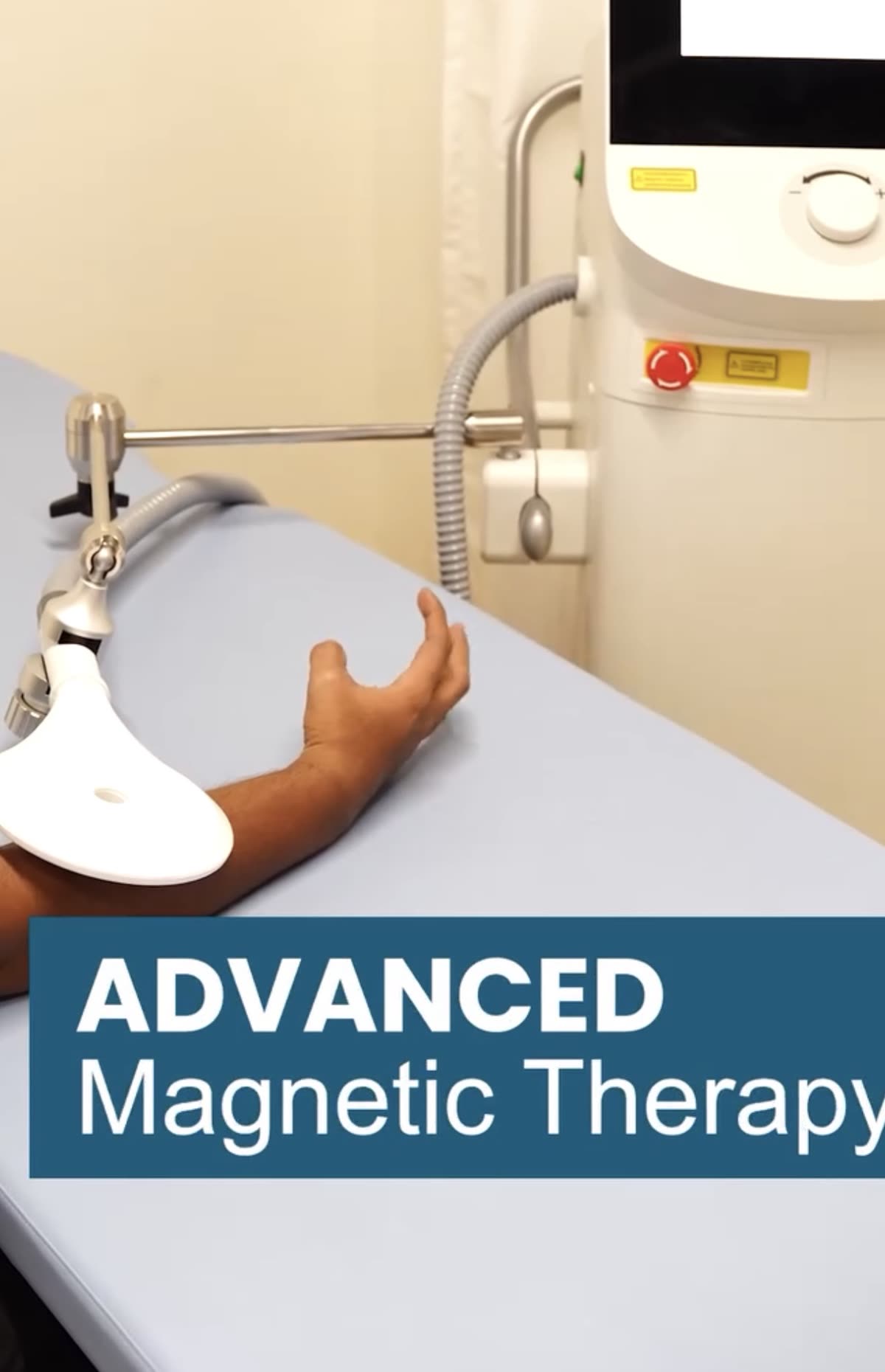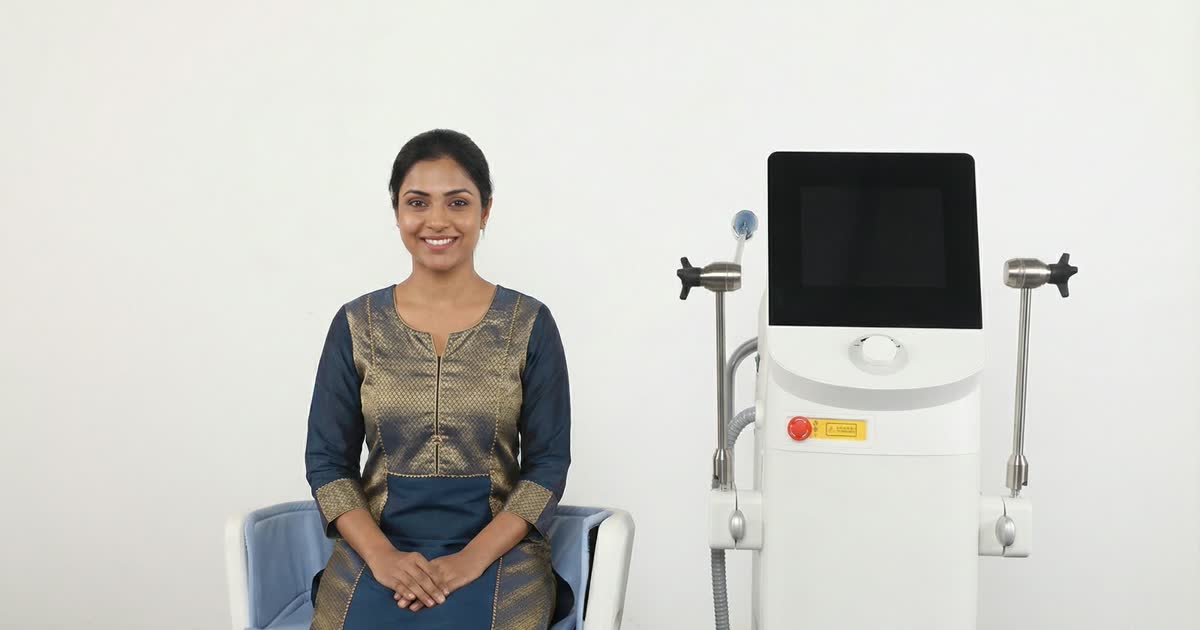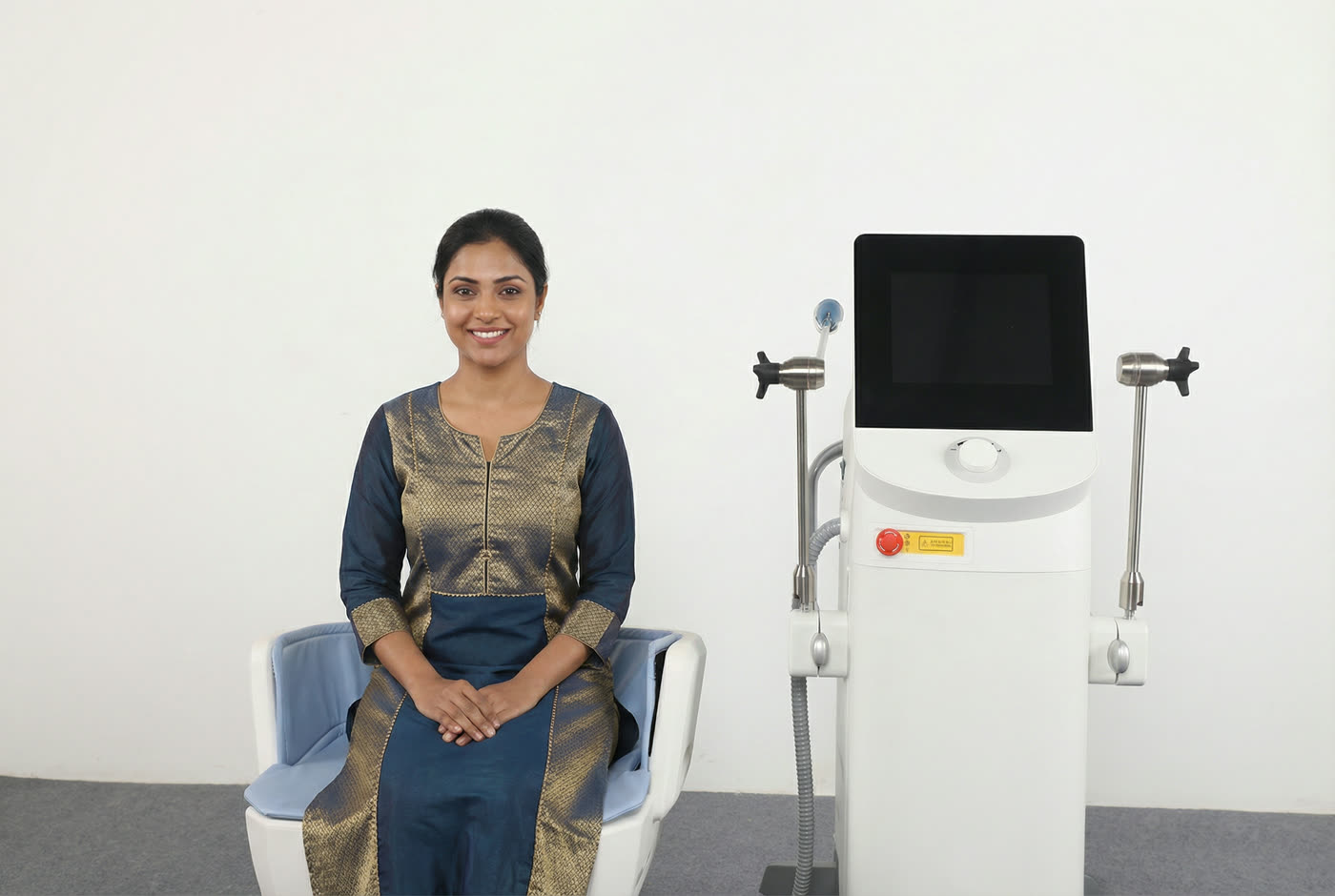
High-intensity electromagnetic therapy (HIEMT), also sold as the Super Inductive System or described in research as repetitive peripheral magnetic stimulation (rPMS), uses a rapidly changing magnetic field to make nerves fire and muscles contract without electrodes or skin contact. The published evidence supports it only as an adjunct for short-term pain relief and muscle activation after surgery, and even that evidence is thin: a 2023 meta-analysis of 18 studies of peripheral magnetic stimulation found pain about 1.6 points lower on a 10-point scale in the first week after an operation (Park et al., 2023), but the trials it pooled were almost all of low-intensity pulsed electromagnetic field (PEMF) devices, not high-intensity coils; the one randomised trial of a high-intensity device after surgery that we could find involved 67 people (Souza et al., 2026). It has not been shown to speed fracture healing or to prevent muscle wasting on its own. This guide separates what the device can do from what the brochures say.
Electromagnetic stimulation is never used for new, unexplained pain after surgery. Sudden calf pain or swelling, breathlessness, chest pain, fever with a hot red wound, or a limb that is pale, cold or numb need a doctor the same day. Call 108 or 112 if symptoms are severe.
What Is High-Intensity Electromagnetic Therapy?
A coil in the applicator produces a brief, strong magnetic pulse. Because the field passes through skin and fat, it induces a small electrical current in the nerves and muscle underneath, which depolarises them and produces a contraction. Repeated pulses, typically at a few to over a hundred per second, can produce rhythmic contractions and a sensory barrage that may dampen pain signals.
In the research literature this is called repetitive peripheral magnetic stimulation. A 2015 review of 24 studies described it as able to reach deep structures and produce strong contractions while recruiting the body's own position-sense nerves with little skin sensation, but called the evidence on exactly which nerves are stimulated "very scant" and asked for larger sham-controlled trials before guidelines could be written (Beaulieu and Schneider, 2015).
Device specifications come from manufacturers, not from independent testing. The maker of the Super Inductive System states that its device produces a field of up to 3 Tesla and tissue penetration of up to 10 cm, and that users should consult the manual for contraindications (BTL). These are output figures for the coil, not measures of what reaches a given muscle in a given patient.
The same technology, marketed as HIFEM, is used in cosmetic body-contouring, and several of the muscle-thickness studies that get quoted in rehabilitation brochures come from that setting.
What Do the Claims Look Like Against the Evidence?
| Common claim | What published evidence shows |
|---|---|
| Reduces pain after surgery | Best supported, but mostly by a different device class. A meta-analysis of 18 studies (17 randomised) found peripheral magnetic stimulation reduced pain by a mean 1.64 points (0–10 scale) in the first 7 days and at 1–2 months, with no difference in persistent pain at 6–12 months or in opioid use; evidence quality was generally low (Park et al., 2023). Nearly all of its trials used low-intensity PEMF devices. For high-intensity stimulation itself, a 2026 randomised trial of 67 people after foot and ankle surgery found lower pain scores with five daily 10-minute sessions (Souza et al., 2026) |
| Relieves chronic back and joint pain | A 2025 meta-analysis of 8 trials (177 people) with chronic musculoskeletal pain found reduced pain and disability, but rated the certainty very low to low (Pan et al., 2025) |
| Prevents muscle wasting after surgery | No trials in post-surgical patients that we could find. Muscle-thickness gains come from cosmetic HIFEM studies in healthy adults; one such multicentre study was funded by the device manufacturer (DiBernardo et al., 2023) |
| Accelerates fracture healing | Not shown for high-intensity devices. The only Cochrane review on electromagnetic fields for fractures covered low-intensity pulsed fields (PEMF) for delayed or non-union: 4 trials, 125 people, union rate not significantly different (risk ratio 1.96, 95% CI 0.86–4.48), evidence "inconclusive" (Griffin et al., 2011) |
| Reduces spasticity | A 2022 Cochrane review of 4 trials (139 people after stroke) found insufficient evidence for routine use (Kamo et al., 2022). A 2026 double-blind sham-controlled trial of 50 people reported a short-term reduction in ankle spasticity (Aslantaş et al., 2026); small 2026 trials in the arm found short-term reductions that were not sustained. See our spasticity guide |
| Restores joint range, replaces manual mobilisation | No controlled trials found. Manufacturer claim only |
Two patterns run through this table. The studies that exist are small, often fewer than 100 people, with short follow-up. And the strongest-sounding claims (fracture healing, atrophy prevention, "96% pain reduction"), and much of the pain evidence too, trace back to manufacturer materials or to studies of different, low-intensity devices, not to trials of HIEMT in surgical patients.
Is HIEMT the Same as PEMF Bone Stimulators?
No, and the difference matters because families often hear the two mixed up.
Pulsed electromagnetic field (PEMF) devices use very weak fields, in the microtesla to millitesla range, worn for hours a day over weeks. Some are marketed as bone-growth stimulators for fractures that have failed to heal (non-union). Even for that indication, the Cochrane review above found the evidence inconclusive.
High-intensity electromagnetic therapy uses far stronger fields, around a hundred times those of conventional magnetotherapy according to the manufacturer, in short sessions to make muscles contract. A 2026 systematic review of magnetic therapies for orthopaedic pain found that the high-intensity trials were the ones producing rapid pain relief (a finding resting on a single trial), while PEMF trials addressed longer-term tissue effects, and it noted small samples (21–106 people), short follow-up and incomplete reporting of field strength in most trials (Silva et al., 2026).
If your surgeon has advised a bone stimulator for a non-union, that is a PEMF device, not HIEMT, and the two are not interchangeable.
Where Might HIEMT Fit After Surgery?
Used honestly, it is one tool within a physiotherapy programme, and never the programme itself. Situations where our consultant physiatrist may add it:
- Early pain that limits exercise. After knee or hip replacement, spine surgery or fracture fixation, a short course, with the applicator kept away from the wound and any implant, may make the first sessions of exercise more tolerable, alongside ice, medicines and positioning. Our knee replacement rehabilitation guide shows where it sits among the better-proven therapies.
- A muscle that will not switch on. When the quadriceps or gluteal muscles are inhibited by pain and swelling, a contraction triggered by the device can help the patient find the muscle again before active exercise. Electrical stimulation (NMES) does the same job with better evidence after knee replacement and is our first choice; HIEMT is an alternative for people who cannot tolerate electrodes, applied away from the wound and any metalwork.
- Stiff, painful muscles around a healing joint, where the rhythmic contractions may ease spasm before manual therapy.
- Pelvic floor weakness after pelvic or prostate surgery, where a seated pelvic-floor magnetic chair is used; our pelvic-floor magnetic stimulation guide covers that separately.
What it does not replace: weight-bearing, walking practice, progressive strengthening, range-of-motion work and the surgeon's protocol. A plan that is mostly machine time and little supervised exercise is a warning sign at any centre, including ours.
Who Should Not Have HIEMT?
The manufacturer refers users to the device manual for the contraindication list (BTL). Hospitals using the system publish restrictions that include pacemakers and implanted defibrillators, pregnancy, certain metal implants, active cancer, fever, uncontrolled medical conditions and bleeding disorders (Rehabilitation Hospital Beroun). At SENSE Health we screen every patient before the first session for:
- Any implanted electronic device: pacemaker, defibrillator (ICD), cochlear implant, insulin pump, nerve or spinal cord stimulator, or a programmable shunt
- Pregnancy
- Metal in or near the treatment area, including joint prostheses, plates, screws, rods and cages
- Recent surgery with an unhealed wound, drains or clips in the field
- Active cancer, fever or infection, or a bleeding disorder or anticoagulant treatment where bruising from strong contractions would be risky
- Epilepsy, if the head or neck is anywhere near the applicator
A note on metal implants. An earlier version of this page stated that the therapy is safe with titanium implants. That was too simple. A changing magnetic field can induce currents in conductive metal and may heat or move some implants, and whether a given implant is acceptable depends on its material, size, position and the device manual. Non-ferromagnetic materials such as titanium are generally considered lower risk, but we treat each implant as a question to be answered from the implant card and the manual, not an assumption. If you have a joint replacement or fracture fixation, bring the implant details to the assessment, and expect us to avoid or adjust the field over the implant.
Minor effects reported in trials are muscle twitching, warmth and tingling (Silva et al., 2026).
What Should Families Ask Before Agreeing to HIEMT?
- What is the specific goal, pain relief or muscle activation, and how will you measure it?
- How many sessions, and when will you review whether it is working?
- What is the rest of the rehabilitation plan, and how many supervised exercise sessions does it include?
- Have you checked my implant, pacemaker or other device against the manufacturer's manual?
- Is this charged separately, and is it written in the care plan?
At SENSE Health, HIEMT is part of our Advanced inpatient package and is listed on the written package sheet families see before admission, which shows what is included and what is charged separately. If our team does not think it will add anything for a particular patient, we say so.
Getting Started in Kalyan Nagar
If you are recovering from orthopaedic or spine surgery and want a rehabilitation plan that uses technology where it helps and exercise where it counts, call or WhatsApp us on +91 96633 34659 to book a free initial consultation, or walk in during OPD hours. Bring the discharge summary, the operation notes or implant card, X-rays, the medicine list and the surgeon's weight-bearing instructions.
At the first visit, our consultant physiatrist examines the surgical site, joint range, strength and walking, screens for the contraindications above, and sets out a written plan. Inpatients have 24/7 doctors and a 24/7 emergency response team. SENSE Health is at AVR Heights, 100 Feet Road, HRBR Layout 1st Block, Kalyan Nagar, Bengaluru 560043, easily reached from Indiranagar, Banaswadi and Hennur, and families come to us from Kammanahalli, Hebbal, Horamavu and Ramamurthy Nagar. OPD hours: Monday to Saturday, 9 AM to 7 PM. Email listen@sensehealth.co.in or get directions.
Sources
- Park S, Park R, Westwood D, Moayedi M, Khan JS. Effect of Peripheral Magnetic Stimulation on Acute and Chronic Pain After Surgery: A Systematic Review and Meta-Analysis. The Journal of Pain. 2023.
- Beaulieu LD, Schneider C. Repetitive peripheral magnetic stimulation to reduce pain or improve sensorimotor impairments: A literature review on parameters of application and afferents recruitment. Neurophysiologie Clinique. 2015.
- BTL Industries. Super Inductive System. Manufacturer product page. Accessed October 2026.
- Souza Júnior EÁ, Generoso LP, Pereira GS, da Silva ML, Cliquet A. Effect of Repetitive Peripheral Magnetic Stimulation on Postoperative Pain Control in Foot and Ankle Surgery. Acta Ortopédica Brasileira. 2026.
- Pan J, Jia Y, Li K, et al. Repetitive peripheral magnetic stimulation for pain, disability, and kinesiophobia in patients with chronic musculoskeletal pain: a systematic review and meta-analysis. European Journal of Physical and Rehabilitation Medicine. 2025.
- DiBernardo B, Chilukuri S, McCoy JD, Katz B, Goldberg DJ. High-Intensity Focused Electromagnetic Field With Synchronized Radiofrequency Achieves Superior Gluteal Muscle Contouring Than High-Intensity Focused Electromagnetic Field Procedure Alone. Aesthetic Surgery Journal Open Forum. 2023.
- Griffin XL, Costa ML, Parsons N, Smith N. Electromagnetic field stimulation for treating delayed union or non-union of long bone fractures in adults. Cochrane Database of Systematic Reviews. 2011.
- Kamo T, Wada Y, Okamura M, Sakai K, Momosaki R, Taito S. Repetitive peripheral magnetic stimulation for impairment and disability in people after stroke. Cochrane Database of Systematic Reviews. 2022.
- Aslantaş HO, Kutlay Ş, Gök H, Özkan S, Güneş S, Elhan AH. Effects of repetitive peripheral magnetic stimulation on poststroke ankle spasticity: a double-blind randomized controlled trial. Turkish Journal of Medical Sciences. 2026.
- Silva LD, Batista JD, Batista JD, Pereira GS, da Silva ML. Efficacy and safety of low- and high-intensity magnetic field therapies for orthopedic pain: a systematic review. Frontiers in Pain Research. 2026.
- Rehabilitation Hospital Beroun. Super Inductive System: a modern technology that helps with pain relief and healing. Hospital information page (contraindications as listed by a user hospital). Accessed October 2026.
This article is for general education and does not replace advice from your own doctor. If symptoms are sudden or severe, call 108 or go to the nearest emergency department.