Cardiac rehabilitation is a medically supervised programme of monitored exercise, risk-factor control and education that starts after a heart attack, angioplasty, bypass surgery or a heart failure admission. A 2021 Cochrane review of 85 trials found that exercise-based cardiac rehab lowered the risk of a further heart attack by about 28% and of hospital admission by about 42% in the first year, and lowered cardiovascular deaths over the longer term (Dibben et al., 2021). Very few people in India ever get it. This guide explains who qualifies, what a supervised session looks like, and what to watch for.
If you or your family member develops chest pain or tightness that spreads to the arm, neck or jaw, severe breathlessness, fainting or a grey, sweaty appearance, call 108 or 112 immediately. Do not drive yourself to hospital.
Why Does Cardiac Rehab Matter So Much in India?
Cardiovascular disease is now India's biggest killer. The Global Burden of Disease analysis for Indian states found that cardiovascular disease caused 28.1% of all deaths in India in 2016, up from 15.2% in 1990, and estimated about 23.8 million people living with ischaemic heart disease that year (India State-Level Disease Burden Initiative, 2018).
Rehabilitation, however, is rare. A 2020 survey for the International Council of Cardiovascular Prevention and Rehabilitation identified only 23 cardiac rehab programmes in the whole of India, and calculated that there was one programme place for every 360 people with ischaemic heart disease each year, with the responding centres in just three states (Karnataka, Maharashtra and Tamil Nadu) (Babu et al., 2020). A survey of 285 cardiologists at a 2017 Indian conference found that just over a quarter had a cardiac rehab programme at their institution, and that on average they referred only 20–30% of their patients (Ghisi et al., 2018).
If nobody mentioned rehabilitation at discharge, that is not because it is unnecessary. Ask for it.
What Does the Evidence Say Cardiac Rehab Achieves?
The strongest evidence is for people who have had a heart attack or a stent or bypass procedure. The 2021 Cochrane review pooled 85 randomised trials with 23,430 adults with coronary heart disease, mostly after a heart attack or revascularisation, and compared exercise-based rehab with no exercise (Dibben et al., 2021). It found:
- Fewer heart attacks: risk ratio 0.72 at 6–12 months, roughly a 28% relative reduction (high-certainty evidence).
- Fewer hospital admissions: risk ratio 0.58 for all-cause admission at 6–12 months, roughly a 42% reduction (moderate certainty).
- Fewer cardiovascular deaths over the long term: risk ratio 0.58 beyond three years, and 0.77 at one to three years.
- No clear reduction in all-cause death within the first year, and small improvements in quality of life that may not reach clinically important thresholds.
The benefits were independent of how or where the rehab was delivered.
For heart failure, a 2024 Cochrane review of 60 trials (8,728 adults) found that exercise-based rehab reduced all-cause hospital admissions within a year (15.9% versus 23.8%, risk ratio 0.69) and produced a clinically meaningful gain in heart-failure-specific quality of life, with no clear effect on death (Molloy et al., 2024).
For heart valve surgery, the evidence is thin: a 2021 Cochrane review found only six small trials (364 people), too few to judge effects on death or readmission, although rehab remains standard practice after valve surgery (Abraham et al., 2021).
Guidelines reflect this. The 2021 European Society of Cardiology prevention guideline gives its strongest grade (Class I, Level A) to supervised, exercise-based cardiac rehab after a heart attack, other atherosclerotic event or revascularisation, and in heart failure (Visseren et al., 2021). The 2024 American Heart Association and AACVPR statement lists the core components every programme should deliver: assessment, nutrition, weight, risk-factor management, psychosocial support, aerobic and strength training, and physical activity counselling (Brown et al., 2024).
Who Qualifies for Cardiac Rehabilitation?
You should be referred if you have had any of the following:
- A heart attack (myocardial infarction)
- Angioplasty with a stent (PCI)
- Coronary artery bypass surgery (CABG)
- Heart valve repair or replacement
- A hospital admission for heart failure, or stable chronic heart failure
- Stable angina on treatment
When Should Rehab Start, and What Are the Three Phases?
Rehabilitation begins in the acute hospital and continues after discharge. The timings below are typical; your cardiologist sets the exact start date.
| Phase | When | What it involves |
|---|---|---|
| Phase 1: Inpatient | The first days after the event, in the acute hospital | Sitting out of bed, short walks on the ward, breathing exercises, education about medicines and warning signs, planning for discharge |
| Phase 2: Supervised outpatient or inpatient rehab | Usually starts within a few weeks of discharge; 6–12 weeks of sessions | Monitored, individually prescribed exercise several times a week, risk-factor review, diet counselling, stress management, gradual return to daily activities |
| Phase 3: Maintenance | From about 3 months, lifelong | Independent exercise at home or in a group, periodic reviews, continued control of blood pressure, cholesterol, sugar and smoking |
The NHS describes the core programme as weekly sessions over 6 to 12 weeks, in a group, online or at home (NHS); the US CDC says programmes usually last about three months (CDC). Phase 2 is where most of the evidence comes from, so do not skip it.
Some people are not ready to go home after a cardiac event: those who are frail, who had a stroke or a long ICU stay alongside the heart problem, or who live alone in a flat with stairs. For them, Phase 2 can start as an inpatient stay at a rehabilitation hospital with doctors on site. Our guide to recovering after an ICU stay covers that situation.
What Happens in a Supervised Session?
At SENSE Health, a Phase 2 session follows a fixed structure:
- Pre-exercise check: resting heart rate, blood pressure, oxygen saturation (SpO2) and a symptom review. Readings outside the limits your doctor has set mean the session is modified or postponed.
- Warm-up of 5–10 minutes of gentle movement and breathing.
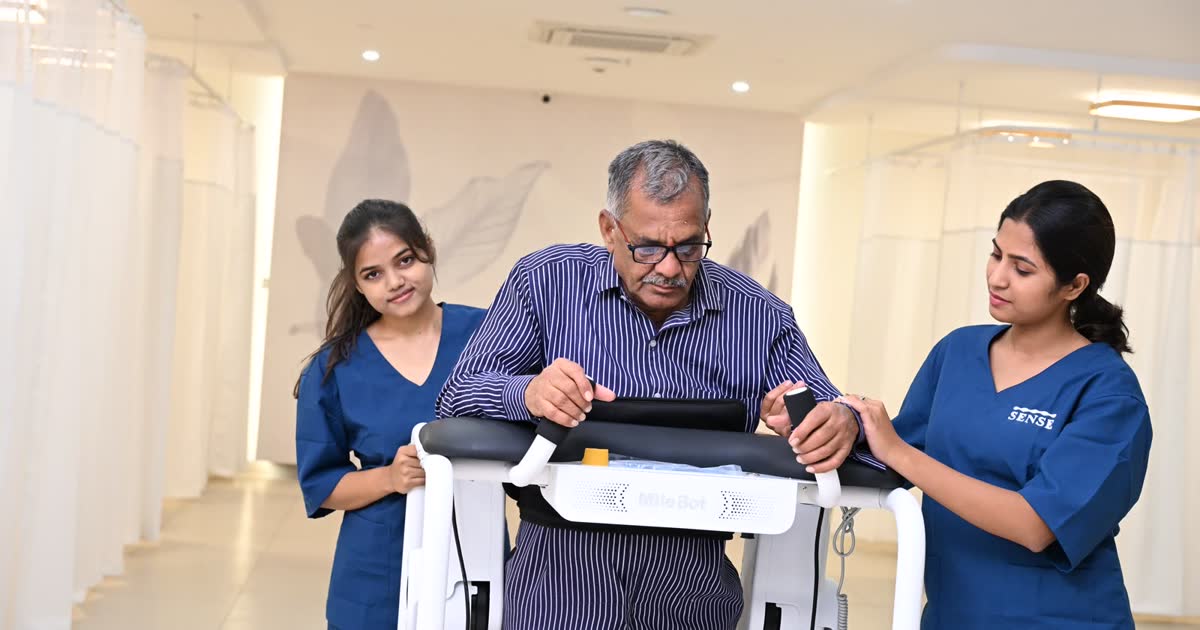
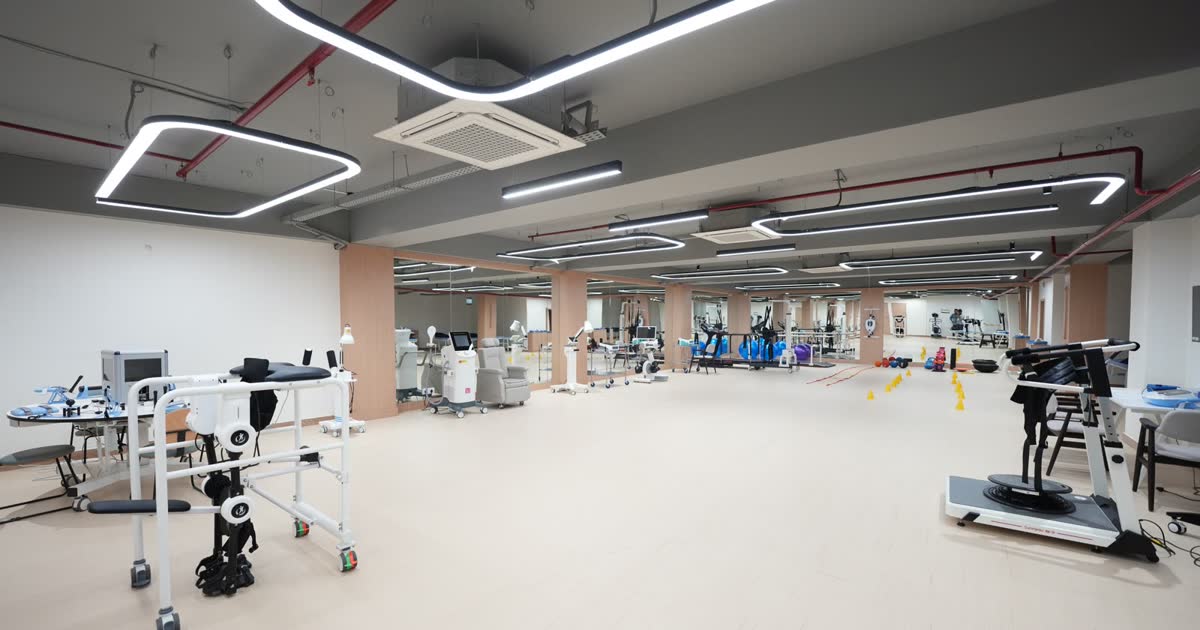
- Prescribed exercise: walking on a treadmill or the floor, a stationary cycle, step training and light resistance work, at an intensity set from your assessment, usually a target heart-rate range or a "somewhat hard" effort level. Heart rate and SpO2 are monitored during exercise, and blood pressure is checked between stages. Continuous cardiac monitoring is used where the doctor advises it.
- Cool-down and a repeat of the vital signs before you leave.
- Education: a short session on one topic, such as your medicine list, salt and oil in a South Indian diet, or what to do about chest discomfort.
Inpatients at SENSE Health have 24/7 doctors and a 24/7 emergency response team, which matters most in the first weeks after a heart event.
Which Warning Signs Mean Stop Exercising?
Supervised exercise after a heart event is safe for most people, but everyone in the room should know the stop signs:
- Chest pain, pressure, tightness or a burning sensation, including pain spreading to the arm, jaw or back
- Breathlessness out of proportion to the effort, or that does not settle within a few minutes of stopping
- Dizziness, light-headedness, or feeling faint
- Palpitations, a racing or irregular heartbeat
- Cold sweat, nausea, or a pale or grey appearance
- Unusual fatigue or weakness that comes on suddenly
Stop, sit down and tell the therapist or your family member immediately. The NHS lists tight or squeezing chest pain, pain spreading to the arms, neck or jaw, severe breathing difficulty and loss of consciousness as emergency symptoms (NHS).
If chest pain, severe breathlessness or fainting occurs during exercise at home or anywhere outside a hospital, call 108 or 112. If your cardiologist has prescribed a tablet to place under the tongue for chest pain, use it exactly as instructed while help is on the way.
Is Cardiac Rehab Safe and Worthwhile for Seniors?
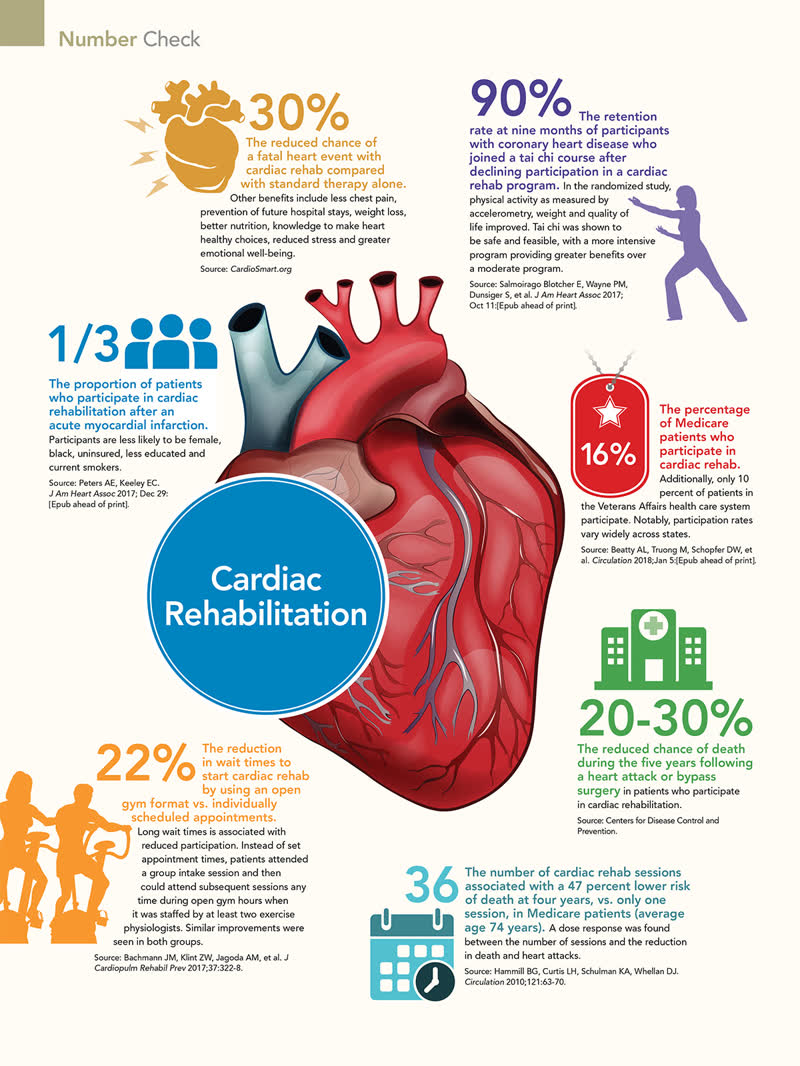
Yes. In a US Medicare study of 30,161 adults aged 65 and over (median age 74), those who completed all 36 sessions had a 47% lower risk of death over four years than those who attended a single session (hazard ratio 0.53), and a lower risk of heart attack (Hammill et al., 2010). This was an observational study, so regular attenders may also be healthier in other ways, but the direction of benefit matches the trials.
For a frail older person, the programme is adapted rather than withheld, often within our senior care service: shorter bouts of exercise, chair-based strength work, balance training and attention to nutrition and mood. Our fall-prevention guide covers the home side.
Can Cardiac Rehab Be Done at Home?
For many people, yes. A 2017 Cochrane review of 23 trials (2,890 people after a heart attack, revascularisation or with heart failure) found no clear difference between home-based and centre-based rehab in death, exercise capacity or quality of life, with slightly better programme completion at home (Anderson et al., 2017). The 2024 heart failure review likewise found benefits across centre-based, home-based and hybrid delivery (Molloy et al., 2024).
A home programme works when the person has been assessed first, has a written exercise prescription with heart-rate limits, knows the stop signs, and has someone checking in. A common pattern is a few supervised sessions at the centre to set the prescription, then a home programme with periodic reviews. SENSE Health provides home physiotherapy across Bengaluru for people who cannot travel.
What About Blood Pressure, Cholesterol and Diabetes?
Exercise is one part of secondary prevention. The other is keeping blood pressure, LDL cholesterol, blood sugar and smoking under control with the medicines your cardiologist prescribes; the 2021 ESC guideline treats these goals as part of cardiac rehabilitation after an acute coronary syndrome (Visseren et al., 2021). Targets are individual, so ask your cardiologist to write them down and bring that sheet to rehab. Never stop or change a heart medicine because you feel better; discuss it with your doctor first.
Getting Started with Cardiac Rehab in Kalyan Nagar
If your family member has just been discharged from a cardiac unit, call or WhatsApp us on +91 96633 34659 to book a free initial consultation, or walk in during OPD hours. Bring the discharge summary, the angiogram or surgery report, the latest ECG and echo, the medicine list and any targets the cardiologist has set.
At the first visit, our consultant physiatrist and physiotherapist review the records, check resting vital signs, assess walking and strength, agree goals with you, and recommend outpatient sessions, an inpatient stay or a home programme. Before any inpatient admission you receive a written package sheet showing what is included and what is charged separately, and our admissions team checks your insurance and helps with pre-authorisation. Inpatients have 24/7 doctors and a 24/7 emergency response team. If you are weighing up rehabilitation centres, our checklist for choosing a rehab hospital lists the questions to ask.
SENSE Health is at AVR Heights, 100 Feet Road, HRBR Layout 1st Block, Kalyan Nagar, Bengaluru 560043, easily reached from Indiranagar, Banaswadi and Hennur, and families come to us from Kammanahalli, Hebbal, Horamavu and Ramamurthy Nagar. OPD hours: Monday to Saturday, 9 AM to 7 PM. Email listen@sensehealth.co.in or get directions.
Sources
- Dibben G, Faulkner J, Oldridge N, et al. Exercise-based cardiac rehabilitation for coronary heart disease. Cochrane Database of Systematic Reviews. 2021.
- India State-Level Disease Burden Initiative CVD Collaborators. The changing patterns of cardiovascular diseases and their risk factors in the states of India: the Global Burden of Disease Study 1990–2016. Lancet Global Health. 2018.
- Babu AS, Turk-Adawi K, Supervia M, et al. Cardiac Rehabilitation in India: Results from the ICCPR Global Audit of Cardiac Rehabilitation. Global Heart. 2020.
- Ghisi GLM, Contractor A, Abhyankar M, Syed A, Grace SL. Cardiac rehabilitation knowledge, awareness, and practice among cardiologists in India. Indian Heart Journal. 2018.
- Molloy C, Long L, Mordi IR, et al. Exercise-based cardiac rehabilitation for adults with heart failure. Cochrane Database of Systematic Reviews. 2024.
- Abraham LN, Sibilitz KL, Berg SK, et al. Exercise-based cardiac rehabilitation for adults after heart valve surgery. Cochrane Database of Systematic Reviews. 2021.
- Visseren FLJ, Mach F, Smulders YM, et al. 2021 ESC Guidelines on cardiovascular disease prevention in clinical practice. European Heart Journal. 2021.
- Brown TM, Pack QR, Aberegg E, et al. Core Components of Cardiac Rehabilitation Programs: 2024 Update. A Scientific Statement From the AHA and AACVPR. Circulation. 2024.
- Anderson L, Sharp GA, Norton RJ, et al. Home-based versus centre-based cardiac rehabilitation. Cochrane Database of Systematic Reviews. 2017.
- Hammill BG, Curtis LH, Schulman KA, Whellan DJ. Relationship between cardiac rehabilitation and long-term risks of death and myocardial infarction among elderly Medicare beneficiaries. Circulation. 2010.
- NHS. Coronary heart disease: Recovery. Accessed October 2026.
- NHS. Heart attack: Symptoms. Accessed October 2026.
- Centers for Disease Control and Prevention. Cardiac Rehabilitation. CDC. Accessed October 2026.
This article is for general education and does not replace advice from your own doctor. If symptoms are sudden or severe, call 108 or go to the nearest emergency department.