You survived the stroke. But something is still wrong.
Your arm doesn't hang naturally at your side — it curls inward, pulling against you. Your hand won't fully open. Your foot turns inward when you try to walk, making every step a negotiation. You feel a constant, exhausting tightness in muscles that refuse to let go. You've been told this is spasticity. But no one quite prepared you for how much it would take from you.
This article is about spasticity — what it really is, what it does to people's lives, and how modern treatment at SENSE Health, Bangalore is helping stroke survivors break free from it.
What Is Post-Stroke Spasticity?
When a stroke damages the brain, it disrupts the signals that regulate muscle tone — the constant, background tension that keeps muscles ready to move. Without proper regulation from the brain, muscles can become permanently overactivated, contracting even when you don't want them to. This is spasticity.
Clinically, spasticity is defined as a velocity-dependent increase in muscle tone — the faster you try to move a limb, the stiffer and more resistant it becomes. But for the people living with it, spasticity is not a clinical definition. It is a constant, unwelcome presence in every moment of every day.
According to research published in PubMed, spasticity develops in approximately 45% of stroke survivors by 3 months after stroke, and 35% still have it at 12 months — with 20% experiencing severe spasticity that significantly limits daily function ([Prevalence and predictors of post-stroke spasticity, PubMed](https://pubmed.ncbi.nlm.nih.gov/31845749/)).
It is one of the most common — and most disabling — consequences of stroke. And it is still profoundly undertreated.
What Spasticity Actually Does to People
The clinical description of spasticity understates what it costs people.
It takes away the small things first. The ability to button a shirt. To hold a cup without it shaking. To pick up a grandchild. These are the things that make life feel like yours — and spasticity quietly removes them.
It causes pain that doesn't stop. The muscles don't just tighten — they ache. The sustained contraction creates a deep, pulling pain that can be worse at night, disturbing sleep and leaving patients exhausted even before the day begins.
It isolates. When your arm contracts visibly, when your gait is altered, when your hand curls in a way you cannot control, many people begin to withdraw from public life. The fear of being stared at, the effort required to do ordinary things, the exhaustion of managing a body that doesn't cooperate — these drive people inward.
It affects caregivers too. Spasticity makes it harder to bathe, dress, and transfer a patient. It increases the physical burden on family members who are already stretched thin emotionally and practically.
It blocks recovery. Perhaps most cruelly, untreated spasticity interferes with rehabilitation itself. When muscles are too stiff to move through their full range, physiotherapy becomes less effective. Contractures — permanent shortening of muscle and connective tissue — can develop, closing the window of recovery even further.
A longitudinal cohort study published in PMC (Acta Neurologica Scandinavica) confirmed that stroke survivors with spasticity had significantly worse health-related quality of life across physical functioning, role limitations, physical pain, and vitality compared to stroke survivors without spasticity ([The negative impact of spasticity on HRQoL, PMC](https://www.ncbi.nlm.nih.gov/pmc/articles/PMC4587810/)).
This is not a minor complication. It is a condition that reshapes a person's entire life after stroke.
Why Spasticity Is So Hard to Treat
For decades, the main treatments for post-stroke spasticity have been limited: oral muscle relaxants (which cause sedation and weakness throughout the body), botulinum toxin injections (effective but expensive, temporary, and requiring repeated procedures), and physiotherapy (essential but limited in reach when muscles are too stiff to respond).
The challenge is that spasticity is a neurological problem — not just a muscle problem. The muscles are tight because the brain is no longer sending the right signals to regulate them. Treating the muscle alone, without addressing the neurological component, provides only partial and temporary relief.
This is where High-Intensity Electromagnetic Therapy (HIEMT) changes the equation.

How HIEMT Breaks the Spasticity Cycle
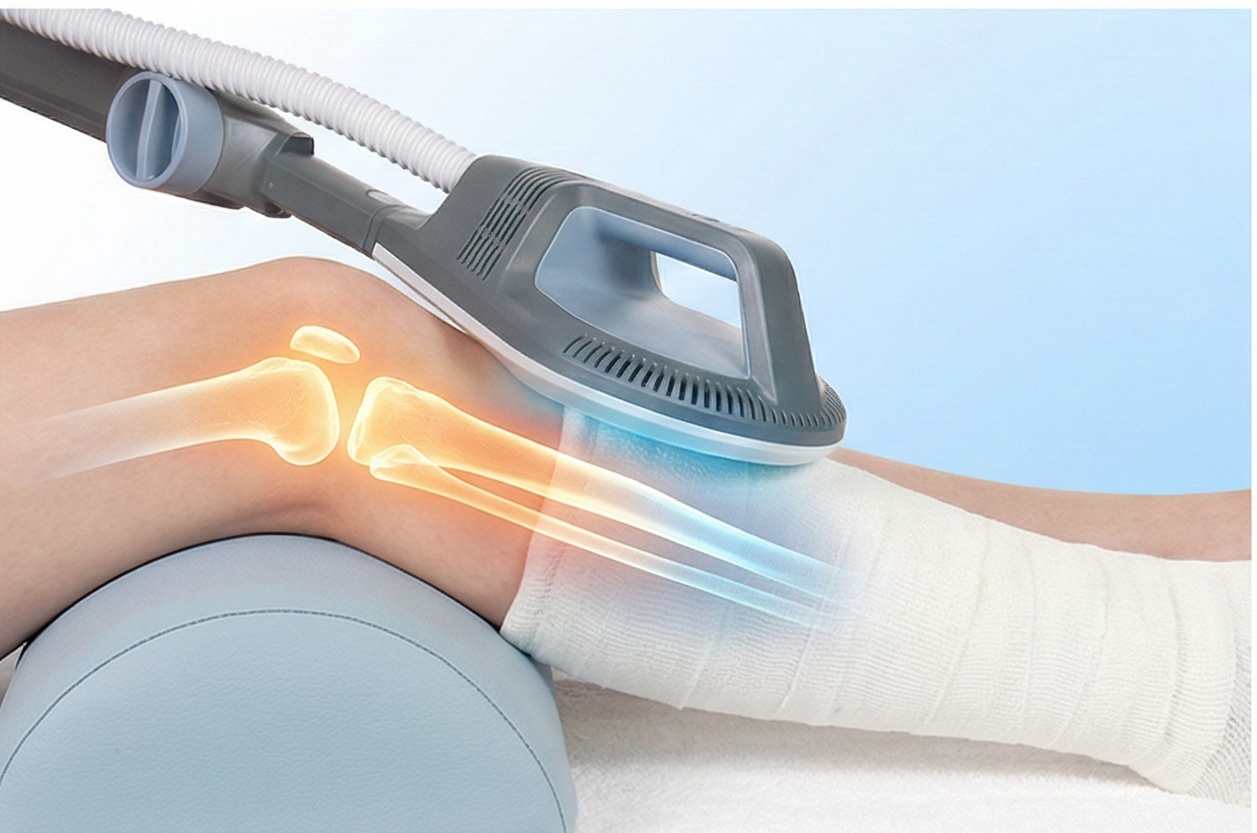
HIEMT uses a focused electromagnetic field — delivered through a coil placed over the target area — to generate precisely controlled electrical currents within neural and muscle tissue. Unlike surface electrical stimulation, HIEMT penetrates up to 10 cm deep at 6 Tesla of magnetic intensity, reaching structures that conventional therapy cannot access.
For spasticity, HIEMT works through two complementary mechanisms:
1. Reciprocal Inhibition
When a muscle is spastic, its antagonist (the opposing muscle) is typically weak and underactivated. HIEMT selectively stimulates the antagonist — for example, the wrist extensors when the flexors are spastic — activating inhibitory interneurons in the spinal cord (Ia interneurons) that naturally suppress the spastic muscle's overactivity.
This is the same neurological mechanism the brain uses in healthy movement to coordinate smooth, controlled motion. HIEMT essentially bypasses the damaged brain signal and directly activates this inhibitory pathway.
Research confirms this mechanism: electromagnetic and electrical stimulation applied to antagonist muscles reduces spasticity through reciprocal inhibition, reducing stretch reflex excitability and decreasing motor neuron excitability in the spastic muscle ([AHA Journals — Effects of Electrical Stimulation in Spastic Muscles After Stroke](https://www.ahajournals.org/doi/10.1161/strokeaha.115.009633)).
2. Direct Reduction of Muscle Hypertonicity
At high intensities, HIEMT induces supramaximal muscle contractions — stronger than voluntary contractions — followed by a period of post-activation depression. This repeated cycle of strong contraction and relaxation gradually reduces resting muscle tone, breaking the sustained spastic contraction pattern.
High-frequency electromagnetic stimulation has been shown to reduce muscle hypertonicity and facilitate reciprocal inhibition, improving movement control in patients with neurological conditions including post-stroke spasticity.
A 2025 network meta-analysis in eClinicalMedicine (The Lancet) — the largest comparative study of its kind, examining 185 randomised controlled trials with 11,185 participants — confirmed that non-invasive electromagnetic and neuromodulation therapies significantly reduce spasticity in stroke survivors, supporting their integration alongside rehabilitation ([Comparative efficacy of neuromodulation for post-stroke spasticity, PMC/Lancet](https://www.ncbi.nlm.nih.gov/pmc/articles/PMC11741030/)).
What HIEMT Treatment for Spasticity Looks Like at SENSE Health
At SENSE Health, Bangalore, HIEMT for spasticity is not a standalone procedure. It is integrated into a comprehensive, individually designed rehabilitation programme.
The treatment itself is non-invasive and painless. The electromagnetic coil is placed over the spastic muscle group — the arm, forearm, hand, calf, or foot — and the device delivers precisely calibrated pulses. There is no skin contact requirement, no gels, no needles, no sedation. Patients remain fully clothed and seated or lying comfortably.
Sessions typically last 20–30 minutes. A course of treatment is designed by our rehabilitation physicians based on the location and severity of spasticity, the stage of recovery, and the patient's overall rehabilitation goals.
HIEMT is most effective when combined with:
- Physiotherapy — to retrain movement patterns as spasticity reduces and range of motion returns
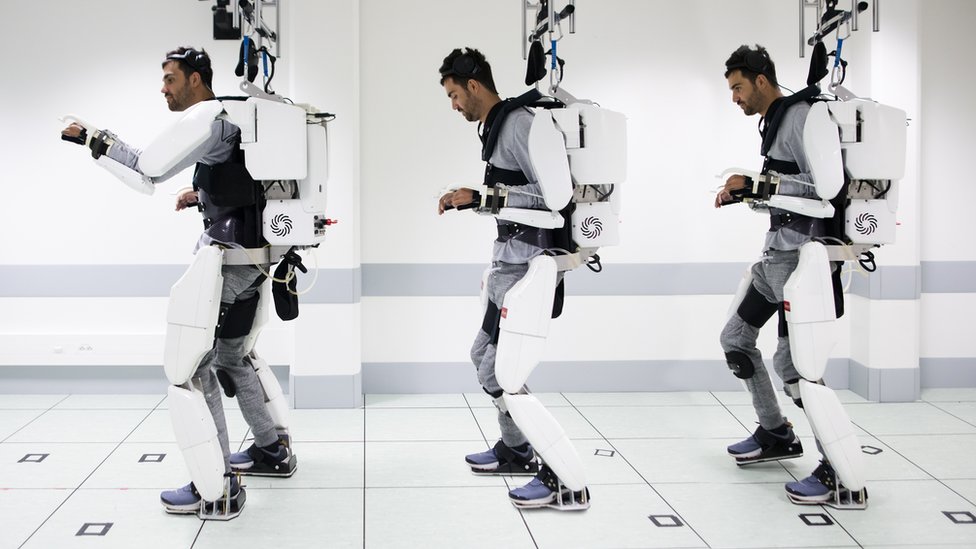
- Robotic Gait Training (RAGT) — to guide the nervous system through correct walking patterns
- rTMS — to address the brain-level neurological imbalance driving the spasticity
- Occupational therapy — to translate reduced spasticity into functional gains in daily tasks
This multi-technology approach — targeting the problem at the level of the muscle, the spinal cord, and the brain simultaneously — is what separates SENSE Health's rehabilitation programme from conventional care.
The Realistic Goal: Not Just Less Spasticity, But More Life
Spasticity treatment is not about achieving perfection. It is about expanding what is possible.
When spasticity reduces, physiotherapy becomes more effective. Range of motion improves. Caregiving becomes easier. Pain decreases. Sleep improves. Patients who had withdrawn from life begin to re-engage — attending family events, regaining a hobby, walking a short distance they had given up on.
These are not small things. They are the substance of life.
At SENSE Health, we have seen patients who were told their contractures were permanent — and whose range of motion improved with consistent HIEMT-integrated rehabilitation. We have seen patients whose caregivers were burning out — and who gained enough function to reduce their dependence.
Recovery after stroke is not a straight line. But spasticity does not have to be the end of it.
If you or someone you love is living with post-stroke spasticity in Bangalore, SENSE Health offers a free initial consultation to assess the extent of spasticity, discuss treatment options, and design a personalised plan.
The muscles do not have to win.
References:
- Wissel J et al. (2010) — [Prevalence and predictors of post-stroke spasticity, PubMed](https://pubmed.ncbi.nlm.nih.gov/31845749/)
- Lundström E et al. (2010) — [Negative impact of spasticity on HRQoL of stroke survivors, PMC](https://www.ncbi.nlm.nih.gov/pmc/articles/PMC4587810/)
- eClinicalMedicine/The Lancet (2025) — [Comparative efficacy of neuromodulation for post-stroke spasticity — 185 RCTs, 11,185 patients, PMC](https://www.ncbi.nlm.nih.gov/pmc/articles/PMC11741030/)
- AHA Journals — [Effects of Electrical Stimulation in Spastic Muscles After Stroke](https://www.ahajournals.org/doi/10.1161/strokeaha.115.009633)