A spinal cord injury (SCI) can transform life in an instant — affecting movement, sensation, and independence. Yet recovery doesn't end with survival; it begins there. At SENSE Health, Bangalore, we believe every individual deserves a chance to regain strength, function, and dignity.
Our comprehensive Spinal Cord Injury Rehabilitation Program combines advanced medical science, technology-driven therapy, and compassionate care to help each patient rebuild life beyond limits.
Understanding Spinal Cord Injury
The spinal cord acts as the communication highway between the brain and the body. When it's damaged — either partially or completely — this communication is disrupted, leading to challenges with mobility, bladder or bowel control, breathing, and sensory feedback.
While the damage itself may not be reversible, the body's ability to adapt and reorganise — known as neuroplasticity — makes recovery possible. Structured rehabilitation helps restore function, prevent complications, and improve quality of life.
Classifying Spinal Cord Injury
ASIA Impairment Scale (AIS)
The American Spinal Injury Association (ASIA) scale is the gold standard for classifying spinal cord injuries:
- ASIA-A (Complete): No motor or sensory function below the level of injury
- ASIA-B (Sensory Incomplete): Sensory function preserved, but motor function absent
- ASIA-C (Motor Incomplete – Weak): Some motor function preserved, most muscles weak
- ASIA-D (Motor Incomplete – Strong): Motor function preserved, most muscles functional
- ASIA-E (Normal): Normal motor and sensory function
Understanding the ASIA grade helps our specialists predict recovery potential and design the most effective treatment plan.
Functional Independence Measure (FIM)
This scale evaluates how independently a person can perform daily activities such as dressing, grooming, walking, eating, and toileting. Scores range from 18 (complete dependence) to 126 (complete independence). It helps track progress and set practical goals.
Spinal Cord Independence Measure (SCIM)
SCIM is designed specifically for SCI rehabilitation, focusing on:
- Self-care (feeding, grooming, dressing)
- Respiration and sphincter management
- Mobility (bed, transfers, indoor/outdoor)
Our SCI Rehabilitation Approach
Robotic-Assisted Gait Training (RAGT)
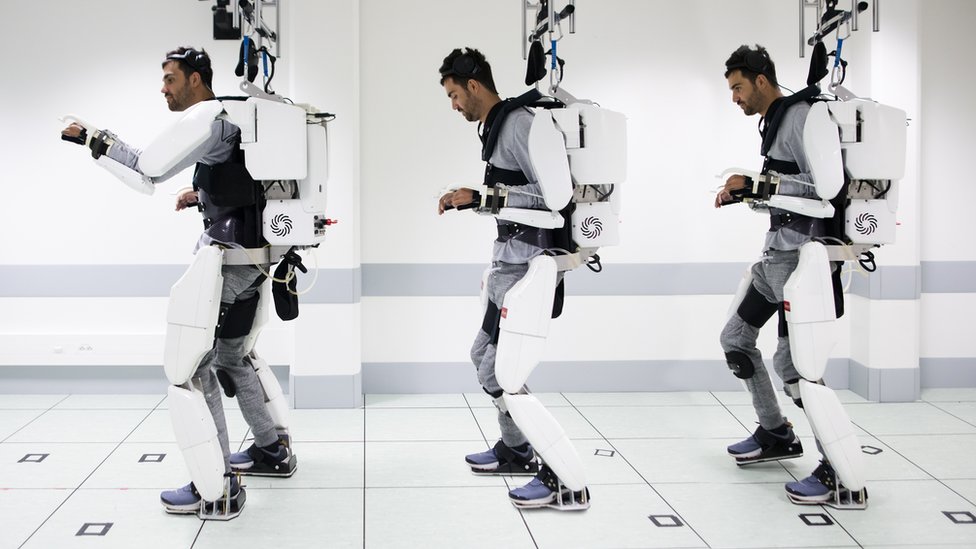
Our robotic exoskeleton delivers 5,000+ guided steps per session — activating neuroplasticity and retraining the nervous system. Suitable for incomplete SCI patients working toward standing and walking.
Neuromuscular Electrical Stimulation (NMES)
NMES delivers targeted electrical impulses to paralysed muscles, maintaining muscle bulk, stimulating neural pathways, and preventing atrophy during the recovery period.
Occupational Therapy
Occupational therapists help patients regain independence in daily activities and teach compensatory strategies for activities of daily living (ADLs), driving, return to work, and home modifications.
Bladder & Bowel Management
A critical but often overlooked component. Our team provides education and therapy to establish effective bladder and bowel routines, reducing the risk of infection and improving quality of life.
Respiratory Therapy
For cervical SCI patients, respiratory function may be compromised. Our chest physiotherapy and breathing retraining protocols help maintain lung capacity and clear secretions.
Pain Management
Neuropathic pain is common in SCI. Our multidisciplinary approach combines:
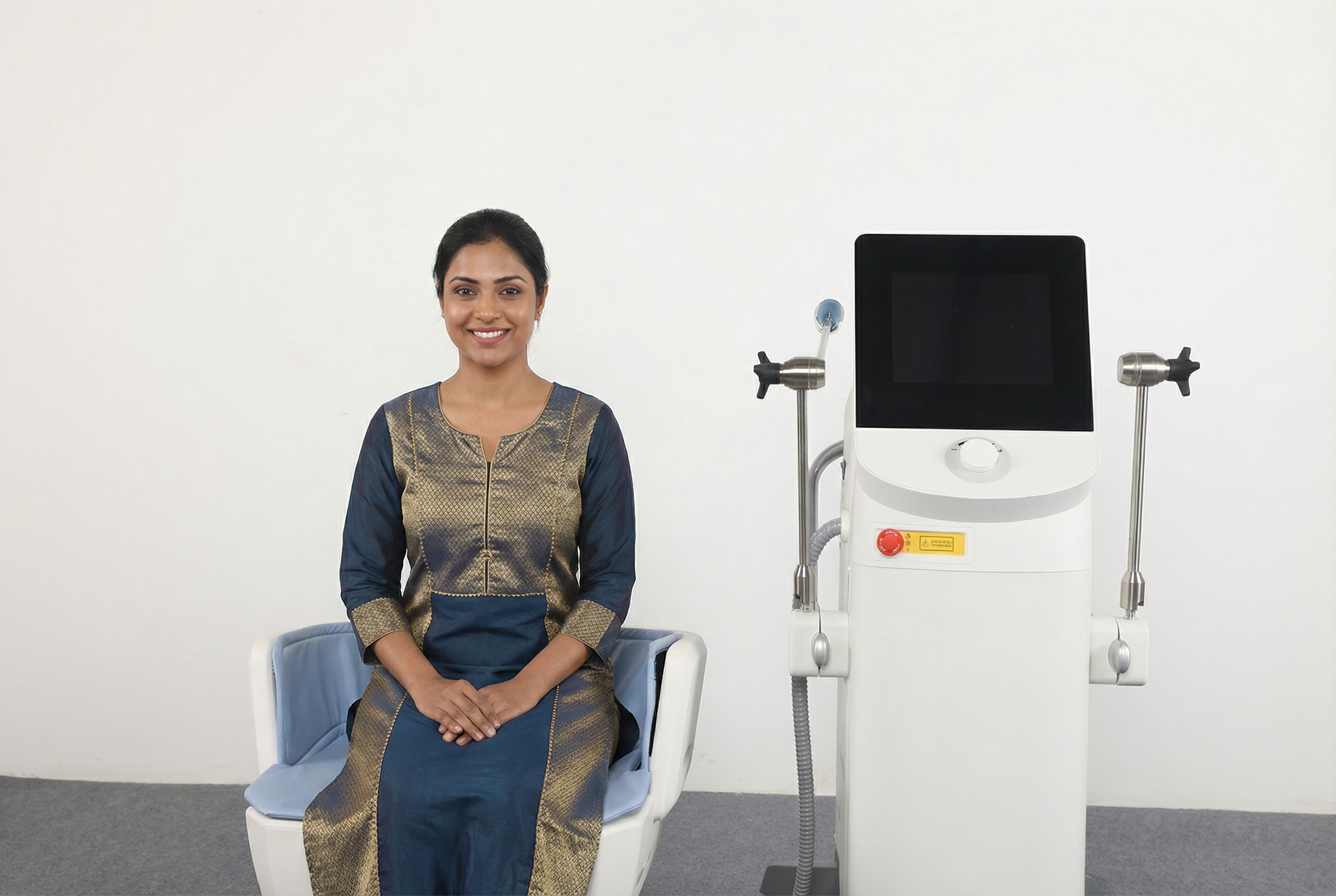
- Super Inductive System (SIS) for pain modulation
- TENS and electrotherapy
- Manual therapy
- Psychological support for pain coping
Psychological Support & Counselling
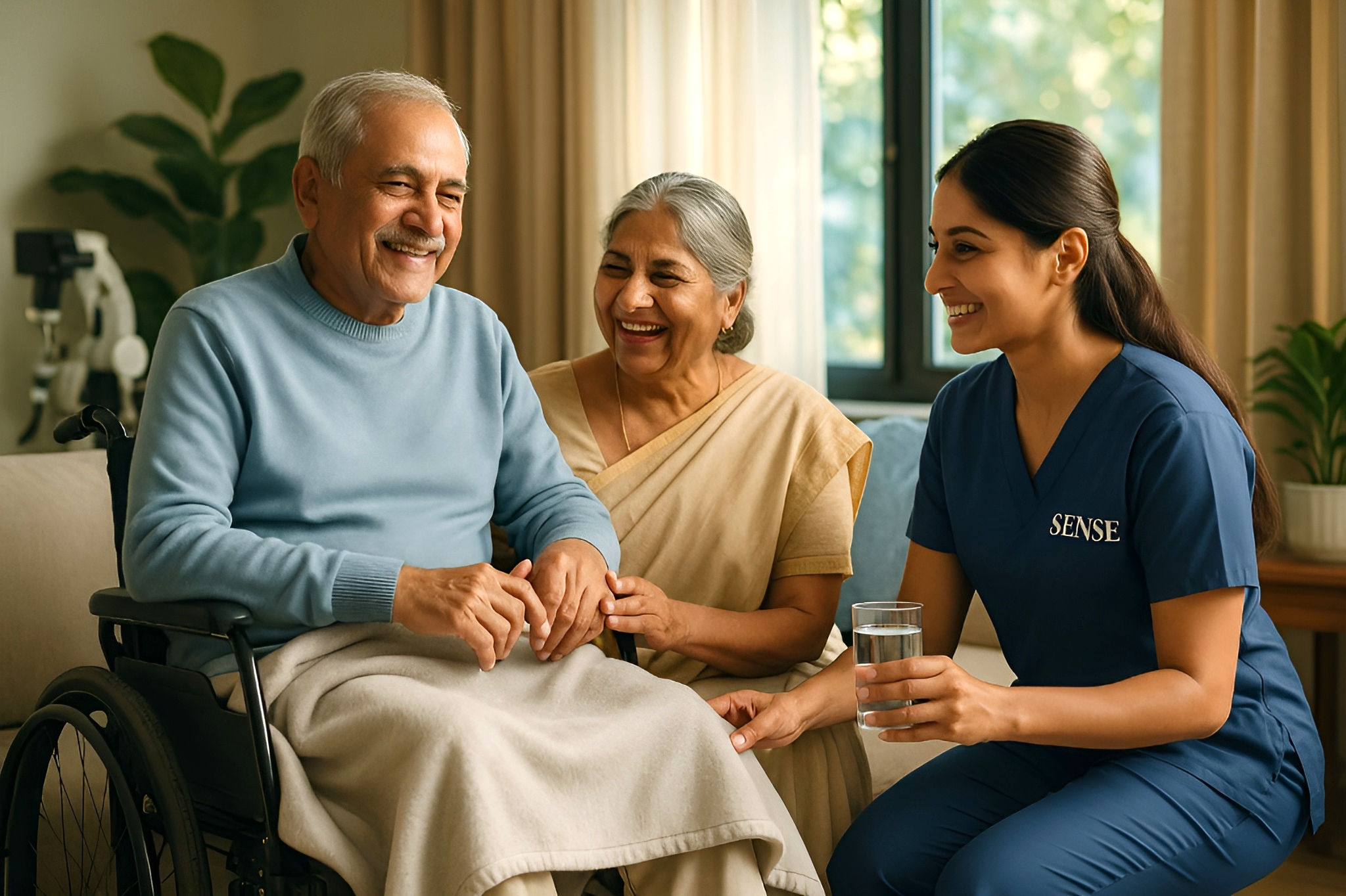
Adjusting to life after SCI is emotionally challenging. Our psychologists and counsellors work alongside the clinical team to support mental health, motivation, and family adjustment.
Goals of SCI Rehabilitation
- Maximise functional independence
- Prevent secondary complications (pressure sores, contractures, UTIs)
- Restore as much mobility as possible
- Enable return to community life
- Support family and caregiver education
Why Choose SENSE Health for SCI Rehabilitation in Bangalore
- Technology-driven: Robotic gait training, NMES, SIS, HBOT
- Multidisciplinary team: Physiotherapists, occupational therapists, speech pathologists, psychologists, nursing
- 24/7 nursing care for residential patients
- Family education and caregiver training
- Progressive, goal-oriented programs
"Every step forward — however small — is a victory worth celebrating."
At SENSE Health, we are committed to helping every SCI patient achieve their fullest possible recovery, with dignity and determination.